Cost of Owning a Car in France — 2026 Complete Guide

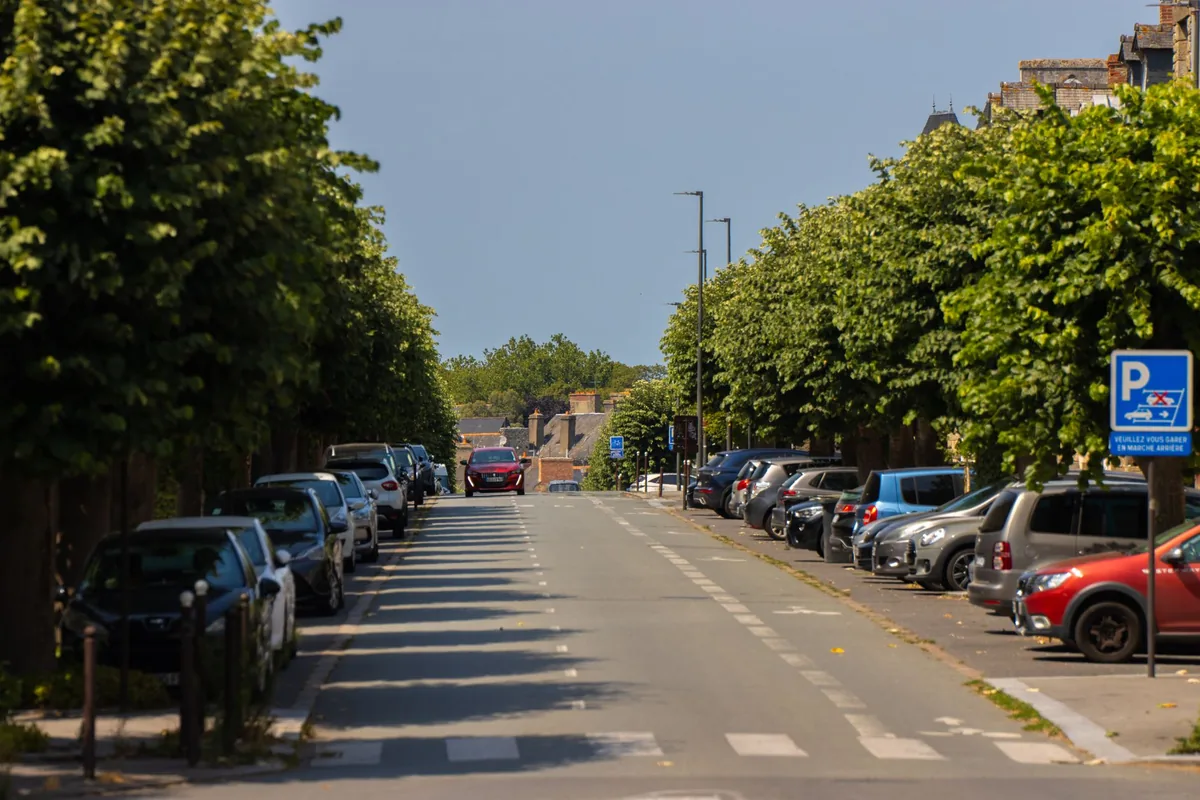
Car costs France drivers pay in 2026 come from three places: the pump, the plug, and a small pile of paperwork. Petrol averages €2.073 a litre and diesel €2.209 a litre, household electricity €0.256 per kWh, and the mandatory contrôle technique about €78. What France does not charge is an annual road tax on private cars.
This guide prices the energy side of ownership properly. We analysed 17,130 official type-approval consumption records across petrol, diesel, hybrid and electric models, applied verified French prices, and assumed 15,000 km a year. The result is a ranked, checkable picture of the cost of owning a car in France in 2026 — and an honest account of what the data cannot cover.
What car costs France drivers actually face in 2026
A median petrol car in our sample consumes 7.80 L/100km and burns €2,425 of fuel over 15,000 km at €2.073/L. A median diesel consumes 5.50 L/100km and costs €1,822. A median electric car consumes 16.90 kWh/100km and costs €649 of household electricity at €0.256/kWh. Adding the amortised contrôle technique of €39 a year gives sourced annual totals of €2,464 for petrol, €1,861 for diesel and €688 for electric.
Two structural facts shape everything else. Diesel is priced above petrol at the pump — €2.209 against €2.073 — yet still costs less per kilometre because diesel engines burn so much less of it. And France levies no annual road tax on private cars, removing a fixed yearly bill that drivers in Ireland, the UK and Germany still pay.
All figures are 2026 French prices applied to official homologated consumption data for 15,000 km a year. Insurance, tyres, servicing and parking are excluded because we hold no verified French data for them.
How the 2026 France car running cost analysis was built
Every consumption figure below comes from official Vehicle Certification Agency type-approval records — the homologated WLTP and NEDC numbers used across Europe. We pooled three datasets covering model years 2000 to 2027, which gave 17,270 rows, then stripped out implausible entries and rows without a usable consumption figure. That left 17,130 records: 9,201 petrol, 6,855 diesel, 490 hybrid, 402 plug-in hybrid and 182 electric.
The French constants are fixed and public: €2.073/L petrol and €2.209/L diesel from the EU Oil Bulletin week of 31 August 2026, and €0.256/kWh household electricity from Eurostat band DC for the second half of 2025 including taxes. Annual energy cost is consumption divided by 100, multiplied by 15,000 km, multiplied by the price. The same mileage and prices apply to every row, so the ranking reflects vehicle efficiency, not local price variation.
Data quality: the rows we removed, and why
We remove records that cannot represent real driving. Nine rows fell outside our plausibility window of 2.5 to 25.0 L/100km, including a 2022 Mazda CX-60 listed at 141.2 L/100km. No electric row fell outside the 5.0 to 40.0 kWh/100km window. A further 129 rows carry no consumption value at all and were dropped — every one a plug-in hybrid in the current dataset.
Plug-in hybrids are reported separately rather than merged into the hybrid averages, because their official figures assume a full battery on every trip. Two rows tagged simply as hybrids fall under 3.0 L/100km and are excluded for the same reason. Everything published below is a self-charging hybrid, a combustion car or a battery electric car.
- 129 rows dropped for a missing consumption figure — all plug-in hybrids in the current dataset
- 9 rows dropped as out of band: 9 L/100km rows, 0 kWh/100km rows
- 2 hybrid-tagged rows dropped below 3.0 L/100km: Land Rover Range Rover and Range Rover Sport (2018, NEDC, 2.8 L/100km)
- Out-of-band L/100km rows included Kia Niro at 1.3 and Hyundai IONIQ at 1.1 — both plug-in test figures
- 17,130 rows analysed out of 17,270 pulled
Fuel prices in France in 2026
Petrol averages €2.073 per litre and diesel €2.209 per litre in France, according to the EU Oil Bulletin for the week of 31 August 2026. Both sit above the EU averages of €1.840 and €1.966, so French motorists pay a premium at the pump compared with the continent as a whole. The gap between the two fuels is 13.6 cents a litre.
A 50-litre fill of petrol costs €103.65; the same fill of diesel costs €110.45. French pump grades are 95, 98 and E10 for petrol and B7 for diesel. Prices move weekly, so treat these as a September 2026 baseline rather than a fixed rate.
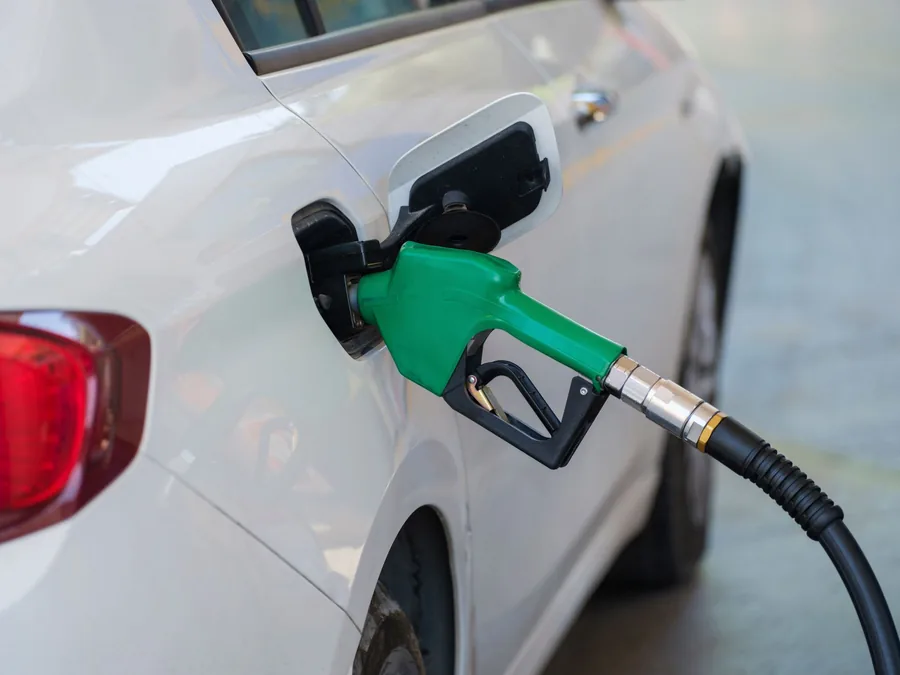
- Petrol: €2.073/L (EU Oil Bulletin, week of 31 August 2026)
- Diesel: €2.209/L (EU Oil Bulletin, week of 31 August 2026)
- EU average for comparison: petrol €1.840/L, diesel €1.966/L
- 50-litre tank: €103.65 petrol, €110.45 diesel
French pump labels are 95, 98 and E10 for petrol and B7 for diesel. Octane figures from other markets do not describe the fuel sold in France.
Diesel versus petrol: which is really cheaper to run in France
Diesel wins on cost per kilometre despite costing 13.6 cents more per litre. The reason is consumption: the median diesel record in our sample uses 5.50 L/100km against 7.80 L/100km for petrol. Over 15,000 km that is €1,822 a year versus €2,425, a saving of €603 or 24.9%. On cost per 100 km the gap is €12.15 against €16.17.
The advantage is narrower than a decade ago, because French fuel tax now keeps diesel priced above petrol. Diesel still suits high-mileage drivers and anyone towing. At low annual mileages the higher purchase price of a diesel variant can take years to repay, and diesel is the powertrain most exposed to low-emission-zone restrictions.
| Measure | Petrol | Diesel |
|---|---|---|
| Median consumption | 7.80 L/100km | 5.50 L/100km |
| Median annual energy cost at 15,000 km | €2,425 | €1,822 |
| Median cost per 100 km | €16.17 | €12.15 |
| Pump price (31 Aug 2026) | €2.073/L | €2.209/L |
| Records analysed | 9,201 | 6,855 |
Electricity prices and the cost of charging at home in France
Household electricity in France averages €0.256 per kWh, from Eurostat data for the second half of 2025 on band DC consumption including all taxes. That is above the EU average of €0.220 but far below Germany at €0.387 and Ireland at €0.404.
A full charge of a 60 kWh battery costs €15.36. The median electric record consumes 16.90 kWh/100km, which is €4.33 per 100 km and €649 over 15,000 km — 73% cheaper than the median petrol car. Public rapid chargers bill more than the household tariff, so a driver without home charging should budget well above €649.
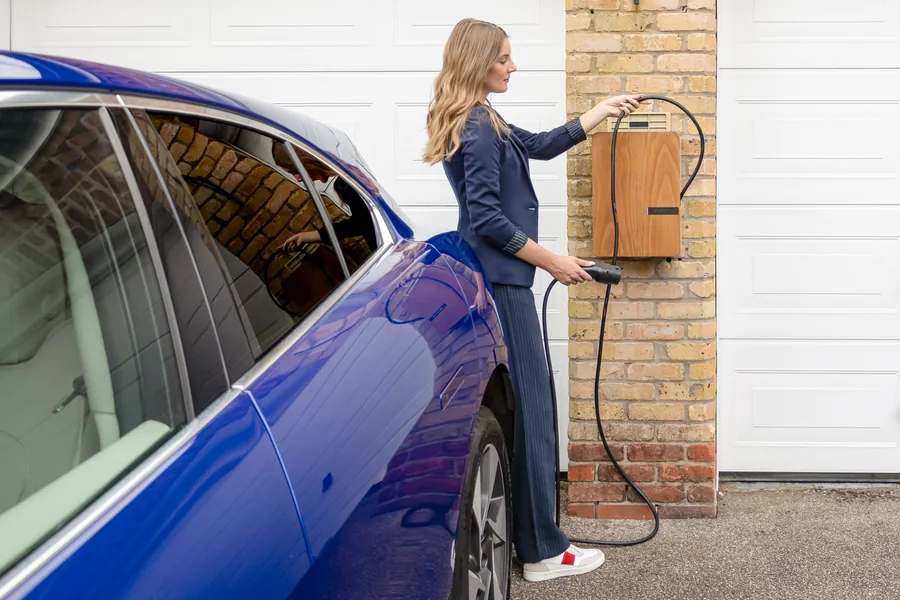
- Household electricity: €0.256/kWh (Eurostat, H2 2025, band DC, incl. taxes)
- EU average: €0.220/kWh; Germany €0.387/kWh; Ireland €0.404/kWh
- 60 kWh battery charged at home: €15.36
- Median electric consumption: 16.90 kWh/100km, or €649 a year at 15,000 km
Home charging is priced at the household tariff. Public fast charging costs more, so the electric figures are a best case for drivers with off-street parking and a domestic supply.
Annual energy cost by powertrain, with mean and median
Across 17,130 records, mean petrol consumption is 8.53 L/100km and the median 7.80, so the average is pulled up by large SUVs and performance models. Median petrol energy cost is €2,425 a year. Diesel medians are lower on both counts at 5.50 L/100km and €1,822. Hybrid medians land at 5.85 L/100km and €1,819, effectively level with diesel on fuel cost alone.
Plug-in hybrids sit at a median of 6.00 L/100km and €1,866 once implausible rows are removed, which shows what that technology looks like without a full battery flattering the test. Electric is in a different band: a median of 16.90 kWh/100km and €649 against a mean of 17.46 kWh/100km and €670.
| Powertrain | Records | Mean consumption | Median consumption | Mean €/yr | Median €/yr |
|---|---|---|---|---|---|
| Petrol | 9,201 | 8.53 L/100km | 7.80 L/100km | €2,651 | €2,425 |
| Diesel | 6,855 | 5.84 L/100km | 5.50 L/100km | €1,934 | €1,822 |
| Hybrid | 490 | 6.08 L/100km | 5.85 L/100km | €1,892 | €1,819 |
| Plug-in hybrid | 402 | 6.19 L/100km | 6.00 L/100km | €1,924 | €1,866 |
| Electric | 182 | 17.46 kWh/100km | 16.90 kWh/100km | €670 | €649 |
Plug-in hybrid rows are reported separately and are not merged into the hybrid average. Costs assume 15,000 km a year and 2026 French prices.
Cost per 100 km: the fairest way to compare powertrains
Annual totals depend on how far you drive, so the price of moving the car 100 km is the cleanest comparison. The median figures in France are €4.33 for electric, €12.13 for hybrid, €12.15 for diesel, €12.44 for plug-in hybrid and €16.17 for petrol. Electricity is not a little cheaper than petrol here — it is roughly a quarter of the cost.
Hybrid, diesel and plug-in hybrid land within 31 cents of each other per 100 km at the median, so choosing between them should rest on purchase price, usage and tax treatment rather than the energy bill. The petrol median sits 33% above that trio; the electric median sits 73% below.
| Powertrain | Median cost per 100 km | Median €/yr at 15,000 km | Versus median petrol |
|---|---|---|---|
| Electric | €4.33 | €649 | 73% cheaper |
| Hybrid | €12.13 | €1,819 | 25% cheaper |
| Diesel | €12.15 | €1,822 | 24.9% cheaper |
| Plug-in hybrid | €12.44 | €1,866 | 23% cheaper |
| Petrol | €16.17 | €2,425 | baseline |
The cheapest models to run in France
The 2018 Toyota Prius is the cheapest combustion car to run in the dataset at 3.0 L/100km, 70 g/km of CO₂ and €933 a year. The 2017 Peugeot 208 diesel matches it on consumption, at 3.0 L/100km and 79 g/km, and costs €994 — a €61 premium because diesel is dearer per litre.
Below them is a tight band of superminis and small family cars between 3.1 and 3.8 L/100km: the 2018 Toyota Yaris hybrid at €1,026, the 2017 Peugeot 308 diesel at €1,027, and the 2017 Peugeot 308 SW, 2012 Kia Rio and 2013 Hyundai i20 at €1,060. The cheapest petrol car is the 2017 Suzuki Celerio at 3.6 L/100km and €1,119. Nothing large appears until consumption passes 5 L/100km.
| Make | Model | Year | Fuel | Consumption | CO₂ | Annual energy |
|---|---|---|---|---|---|---|
| Toyota | Prius | 2018 | Hybrid | 3.0 L/100km | 70 g/km | €933 |
| Peugeot | 208 | 2017 | Diesel | 3.0 L/100km | 79 g/km | €994 |
| Toyota | Yaris | 2018 | Hybrid | 3.3 L/100km | 75 g/km | €1,026 |
| Peugeot | 308 | 2017 | Diesel | 3.1 L/100km | 82 g/km | €1,027 |
| Peugeot | 308 SW | 2017 | Diesel | 3.2 L/100km | 85 g/km | €1,060 |
| Kia | Rio | 2012 | Diesel | 3.2 L/100km | 85 g/km | €1,060 |
| Hyundai | i20 | 2013 | Diesel | 3.2 L/100km | 84 g/km | €1,060 |
| Suzuki | Celerio | 2017 | Petrol | 3.6 L/100km | 84 g/km | €1,119 |
| Fiat | 500 | 2018 | Petrol | 3.8 L/100km | 90 g/km | €1,182 |
The cheapest electric cars to run in France
The 2026 Mini Aceman leads the electric table at 10.9 kWh/100km and €419 a year, less than half the fuel bill of the cheapest combustion car in the dataset. The 2026 Mercedes-Benz CLA Saloon follows at 12.2 kWh/100km and €468, then the 2026 Dacia Spring at 12.5 kWh/100km and €480. The Aceman is cheap because it is small, slippery and front-drive, not because of any charging trick.
Between €511 and €564 sit eleven more models, from the 2025 Fiat 500 and 2026 Tesla Model 3 to the Hyundai Kona Electric, Volkswagen ID.7 Tourer and Lexus RZ 350e. Even the thirstiest electric car in the dataset, the 2026 Mercedes-Benz G-Class at 30.3 kWh/100km, costs €1,164 a year — still below the median petrol car.
| Make | Model | Year | Consumption | Annual electricity |
|---|---|---|---|---|
| Mini | Aceman | 2026 | 10.9 kWh/100km | €419 |
| Mercedes-Benz | CLA Saloon | 2026 | 12.2 kWh/100km | €468 |
| Dacia | Spring | 2026 | 12.5 kWh/100km | €480 |
| Fiat | 500 | 2025 | 13.3 kWh/100km | €511 |
| Tesla | Model 3 | 2026 | 13.8 kWh/100km | €530 |
| Mini | Cooper Electric | 2026 | 14.2 kWh/100km | €545 |
| Peugeot | 2008 | 2026 | 14.2 kWh/100km | €545 |
| Tesla | Model Y | 2026 | 14.2 kWh/100km | €545 |
| Volkswagen | ID.7 | 2026 | 14.2 kWh/100km | €545 |
| Hyundai | Kona Electric | 2023 | 14.3 kWh/100km | €549 |
| Volkswagen | ID.7 Tourer | 2026 | 14.6 kWh/100km | €561 |
| Lexus | RZ 350e | 2026 | 14.7 kWh/100km | €564 |
The dearest cars to run in France
At the other end of the table, the 2000 Lamborghini Diablo (model year 1998/1999) consumes 24.9 L/100km and 575 g/km of CO₂, which costs €7,743 a year in petrol. The 2026 McLaren GT is close behind at 23.7 L/100km and €7,370, and the 2005 Maserati MC12 sits at 23.0 L/100km and €7,152. These are certified type-approval values, not anomalies.
Two Lamborghini models dominate the bottom of the list, along with Ferrari, Maserati and McLaren. One Diablo's annual fuel bill equals that of eight Toyota Priuses. In France its CO₂ output also matters at registration, because a high-emission new car attracts a one-off malus on the carte grise — a subject we return to below.

| Make | Model | Year | Consumption | CO₂ | Annual energy |
|---|---|---|---|---|---|
| Lamborghini | Diablo (MY 1998/1999) | 2000 | 24.9 L/100km | 575 g/km | €7,743 |
| Lamborghini | Diablo (MY 1997) | 2000 | 24.8 L/100km | 575 g/km | €7,712 |
| McLaren | GT | 2026 | 23.7 L/100km | 270 g/km | €7,370 |
| Maserati | MC12 | 2005 | 23.0 L/100km | 545 g/km | €7,152 |
| Lamborghini | Diablo (MY 2000) | 2000 | 22.5 L/100km | 539 g/km | €6,996 |
| Lamborghini | Diablo (MY 2001) | 2001 | 21.8 L/100km | 520 g/km | €6,779 |
| Lamborghini | Murcielago (MY 2002/3) | 2003 | 21.5 L/100km | 500 g/km | €6,685 |
The spread between cheapest and dearest: €6,749 a year
The distance between the cheapest combustion car in the dataset and the thirstiest is €6,749 a year at 15,000 km. Measured against the Toyota Prius at €933 rather than the Peugeot 208, the gap widens to €6,810. That is not a hypothetical range — it is the difference between two cars that exist, driven the same distance on the same French petrol.
Three comparisons frame it. The cheapest electric car at €419 saves €514 against the cheapest combustion car; the median electric car at €649 saves €1,776 against the median petrol car at €2,425. The dearest car costs 18 times as much to fuel as the cheapest electric one, and those ratios come from energy price and certified efficiency alone.
Contrôle technique: €78 every two years
The contrôle technique is France's compulsory roadworthiness inspection and costs roughly €78 at an approved centre. New cars get their first test at 48 months, and after that the test is due every 24 months for the life of the car. Spread across two years that is about €39 a year — a rounding error next to the fuel bill, but a hard deadline that carries penalties if you let it lapse.
The test covers braking, steering, suspension, lighting, tyres, corrosion and exhaust emissions. Failing items must be repaired and the car re-presented within two months. Prices vary slightly between centres and regions, so book early rather than waiting until the final week before expiry.

- Cost: roughly €78 at an approved centre
- First test at 48 months on a new car, then every 24 months
- Re-test window: 2 months to repair and re-present a failed car
Booking early matters: a lapsed contrôle technique can invalidate your insurance cover and expose you to a fine.
No annual road tax: the real French cost advantage
France does not levy an annual road tax on private cars. There is no French equivalent of the Irish motor tax or the German Kfz-Steuer, a structural saving rather than a rounding difference. The money is collected once instead, when the vehicle is registered, through the carte grise.
The carte grise fee is calculated from the vehicle's fiscal horsepower, its CO₂ emissions and the region where you register it, so the amount is specific to your car and your department and cannot be reduced to a single national figure. Electric vehicles are exempt or heavily reduced in most regions. On top of the carte grise, a one-off malus applies to new high-emission cars, scaled to their certified CO₂ output. Both charges are paid once.
- Check the vehicle's fiscal horsepower and certified CO₂ figure before you buy — both drive the fee
- Price the carte grise for your specific department, since regional rates differ
- Confirm the one-off malus position on a new, high-CO₂ car before signing
- Budget the payment at registration only: there is no recurring annual tax afterwards
French registration paperwork is handled through the official ANTS service. Simulate the carte grise cost for your exact car and region before committing to a purchase.
Total cost of owning a car in France: the sourced split
Adding the two costs we can verify gives a defensible minimum annual figure. Take the median energy cost for each powertrain and add €39 for the amortised contrôle technique. That produces €2,464 for a median petrol car, €1,861 for a median diesel, €1,858 for a median hybrid and €688 for a median electric car.
Read this table as a floor, not a total. It contains energy and the inspection, plus the knowledge that no annual road tax is due on top. Insurance, tyres, servicing, parking and low-emission-zone costs sit outside it, and for older cars repair bills matter more than any number here.
| Car or powertrain | Annual energy | Contrôle technique | Sourced annual total |
|---|---|---|---|
| Cheapest electric: 2026 Mini Aceman | €419 | €39 | €458 |
| Median electric | €649 | €39 | €688 |
| Cheapest combustion: 2018 Toyota Prius | €933 | €39 | €972 |
| Median hybrid | €1,819 | €39 | €1,858 |
| Median diesel | €1,822 | €39 | €1,861 |
| Median petrol | €2,425 | €39 | €2,464 |
| Dearest: 2000 Lamborghini Diablo | €7,743 | €39 | €7,782 |
Mileage sensitivity: 10,000, 15,000 and 20,000 km
Energy cost scales linearly with distance, so the ranking holds at any mileage while the cash gap moves with you. A median petrol car costs €1,617 a year at 10,000 km, €2,425 at 15,000 km and €3,234 at 20,000 km. A median electric car costs €433, €649 and €865 at the same three mileages.
The consequence is that the higher your mileage, the more a cheap-to-run car pays for itself. At 10,000 km the annual gap between a median petrol and a median electric car is €1,184; at 20,000 km it is €2,369. The contrôle technique stays at €39 a year regardless of distance.
| Powertrain | 10,000 km | 15,000 km | 20,000 km |
|---|---|---|---|
| Petrol | €1,617 | €2,425 | €3,234 |
| Diesel | €1,215 | €1,822 | €2,430 |
| Hybrid | €1,213 | €1,819 | €2,425 |
| Plug-in hybrid | €1,244 | €1,866 | €2,488 |
| Electric | €433 | €649 | €865 |
What is not in these numbers — and why that matters
Insurance is the largest omission. French premiums vary with driver age and history, department, claims record, the car's group rating and the level of cover, and we hold no verified French average, so we do not publish one. Third-party cover, known as au tiers, is the legal minimum and the cheapest route; comprehensive cover, tous risques, costs more and is usually required while a car is financed. Fiscal horsepower feeds into premiums, so the same car can quote very differently for two drivers.
Tyres, servicing, repairs and parking are missing too. Tyre and servicing bills depend on size, brand, labour rates and how hard the car is driven, and urban parking is a function of where you live — a residential permit in a large city costs differently from a rural driveway, and both differ from metered street parking.
- Insurance: varies by driver, department, claims history and cover level — get your own quotes
- Tyres and servicing: depend on size, brand, labour rate and driving pattern
- Repairs: rise with age and mileage, and dominate the budget of older cars
- Parking and tolls: driven by location, not by the vehicle
- Depreciation: the largest cost of new-car ownership, and separate from everything above
Crit'Air and low-emission zones: a small cost that varies
The Crit'Air vignette is an emissions sticker that classifies a vehicle from Crit'Air 1 down to Crit'Air 5, with an additional category for electric cars. It is needed to drive inside France's low-emission zones, the zones à faibles émissions, which include Paris and a growing list of larger cities. Without one, driving inside a restricted zone can mean a fine.
The sticker is a cheap one-off purchase ordered through the official Crit'Air service, though price and postage vary, so check the current figure rather than relying on an old article. The bigger financial risk is a car classified too low to enter a zone at all: older diesels are most affected, which can make a cheap used car worthless in the city where you need it. Check the category before buying.
How to use these numbers to choose a car in France
Start with annual distance, because everything scales from it. Halve the figures in our tables for 7,500 km a year and double them for 30,000 km. Then match the powertrain to the pattern of use. Short urban trips suit a self-charging hybrid or a small petrol car; long motorway runs suit an efficient diesel or an electric car with a large battery; a driveway with a home charger makes the cheapest electric models the logical choice.
After that, check what the energy tables cannot see. Get insurance quotes for your shortlist before you buy, because a premium difference can wipe out a fuel saving. Confirm the Crit'Air category of a used car if you drive into any city with a low-emission zone. Price the carte grise for your department: a high-CO₂ car can carry a painful one-off charge at registration even though it pays no annual road tax.
- Work out your real annual distance, then scale the cost tables to it
- Pick the powertrain that matches your journeys and whether you can charge at home
- Get insurance quotes for two or three candidate cars before committing
- Check the Crit'Air category of a used car if you enter low-emission zones
- Price the carte grise and any one-off malus for your car and department
Depreciation and the limits of official test figures
Depreciation is usually the largest single cost of owning a new car and it appears in none of the tables above. As a rough market pattern, a new car loses about 15% to 25% of its value in the first year and around 50% over five years, with exact figures depending on model, demand and condition.
Finally, official consumption figures are laboratory results. WLTP and NEDC tests run on a rolling road at controlled temperature with no wind, no passengers and no air conditioning. Real-world consumption typically runs 10% to 25% higher for petrol and diesel, and EVs suffer more in winter cold. Treat the numbers here as a ranked index: if one car tests at 3.0 L/100km and another at 7.8 L/100km, the first will almost always cost less to run in the same hands.
Use the free calculators
Frequently asked questions
Does France have an annual road tax for private cars?
No. France levies no annual road tax on private cars, so there is no yearly equivalent of Irish motor tax or German Kfz-Steuer. Instead you pay the carte grise once at registration, calculated from fiscal horsepower, CO₂ emissions and your region, plus a one-off malus on high-emission new cars.
How much does the contrôle technique cost and how often is it due?
The contrôle technique costs roughly €78 at an approved centre. A new car gets its first test at 48 months, then every 24 months. If the car fails, you have two months to repair it and present it for a re-test. Amortised over the cycle, that is about €39 a year.
How much does it cost to run an electric car in France?
At €0.256/kWh and 15,000 km a year, the median electric car in our data costs €649 in energy, or €4.33 per 100 km. That is 73% cheaper than the median petrol car. Add €39 for the amortised contrôle technique and the sourced annual total is €688.
What is the cheapest car to run in France in 2026?
Among electric cars, the 2026 Mini Aceman at 10.9 kWh/100km costs €419 a year. Among combustion cars, the 2018 Toyota Prius hybrid at 3.0 L/100km costs €933, narrowly ahead of the 2017 Peugeot 208 diesel at €994. All figures assume 15,000 km a year at September 2026 French prices.
Do these running costs include insurance, tyres or servicing?
No. The tables cover energy and the contrôle technique only. Insurance varies by driver, department and cover level; tyres and servicing depend on size, brand and labour rates; parking depends on where you live. We hold no verified French averages for those, so we publish no figures for them.