Public EV charging costs across Europe in 2026

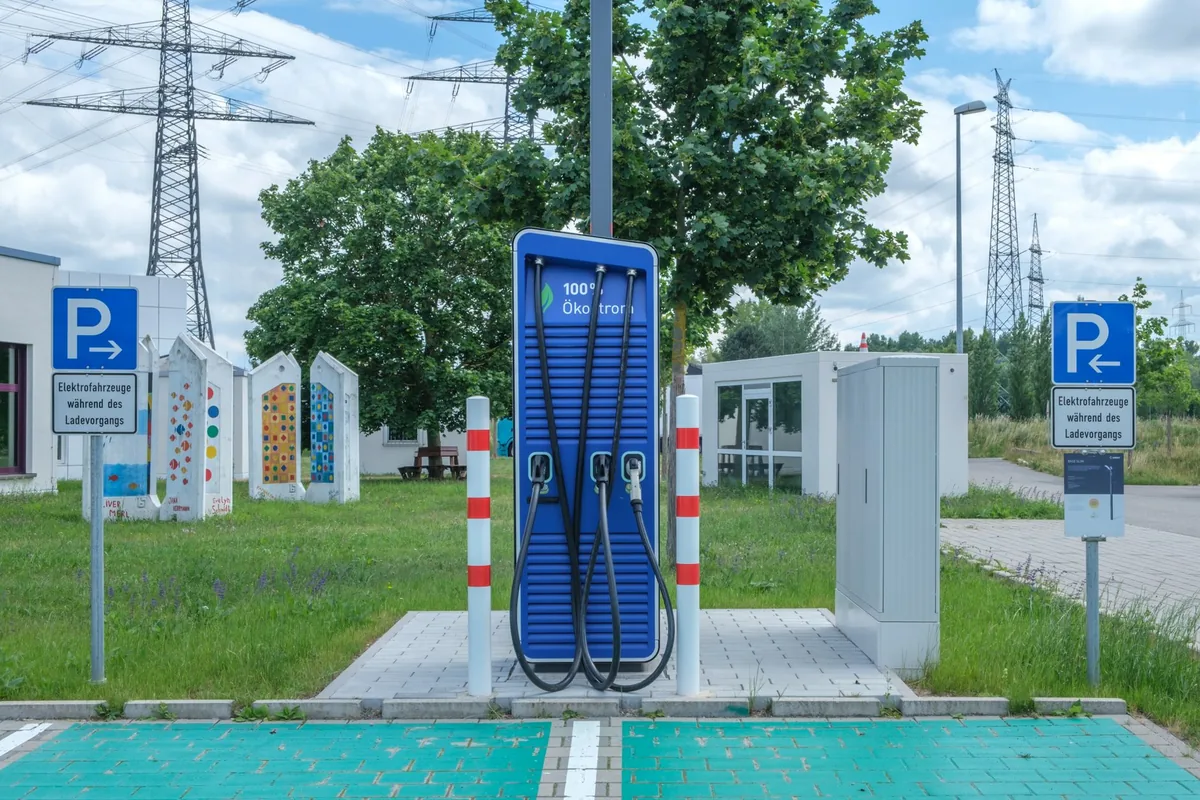
Public EV charging costs across Europe are not the same product as the electricity in your house, and they are not priced like it. The gap between the two decides whether an electric car saves you money or quietly costs you more than the petrol car it replaced.
This guide builds that comparison from 182 certified electric vehicle records and the verified household electricity price in each market we cover, then shows what happens to the annual bill when public charging is assessed at one and a half, two and three times the home rate. We hold no verified public or rapid charging tariff in any market, so we publish no tariff — we publish the multiple instead, labelled as an assumption you can replace with your own local price.
How this European public EV charging cost guide was built
Every efficiency figure here comes from the 182 certified electric vehicle records in the UK Vehicle Certification Agency dataset we hold — the official type-approval kWh per 100 km value for each model, not a real-world estimate. We then applied the verified household electricity rate for each market (Eurostat nrg_pc_204 household prices, second half of 2025, consumption band DC, including taxes) and a single annual distance of 15,000 km for every metric market.
The arithmetic is deliberately simple so you can redo it: annual kWh equals the certified kWh per 100 km multiplied by 150, and annual cost equals that figure multiplied by your home rate. We excluded any certified record outside 5.0 to 40.0 kWh per 100 km as implausible. None of the 182 VCA electric rows fell outside that window, so nothing was dropped and the population is complete.
The one thing this guide will not do is quote a public charging price. We hold no verified public or rapid charging tariff for any European market, so we do not publish a figure, a range or a subscription fee. Where public charging appears, it appears as a multiple of a number we can verify — the home rate.
Source: UK VCA certified data (182 electric rows) plus Eurostat household electricity, H2 2025. Public charging appears only as a stated multiple of the home rate.
Home electricity prices by market: the floor for EV running costs
Home charging sets the floor for what electric driving can cost, because it is the cheapest electricity you will ever put in the car. Using the typical electric car in our dataset, at an average of 17.5 kWh per 100 km — 17.48 before rounding — 15,000 km a year needs 2,619 kWh — which is the second column of the table below.
Finland is the cheapest market in our set at €0.225 per kWh, and France and the Netherlands follow at €0.256. The United Kingdom sits at £0.263, Spain at €0.267, Belgium at €0.35, Ireland at €0.38 and Germany at €0.387. Sweden is priced in kronor at 3.02 kr per kWh. The EU average household price in the same period was about €0.220 per kWh, so the expensive end of this table is roughly three quarters above the EU average.
| Market | Household rate | Typical EV: kWh per year | Charged at home per year | Per 100 km |
|---|---|---|---|---|
| Finland | €0.225 / kWh | 2,619 | €589 | €3.93 |
| France | €0.256 / kWh | 2,619 | €670 | €4.47 |
| Netherlands | €0.256 / kWh | 2,619 | €670 | €4.47 |
| United Kingdom | £0.263 / kWh | 2,619 | £689 | £4.59 |
| Spain | €0.267 / kWh | 2,619 | €699 | €4.66 |
| Belgium | €0.350 / kWh | 2,619 | €917 | €6.11 |
| Ireland | €0.380 / kWh | 2,619 | €995 | €6.63 |
| Germany | €0.387 / kWh | 2,619 | €1,013 | €6.76 |
| Sweden | 3.02 kr / kWh | 2,619 | 7,909 kr | 52.73 kr |
| EU average | €0.220 / kWh | 2,619 | €576 | €3.84 |
What the typical electric car actually uses
Across the 182 certified electric rows the average consumption is 17.5 kWh per 100 km and the median is 16.9, so the middle of the market is a little more efficient than the mean. That mean is the number we use as the typical car throughout this guide, and at 15,000 km it translates to 2,619 kWh a year.
The interesting part is how wide the certified range is: 10.9 kWh per 100 km at the efficient end and 30.3 at the inefficient end, a spread of 2.78 times. Electric cars are often described as all being cheap to run, and on energy price per unit that is nearly true, but a large electric SUV or van can use almost three times the electricity of a small electric city car for the same distance.
EV efficiency leaderboard: 10.9 to 30.3 kWh per 100 km
The efficient end of the certified table is dominated by small cars, and the 2026 Mini Aceman leads it at 10.9 kWh per 100 km. The Mercedes-Benz CLA Saloon (12.2), Dacia Spring (12.5), Fiat 500 (13.3), Tesla Model 3 (13.8) and the Mini Cooper Electric, Peugeot 2008 and Tesla Model Y, all at 14.2, follow. Several of the cars at 14.2 are family-sized and still land within a third of the leader, which shows how much of the efficiency question is aerodynamics rather than vehicle size.
The inefficient end is where the money moves. The 2026 Mercedes-Benz G-Class is certified at 30.3 kWh per 100 km, the Peugeot e-Traveller van at 28.2, the Toyota Proace Verso EV at 25.1, the Lotus Eletre at 24.1, and the large Mercedes-Benz EQS SUV and Kia EV9 at 22.9 and 22.8. These are heavy vehicles with large frontal areas, and the certified figure reflects that honestly.
| Make | Model | Year | kWh / 100 km | kWh per year at 15,000 km |
|---|---|---|---|---|
| Mini | Aceman | 2026 | 10.9 | 1,635 |
| Mercedes-Benz | CLA Saloon | 2026 | 12.2 | 1,830 |
| Dacia | Spring | 2026 | 12.5 | 1,875 |
| Fiat | 500 | 2025 | 13.3 | 1,995 |
| Tesla | Model 3 | 2026 | 13.8 | 2,070 |
| Mini | Cooper Electric | 2026 | 14.2 | 2,130 |
| Peugeot | 2008 | 2026 | 14.2 | 2,130 |
| Tesla | Model Y | 2026 | 14.2 | 2,130 |
| Mercedes-Benz | EQS SUV | 2026 | 22.9 | 3,435 |
| Kia | EV9 | 2025 | 22.8 | 3,420 |
| Lotus | Eletre | 2026 | 24.1 | 3,615 |
| Toyota | Proace Verso EV | 2024 | 25.1 | 3,765 |
| Peugeot | e-Traveller | 2026 | 28.2 | 4,230 |
| Mercedes-Benz | G-Class | 2026 | 30.3 | 4,545 |
What the efficiency spread costs you at 15,000 km
The difference between the most and least efficient electric car in the population is 2,910 kWh a year — 1,635 kWh for the Mini Aceman against 4,545 kWh for the G-Class. At Ireland's €0.38 per kWh that gap is worth about €1,106 a year before any public charging premium is considered. At Germany's €0.387 it is €1,126, at Belgium's €0.35 about €1,019, at Spain's €0.267 about €777, and at France or the Netherlands about €745.
In the cheap markets the same gap is smaller but still material: about €655 in Finland at €0.225 per kWh, and 8,788 kr in Sweden at 3.02 kr per kWh. The lesson is that the choice of model matters as much as the choice of country. A driver in Finland with an inefficient electric SUV can spend more on electricity than a driver in Ireland with an efficient electric hatchback, and the second column of the table above shows exactly where each one lands.
Cost to replenish an EV at 15,000 km, market by market
The table below holds the two extremes together with the typical car. Column three is the most efficient electric car in the dataset, column four the least efficient, both driven 15,000 km and charged entirely at home at that market's verified rate.
The pattern is consistent: the efficient car costs roughly 62% of the typical car, and the inefficient car about 174% of it, in every market. Only the absolute numbers change. In Finland the efficient end costs €368 a year and the inefficient end €1,023; in Germany the same two cars cost €633 and €1,759.
| Market | Most efficient EV | Typical EV | Least efficient EV |
|---|---|---|---|
| Finland | €368 | €589 | €1,023 |
| France | €419 | €670 | €1,164 |
| Netherlands | €419 | €670 | €1,164 |
| United Kingdom | £430 | £689 | £1,195 |
| Spain | €437 | €699 | €1,214 |
| Belgium | €572 | €917 | €1,591 |
| Ireland | €621 | €995 | €1,727 |
| Germany | €633 | €1,013 | €1,759 |
| Sweden | 4,938 kr | 7,909 kr | 13,726 kr |
Why public charging costs more than home charging
A home charge is a commodity: you buy kilowatt-hours at the domestic retail rate and the hardware cost is spread over years. A public charge is a service. Behind the price sit the purchase and installation of the unit, the electrical connection and any grid upgrade, the rent or lease on the parking space, maintenance and fault response, payment processing, network roaming fees, and the operator's margin.
Rapid DC charging adds a much more expensive machine and, in several markets, demand charges based on peak power drawn rather than energy delivered. Those costs do not scale with how much electricity a driver takes, so a charger that sits empty still has to be paid for, and the price per kWh has to carry it. This is the structural reason public charging cannot be sold at the domestic commodity rate, and it is why the same car can cost twice as much to run on public charging as it does at home.
The practical consequence for a European driver is that the energy saving from an electric car is created at home, at work, or wherever a low-cost slow charger is available overnight. Every kilometre that has to be bought at a public bay buys back some of that saving. If all of your charging is public, the fuel advantage over petrol narrows sharply, and in the most expensive electricity markets it can close.
Public charging costs as a multiple of the home rate: the 1.5x, 2x and 3x grid
We cannot quote a public charging tariff, because we hold no verified one in any market. What we can do is show the arithmetic honestly. The grid below takes the typical electric car at 2,619 kWh a year and prices it at the verified home rate, then at one and a half, two and three times that rate. The multiples are assumptions, chosen to bracket what most European drivers report paying relative to their domestic rate, and they are labelled as assumptions wherever they appear.
Read the grid as a sensitivity test rather than a price list. If your own public rate is somewhere between the home rate and twice it, your answer sits in the first two columns. If you rely on motorway rapid charging, the right-hand columns are the honest place to look.
| Market | Home | 1.5x | 2x | 3x |
|---|---|---|---|---|
| Finland | €589 | €884 | €1,178 | €1,768 |
| France | €670 | €1,006 | €1,341 | €2,011 |
| Netherlands | €670 | €1,006 | €1,341 | €2,011 |
| United Kingdom | £689 | £1,033 | £1,377 | £2,066 |
| Spain | €699 | €1,049 | €1,398 | €2,098 |
| Belgium | €917 | €1,375 | €1,833 | €2,750 |
| Ireland | €995 | €1,493 | €1,990 | €2,985 |
| Germany | €1,013 | €1,520 | €2,027 | €3,040 |
| Sweden | 7,909 kr | 11,863 kr | 15,818 kr | 23,726 kr |
The 1.5x, 2x and 3x columns are stated assumptions, not quoted tariffs. We hold no verified public charging price in any European market, so we do not publish one.
What the 3x case adds to an annual charging bill
Multiples hide the size of the number, so here is the same grid expressed as extra euros on the year. Charging entirely at home in Germany costs €1,013 a year for the typical car. At two times the home rate it costs €2,027, and at three times €3,040 — an extra €2,027 a year, which is more than twice the original bill.
Ireland behaves the same way in euro terms: €995 at home becomes €2,985 at three times the rate, an extra €1,990. In the United Kingdom the swing is £689 to £2,066, an extra £1,377. Even in Finland, the cheapest electricity market we cover, the three-times case adds €1,178 a year. These are not small numbers in a running-cost calculation — the public charging premium is often larger than the difference between two comparable cars.
| Market | Home per year | 1.5x adds | 2x adds | 3x adds |
|---|---|---|---|---|
| Finland | €589 | +€295 | +€589 | +€1,178 |
| France | €670 | +€335 | +€670 | +€1,341 |
| Netherlands | €670 | +€335 | +€670 | +€1,341 |
| United Kingdom | £689 | +£344 | +£689 | +£1,377 |
| Spain | €699 | +€350 | +€699 | +€1,398 |
| Belgium | €917 | +€458 | +€917 | +€1,833 |
| Ireland | €995 | +€498 | +€995 | +€1,990 |
| Germany | €1,013 | +€507 | +€1,013 | +€2,027 |
| Sweden | 7,909 kr | +3,954 kr | +7,909 kr | +15,818 kr |
Cost per 100 km at home and on public charging
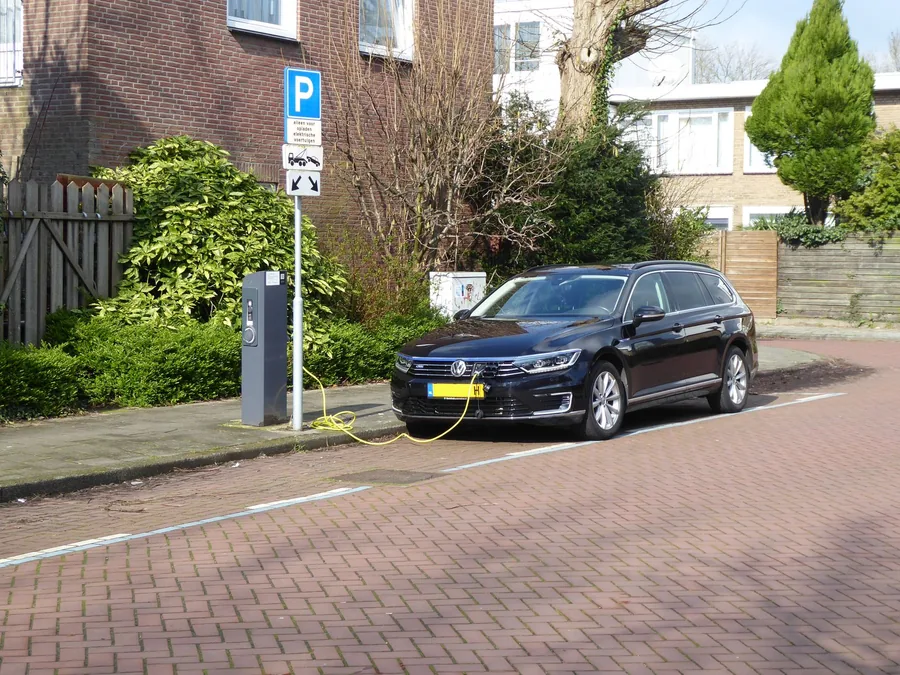
Annual totals are useful for a budget, but the per-100-km figure is what you feel week to week. The typical electric car in our dataset needs 17.5 kWh to cover 100 km, which at Finland's €0.225 per kWh is €3.93 and at Germany's €0.387 is €6.76. The United Kingdom lands at £4.59 and Sweden at 52.73 kr.
Apply the same multiples and the picture changes quickly. The same car, on the same road, costs €13.41 per 100 km at two times the home rate in France and €20.27 at three times the home rate in Germany. The gap between the cheapest and most expensive market is a factor of roughly 1.7 at home — Finland against Germany — but the gap between home and public charging within a single country is larger than that in every market.
| Market | Home per 100 km | 1.5x | 2x | 3x |
|---|---|---|---|---|
| Finland | €3.93 | €5.89 | €7.86 | €11.78 |
| France | €4.47 | €6.70 | €8.94 | €13.41 |
| Netherlands | €4.47 | €6.70 | €8.94 | €13.41 |
| United Kingdom | £4.59 | £6.89 | £9.18 | £13.77 |
| Spain | €4.66 | €6.99 | €9.32 | €13.98 |
| Belgium | €6.11 | €9.17 | €12.22 | €18.33 |
| Ireland | €6.63 | €9.95 | €13.27 | €19.90 |
| Germany | €6.76 | €10.13 | €13.51 | €20.27 |
| Sweden | 52.73 kr | 79.09 kr | 105.45 kr | 158.18 kr |
Where public charging erodes the EV advantage: petrol as the yardstick
To see what the multiples actually mean, compare them with petrol. The 217 certified petrol cars in the same VCA dataset average 8.73 litres per 100 km, which at Ireland's €1.84 per litre is €16.07 per 100 km and at Germany's €2.236 per litre is €19.52. The typical electric car at home needs €6.63 in Ireland and €6.76 in Germany to cover the same 100 km.
At home, the electric car therefore costs well under half the petrol car in every market we cover. The final column of the table shows the multiple at which public charging would bring the electric car level with the dataset-average petrol car. In Ireland that happens at about 2.42 times the home rate; in Belgium at 2.69, Germany at 2.89 and the United Kingdom at 3.12. In Spain the electric car survives to 3.25 times, in France to 4.05, in the Netherlands to 4.59 and in Finland to 4.90.
Two things follow. First, home charging is not a marginal advantage — it is the advantage. Second, the markets where electric driving is most exposed to public charging are the ones with expensive household electricity and cheap petrol relative to it, which is why Ireland's break-even multiple is the lowest in this table.
| Market | Petrol per 100 km | EV at home | EV at 2x | EV at 3x | Petrol matched at |
|---|---|---|---|---|---|
| Ireland | €16.07 | €6.63 | €13.27 | €19.90 | 2.42x |
| Belgium | €16.46 | €6.11 | €12.22 | €18.33 | 2.69x |
| Germany | €19.52 | €6.76 | €13.51 | €20.27 | 2.89x |
| United Kingdom | £14.32 | £4.59 | £9.18 | £13.77 | 3.12x |
| Spain | €15.13 | €4.66 | €9.32 | €13.98 | 3.25x |
| France | €18.10 | €4.47 | €8.94 | €13.41 | 4.05x |
| Netherlands | €20.52 | €4.47 | €8.94 | €13.41 | 4.59x |
| Finland | €19.24 | €3.93 | €7.86 | €11.78 | 4.90x |
The mixed-use driver: what share of your kilometres is public
Almost nobody charges entirely at home or entirely in public. The realistic question is what proportion of your annual kilometres is bought at a public bay. The table below answers it for the typical electric car in Ireland, whose home rate of €0.38 per kWh makes it the market where the public share hurts most, with public charging assumed at two times the home rate.
At 100% home charging the year costs €995. Moving a tenth of the distance to public charging adds about €100; a third of the distance adds roughly €300; and a half of it makes the year €1,493, half again higher than the all-home figure. The same shape appears in every market, scaled by the home rate. If you drive 15,000 km a year, the difference between charging at home nine nights in ten and charging in public half the time is a few hundred euros a year, and it is entirely within your control.
| Share of kilometres in public | Annual cost in Ireland |
|---|---|
| 0% public | €995 |
| 10% public | €1,095 |
| 20% public | €1,194 |
| 30% public | €1,294 |
| 40% public | €1,393 |
| 50% public | €1,493 |
Public charging is modelled at two times the home rate, a stated assumption rather than a quoted tariff.
Ireland: the most expensive household electricity in the EU
Ireland is the most expensive household electricity market in the European Union on Eurostat's comparison, and that single fact shapes the entire charging conversation there. At €0.38 per kWh, the typical electric car costs €995 a year to run at home, and the least efficient electric car in our dataset costs €1,727 — against €621 for the most efficient, the Mini Aceman.
Per 100 km, home charging in Ireland costs €6.63, which is 69% more than Finland and 48% more than France. The petrol yardstick shows how narrow the margin becomes: an average Irish petrol car at 8.73 litres per 100 km and €1.84 per litre costs €16.07 per 100 km, so the electric car is comfortably ahead at home but only moderately ahead at two times the home rate, and more expensive than petrol at three times it.
Ireland also charges the highest motor tax band reference in our factsheet at about €210 a year for the 111-120 g/km band, and the NCT costs €55 every two years. Neither changes the charging arithmetic, but both belong in the total cost of ownership picture when you compare an electric car with a petrol one — see the car ownership cost calculator for that.
Germany, Belgium and the United Kingdom: high rates, bigger penalty
Germany has the highest household electricity rate of the euro markets we cover at €0.387 per kWh, and it also has some of the most expensive petrol at €2.236 per litre. That combination produces the biggest annual charging bill in the table — €1,013 at home for the typical car, €1,759 for the least efficient — while keeping the electric car clearly ahead of petrol, since an average petrol car there costs €19.52 per 100 km against €6.76 at the socket.
Belgium at €0.35 and the United Kingdom at £0.263 sit between the expensive and cheap ends. Belgium's home charging costs €917 a year for the typical car, and the petrol break-even multiple is 2.69, the second lowest in our set. The United Kingdom is cheaper per kWh and its petrol costs less per litre relative to household electricity, so the electric car survives a larger public charging premium — 3.12 times the home rate — before average petrol catches it.
All three markets share the same practical rule: the higher the household rate, the more a driver loses by relying on public charging, because the public premium is applied to an already expensive base.
France, the Netherlands, Spain and Finland: where home charging is cheapest
At the other end, France and the Netherlands share a verified household rate of €0.256 per kWh, Spain is €0.267 and Finland is the cheapest at €0.225. For the typical electric car these mean €670, €699 and €589 a year respectively, and per 100 km they work out at €4.47 in France and the Netherlands, €4.66 in Spain and €3.93 in Finland.
These are also the markets where public charging is least damaging, not because public charging is cheaper there, but because the petrol alternative is comparatively expensive. An average petrol car in the Netherlands costs €20.52 per 100 km at €2.35 per litre, so the electric car at home costs less than a quarter as much and would need public charging at 4.59 times the home rate to be matched. France's figure is 4.05 and Finland's 4.90, the highest in our set.
The honest conclusion for a driver in these markets is that home charging creates a large enough margin to absorb a substantial public charging premium without losing the advantage. That margin is a reason to buy an electric car, and a reason to keep the home charger in the plan.
Sweden: the krone market and the September 2026 fuel-tax change
Sweden is priced in kronor across this guide. Household electricity is 3.02 kr per kWh in our verified constants, which puts the typical electric car at 7,909 kr a year over 15,000 km, the least efficient car in the dataset at 13,726 kr and the most efficient at 4,938 kr. Per 100 km the typical figure is 52.73 kr.
Sweden is also the market where fuel taxation is changing. The verified petrol price is 16.4 kr per litre and diesel 19.29 kr per litre, and the temporary fuel-tax cut that brought Swedish rates to the EU minimum levels expires on 30 September 2026. If that cut is not extended, the cost of the petrol alternative rises while the electricity figure does not — which widens the electric car's advantage in kronor without changing anything about charging itself.
The Swedish running-cost picture is also shaped by fixed charges: besiktning costs about 500 kr and fordonsskatt about 1,200 kr a year for a typical used car in our factsheet reference. Neither is a fuel cost, but both sit alongside the charging bill in an annual budget.
The other costs that sit alongside charging
Charging is the variable a driver controls, but it is not the whole running cost. Servicing is usually cheaper on an electric car because there is no oil, clutch, timing belt or exhaust to replace, and regenerative braking extends brake life. Against that, electric cars are heavy, so tyres wear faster and a set can cost more than on a comparable petrol hatchback.
Insurance varies widely by insurer, model and driver, and expensive electric cars are often more expensive to insure because a repair bill is larger. Depreciation is the biggest single cost for most owners and follows general market behaviour: roughly 15 to 25% in the first year and about 50% over five years for a typical new car, with electric models varying more than combustion cars as battery technology and model ranges keep moving.
Annual road tax references vary by market too. Our verified figures include about €210 a year in Ireland for the 111-120 g/km band, around £190 a year in the United Kingdom for the 111-130 g/km band, roughly €180 a year of typical Kfz-Steuer for a petrol car in Germany, about €700 a year of weight and province dependent MRB in the Netherlands and about €270 a year of typical verkeersbelasting in Belgium. France charges no annual road tax for private cars, using a one-off carte grise instead.
Inspections and annual charges across the markets we cover
Testing and annual charges are small compared with energy, but they are part of the same budget and they differ enough between markets to matter when you are comparing total running costs across a move or a purchase.
The table collects the verified figures in our factsheet. Note that these are reference costs, not universal prices: inspection fees vary by station and region, and road tax rules change frequently, so always confirm the current charge with the national authority before relying on it in a budget.
| Market | Periodic test | Road tax reference |
|---|---|---|
| Ireland | NCT €55 every 2 years | ~€210/year (111-120 g/km band) |
| United Kingdom | MOT £54.85 cap | ~£190/year (111-130 g/km band) |
| Germany | HU/AU (TÜV) ~€160 | ~€180/year typical petrol |
| France | contrôle technique ~€78 | no annual tax for private cars |
| Spain | ITV ~€45 (regional €21-64) | IVTM ~€60/year (Madrid 8-11.99 hp) |
| Netherlands | APK ~€65 | MRB ~€700/year (weight dependent) |
| Finland | katsastus ~€55 | ajoneuvovero ~€190/year (CO2 based) |
| Sweden | besiktning ~500 kr | fordonsskatt ~1,200 kr/year typical used |
| Belgium | contrôle technique ~€46 (Flanders) | verkeersbelasting ~€270/year typical |
How to keep your charging cost per kilometre down
The arithmetic in this guide points to a short list of decisions that matter, in order of how much they change the annual bill.
- Charge at home whenever you can. It is the cheapest electricity the car will ever take, and every kilometre moved from public to home charging removes part of the premium.
- Choose the efficient end of the market if you drive a lot. The gap between 10.9 and 30.3 kWh per 100 km is worth about €1,106 a year in Ireland and €655 in Finland at home rates alone.
- Ask about workplace charging before assuming you need public bays; a subsidised workplace point does the same job as a home one during the working day.
- Look for a home tariff with a cheap night window if your supplier offers one, and set the car to charge inside it rather than on arrival.
- On long trips, plan a top-up at a cheaper charger near your destination instead of buying the whole journey at motorway rapid prices.
- Compare rates per kWh rather than per minute, and check whether the operator charges a connection or parking fee on top, since a cheaper headline rate is not always the cheaper session.
What this guide deliberately does not tell you
We do not publish a public charging price, and that is a deliberate limit rather than an omission. Public charging tariffs in Europe vary by network, by country, by whether you hold a subscription and by whether you pay per kWh or per minute, and we hold no verified figure for any of them. Any number we printed here would be a guess dressed as data.
We also do not model charging losses, cold-weather penalties or pre-conditioning, all of which push real consumption above the certified figure — winter range loss is a well-documented phenomenon and it increases the electricity you buy for the same distance. The certified kWh per 100 km values are the only consistent, legally mandated basis for comparing models, and they are a ranked index rather than a promise.
Finally, the annual costs here cover energy only. Insurance, servicing, tyres, finance, depreciation and annual charges are excluded from the tables, and mileage other than 15,000 km a year scales every figure linearly. Put your own distance and your own rate into the EV charging calculator and the electric car cost calculator to see your number rather than the average driver's.
Use the free calculators
Frequently asked questions
Is public EV charging more expensive than petrol?
Per kilometre, it can be. In our dataset the average petrol car costs about €16 per 100 km in Ireland and the typical electric car costs €6.63 at home, so public charging would need to be roughly 2.4 times the home rate to match petrol there. At 3 times the home rate the electric car costs more. Home charging is far cheaper than petrol almost everywhere.
Why do you not publish public charging prices for each country?
Because we hold no verified public or rapid charging tariff for any European market. Public prices vary by network, subscription, country and by whether you pay per kWh or per minute, and we will not print a figure we cannot verify. Instead we express public charging as 1.5x, 2x and 3x the verified home rate, clearly labelled as an assumption.
How much does it cost to charge an electric car at home in Europe?
For the typical electric car in our dataset using 17.5 kWh per 100 km over 15,000 km, home charging costs about €589 a year in Finland at €0.225 per kWh, €670 in France and the Netherlands, £689 in the United Kingdom, €917 in Belgium, €995 in Ireland and €1,013 in Germany at €0.387 per kWh.
How much electricity does a typical electric car use per 100 km?
Across the 182 certified electric records we analysed, the average is 17.5 kWh per 100 km and the median 16.9. The most efficient car is certified at 10.9 kWh per 100 km and the least efficient at 30.3, a spread of 2.78 times. That spread is worth roughly €1,106 a year in Ireland at home rates over 15,000 km.
Which European country has the cheapest electricity for EV charging?
Among the markets we cover, Finland is cheapest at €0.225 per kWh, followed by France and the Netherlands at €0.256, then Spain at €0.267 and the United Kingdom at £0.263. Ireland at €0.38 and Germany at €0.387 are the expensive end, and the EU average is about €0.220 per kWh.
What does the 3x public charging column actually assume?
It assumes energy from a public charge point costs three times your verified home rate, which is a stated assumption rather than a quoted tariff. Applied to the typical electric car over 15,000 km it means €3,040 a year in Germany, €2,985 in Ireland and £2,066 in the United Kingdom. Check your own public rate before using it.