Cheapest New Cars in Ireland 2026: Prices, Running Costs and What Fits Your Budget
Looking for the cheapest new car in Ireland in 2026, or a new car price list you can actually trust, usually turns up the same problem: nobody publishes what a new car costs to buy. The certified vehicle database has a column for consumption, a column for CO₂ and no price column at all. So this guide prices the part that is published — what every new car costs to run.
We take official WLTP-certified figures from the UK's Vehicle Certification Agency, covering 2024-2026 models sold in Ireland, add Revenue's 2026 motor tax bands, and turn them into a running-cost list you can compare line by line: the cheapest models to run in each powertrain, their annual fuel or electricity bills, and how to work out which one fits your budget.
What 'Cheapest' Really Means for a New Car in Ireland
When searching for the 'cheapest' new car, it's essential to look beyond the initial sticker price. True affordability is a combination of upfront cost, ongoing running expenses like fuel or electricity, annual motor tax, and periodic maintenance such as the NCT. While official data can provide precise figures for consumption and tax, purchase prices are notoriously variable and depend heavily on dealership negotiations, available offers, and specific trim levels.
This analysis relies on official certified figures for fuel and electricity consumption, and government-mandated motor tax rates for 2026. We use data from the UK's Vehicle Certification Agency (VCA), which adheres to EU WLTP standards, ensuring a consistent basis for comparing vehicle efficiency across different models and powertrains available in the Irish market.
Ireland's Cheapest New Cars by Efficiency (2024-2026 Models)
Fuel efficiency is a primary driver of lower running costs. In Ireland's 2026 market, hybrid vehicles consistently lead the efficiency charts, often surpassing even the most economical petrol and diesel cars. Electric vehicles (EVs) offer the lowest 'fuel' cost per kilometre and benefit from the lowest motor tax bracket due to zero CO₂ emissions, though their initial purchase price may be higher.
Based on official VCA data for 2024-2026 models, the following cars represent the pinnacle of efficiency, offering the best starting point for calculating overall cost of ownership.
| Rank | Make | Model | Year | Consumption | CO₂ | Motor Tax | Annual Fuel (15k km) |
|---|---|---|---|---|---|---|---|
| 1 | Mazda | Mazda2 Hybrid | 2026 | 3.8 L/100km | 87 | €190 | €1,688 |
| 2 | Toyota | Aygo X HEV | 2026 | 3.8 L/100km | 87 | €190 | €1,688 |
| 3 | Toyota | Yaris | 2026 | 4.2 L/100km | 95 | €200 | €1,866 |
| 4 | Renault | Clio E-Tech | 2026 | 4.3 L/100km | 97 | €210 | €1,910 |
| 5 | Toyota | Yaris Hybrid | 2026 | 4.3 L/100km | 96 | €210 | €1,910 |
| 6 | MG | MG 3 Hybrid+ | 2026 | 4.4 L/100km | 100 | €210 | €1,954 |
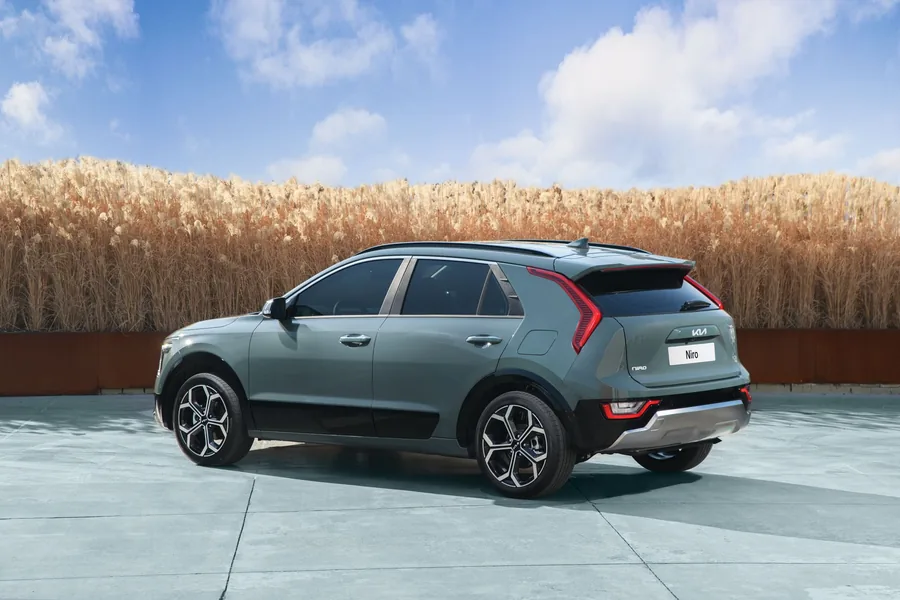
| 7 | Kia | Niro HEV | 2025/26 | 4.6 L/100km | 105 | €225 | €2,043 |
| 8 | Lexus | LBX | 2026 | 4.6 L/100km | 103 | €225 | €2,043 |
| 9 | Dacia | Bigster Hybrid | 2026 | 4.7 L/100km | 106 | €235 | €2,088 |
| 10 | Honda | Jazz Hybrid | 2026 | 4.7 L/100km | 106 | €235 | €2,088 |
Understanding Ireland's Motor Tax System for New Cars
Ireland's motor tax system is structured to encourage the adoption of lower-emission vehicles, directly impacting the overall cost of car ownership. The tax is primarily based on a vehicle's CO₂ emissions.
Cars emitting 50g/km or less, which includes most electric vehicles and highly efficient hybrids, fall into the lowest tax bracket, costing €120 annually. This fixed rate provides a predictable and substantial saving for EV owners. As CO₂ emissions increase, the motor tax liability rises accordingly.
For example, vehicles emitting between 111-115g/km face an annual tax of €250. This amount increases progressively, reaching up to €750 for cars emitting 196-200g/km. For higher-emission petrol and diesel cars, exceeding 225g/km, the annual motor tax can be substantially higher, potentially exceeding €2,400.
| CO₂ Emissions (g/km) | Annual Motor Tax | Applicable Fuel Types |
|---|---|---|
| 0-50 | €120 | Electric, Hybrid |
| 51-80 | €170 | Hybrid, Petrol |
| 81-85 | €180 | Hybrid, Petrol |
| 86-90 | €190 | Hybrid, Petrol |
| 91-95 | €200 | Hybrid, Petrol |
| 96-100 | €210 | Hybrid, Petrol |
| 101-105 | €225 | Hybrid, Petrol |
| 106-110 | €235 | Hybrid, Petrol |
| 111-115 | €250 | Hybrid, Petrol |
| 116-120 | €260 | Hybrid, Petrol |
| 121-125 | €270 | Petrol, Diesel |
| 126-130 | €280 | Petrol, Diesel |
| 131-135 | €300 | Petrol, Diesel |
| 136-140 | €330 | Petrol, Diesel |
| 141-145 | €360 | Petrol, Diesel |
| 146-150 | €390 | Petrol, Diesel |
| 151-155 | €420 | Petrol, Diesel |
| 156-160 | €455 | Petrol, Diesel |
| 161-165 | €485 | Petrol, Diesel |
| 166-170 | €520 | Petrol, Diesel |
| 171-175 | €555 | Petrol, Diesel |
| 176-180 | €590 | Petrol, Diesel |
| 181-185 | €630 | Petrol, Diesel |
| 186-190 | €670 | Petrol, Diesel |
| 191-195 | €710 | Petrol, Diesel |
| 196-200 | €750 | Petrol, Diesel |
| 201-225 | €1,200 | Petrol, Diesel |
| >225 | €2,400+ | Petrol, Diesel |
Motor tax rates based on Revenue.ie guidelines for 2026. Figures are illustrative and may vary based on specific vehicle variants.
Electric Vehicles: The Lowest Running Costs for Irish Drivers
Electric vehicles (EVs) offer the lowest running costs due to significantly cheaper 'fuel' (electricity) and zero CO₂ emissions, placing them in the lowest motor tax bracket (€120 annually). While their initial purchase price can be higher, the long-term savings are substantial.
At 15,000 km annually, the Mini Aceman (10.9 kWh/100km) would cost approximately €621 for electricity. Combined with the lowest motor tax and averaged NCT costs, the total annual running expenses hover around €769, making EVs a compelling choice for budget-conscious drivers.
| Make | Model | Year | Consumption | Annual Electricity (15k km) | Motor Tax | NCT (avg/yr) | Total Annual Running |
|---|---|---|---|---|---|---|---|
| Mini | Aceman | 2026 | 10.9 kWh/100km | €621 | €120 | €27.50 | ~€769 |
| Mercedes-Benz | CLA Saloon | 2026 | 12.2 kWh/100km | €695 | €120 | €27.50 | ~€843 |
| Dacia | Spring | 2026 | 12.5 kWh/100km | €713 | €120 | €27.50 | ~€861 |
| Fiat | 500e | 2025 | 13.3 kWh/100km | €758 | €120 | €27.50 | ~€905 |
| Tesla | Model 3 | 2026 | 13.8 kWh/100km | €787 | €120 | €27.50 | ~€935 |
Electricity cost based on €0.38/kWh (Eurostat H2-2025). Motor tax is fixed at €120 for EVs. NCT cost averaged (€55 every 2 years). Purchase price excluded.
Petrol and Diesel Cars: A Varied Cost Landscape
Petrol and diesel cars present a wider range of costs, heavily dependent on engine size, efficiency, and CO₂ emissions. While they might offer a lower initial purchase price, their running costs can escalate significantly, particularly with higher motor tax bills for less efficient models.
The Skoda Fabia (petrol) offers an annual fuel cost of €2,310, with motor tax around €260. The Skoda Octavia (diesel) comes in slightly higher for fuel at €2,178 but has a higher motor tax of €270. These figures highlight the trade-offs between different powertrain types.
| Make | Model | Year | Fuel Type | Consumption | Annual Fuel (15k km) | Motor Tax (typical) | NCT (avg/yr) | Total Annual Running |
|---|---|---|---|---|---|---|---|---|
| Skoda | Fabia Hatch | 2026 | Petrol | 5.2 L/100km | €2,310 | €260 | €27.50 | ~€2,598 |
| Renault | Clio | 2026 | Petrol | 5.3 L/100km | €2,354 | €260 | €27.50 | ~€2,641 |
| Hyundai | i10 | 2024/25 | Petrol | 5.4 L/100km | €2,399 | €270 | €27.50 | ~€2,697 |
| Skoda | Octavia Estate | 2026 | Diesel | 4.7 L/100km | €2,178 | €270 | €27.50 | ~€2,475 |
| VW | Golf Estate | 2026 | Diesel | 4.8 L/100km | €2,225 | €270 | €27.50 | ~€2,523 |
Annual Fuel based on 15,000 km at August 2026 prices. Motor Tax figures are typical bands for CO₂ emissions. NCT cost averaged.
The Official Data Landscape: What's Included and What's Not
It is crucial to understand the scope of the official data used in this analysis. The primary source, the UK's VCA database (encompassing EU WLTP figures for 2024-2026 models), provides verifiable technical specifications related to vehicle consumption and CO₂ emissions.
However, this data does not include essential financial figures like purchase prices. These vary significantly between dealerships, trim levels, and ongoing market offers, making them impossible to source reliably from official databases. Therefore, this guide cannot declare the absolute 'cheapest' new car by purchase price.
Furthermore, costs related to insurance, routine servicing, tyre replacements, unexpected repairs, and depreciation are also excluded. These expenses are highly individual, depending on factors like driver history, location, chosen garage, and the vehicle's usage and condition over time. The NCT cost is included as an averaged annual figure for consistency.
- Included data: Official WLTP consumption (L/100km, kWh/100km), CO₂ emissions (g/km), Motor Tax bands (based on CO₂).
- Excluded data: Purchase price, insurance costs, servicing estimates, tyre replacement costs, repair costs, depreciation values.
- Reference prices: Fuel costs based on EU Oil Bulletin (Aug 2026), Electricity based on Eurostat (H2-2025).
- NCT cost is averaged (€55 every 2 years for cars over 4 years old).
Navigating Ireland's Motor Tax System in Detail
Ireland's motor tax system is a key financial consideration for any new car owner. It is fundamentally tiered based on CO₂ emissions, directly encouraging drivers to opt for vehicles that produce less pollution.
The lowest tax band, €120 annually, is reserved for vehicles emitting 50g/km or less. This category predominantly includes electric vehicles and some highly efficient hybrids. As emissions rise, so does the tax burden. For example, cars emitting between 111-115g/km face an annual tax of €250. This amount increases progressively, reaching up to €750 for cars emitting 196-200g/km.
For vehicles with higher emissions (over 200g/km), the annual motor tax can be substantially higher, starting at €1,200 for the 201-225g/km band and escalating to €2,400+ for those exceeding 225g/km. This clear financial incentive underscores the long-term value of choosing a more environmentally friendly vehicle.
Electric Car Charging Costs: Home vs. Public
While EVs boast the lowest running costs, the price of electricity and your charging habits play a crucial role. Home charging is generally the most economical option, with costs varying based on your electricity tariff.
Public charging costs can fluctuate. Using the average rate of €0.38/kWh, charging an EV like the Mini Aceman (10.9 kWh/100km) for 15,000 km annually equates to approximately €621. This figure is significantly lower than the fuel cost for comparable petrol or diesel cars. However, it's important to consider that public charging infrastructure and pricing can differ across regions in Ireland.

| Vehicle | Consumption | Annual Electricity Cost (15k km) | Typical Public Charging Rate |
|---|---|---|---|
| Mini Aceman | 10.9 kWh/100km | €621 | ~€0.38/kWh |
| Mercedes-Benz CLA Saloon | 12.2 kWh/100km | €695 | ~€0.38/kWh |
| Dacia Spring | 12.5 kWh/100km | €713 | ~€0.38/kWh |
| Fiat 500e | 13.3 kWh/100km | €758 | ~€0.38/kWh |
| Tesla Model 3 | 13.8 kWh/100km | €787 | ~€0.38/kWh |
Electricity cost based on an average rate of €0.38/kWh (Eurostat H2-2025). Annual electricity cost assumes 15,000 km driven. Public charging rates may vary.
The NCT: A Fixed Cost for Vehicle Roadworthiness
The National Car Test (NCT) is a mandatory vehicle inspection for safety, roadworthiness, and emissions. It becomes compulsory for cars four years after their initial registration and is required every two years thereafter.
The standard fee for an NCT is €55. When averaged over its two-year validity period, this contributes approximately €27.50 annually to the total cost of running a car. While not a major expense compared to fuel or tax, it's a consistent factor in the overall cost of car ownership in Ireland.
The Crucial Role of Purchase Price: Why It's Not in the Data
A key point to remember is that this analysis exclusively covers running costs and tax, as official data sources like the VCA do not provide purchase prices. The initial cost of a new car is highly variable, influenced by dealership markups, ongoing promotions, optional extras, and market demand.
Therefore, while we can identify the most efficient and tax-friendly vehicles, determining the absolute 'cheapest' new car requires prospective buyers to obtain specific quotes from multiple dealerships. This figure will significantly impact the overall affordability, especially when considering financing options or lease agreements.
Making the Smart Choice: Balancing Costs for Your Next Car
Selecting the cheapest new car in Ireland for 2026 involves a holistic view of expenses. While the purchase price is a major factor, the long-term savings from fuel efficiency, lower motor tax, and predictable running costs can make a substantial difference.
Electric vehicles and hybrids offer compelling advantages in lower running costs and motor tax. By carefully considering your annual mileage, typical driving conditions, and the trade-offs between initial outlay and ongoing expenses, you can make an informed decision that best suits your budget and needs.
Comparing Running Costs: Hybrid vs. Petrol vs. Diesel vs. Electric
To provide a clearer picture, let's compare the estimated annual running costs for some of the most efficient vehicles in each category, based on 15,000 km of driving.
The electric Mini Aceman leads with a total annual running cost of approximately €769. Hybrids follow, with the Mazda2 Hybrid estimated at €1,905. Petrol and diesel cars have higher costs, around €2,598 and €2,475 respectively for comparable models, highlighting the long-term financial benefits of electrification and hybridisation.
| Fuel Type | Best Model | Consumption | Annual Fuel/Electricity | Motor Tax (typical) | NCT (avg/yr) | Total Annual Running |
|---|---|---|---|---|---|---|
| Electric | Mini Aceman | 10.9 kWh/100km | €621 | €120 | €27.50 | ~€769 |
| Hybrid | Mazda2 Hybrid | 3.8 L/100km | €1,688 | €190 | €27.50 | ~€1,905 |
| Diesel | Skoda Octavia | 4.7 L/100km | €2,178 | €270 | €27.50 | ~€2,475 |
| Petrol | Skoda Fabia | 5.2 L/100km | €2,310 | €260 | €27.50 | ~€2,598 |
Annual costs are estimates for 15,000 km. Fuel/electricity prices are August 2026 averages. Motor Tax is based on typical CO₂ bands. NCT cost averaged. Purchase price excluded.
New Car Price List Ireland 2026: What the Official Data Actually Holds
Search for a new car price list for Ireland in 2026 and you will find nothing official, because none exists. The certified vehicle database behind this guide has a column for WLTP consumption, a column for CO₂ emissions, and no price column at all: every purchase price in it is empty. That gap is deliberate. New car prices in Ireland move with dealer offers, trim levels and negotiation, so any single figure would be misleading the moment it was published.
What the official file does give you is a different kind of price list, and a more useful one. Across 545 distinct make, model and year combinations, and roughly 4,500 variant records after filtering, it records certified consumption for 2024-2026 models. From that we can price the annual energy bill and the motor tax band for each car. That is the part of a new car's cost you can plan for long before you set foot in a showroom.
| Input used in this guide | Verified figure |
|---|---|
| Petrol | €1.84 per litre |
| Diesel | €1.92 per litre |
| Household electricity | €0.38 per kWh |
| Annual distance | 15,000 km |
| NCT | €55 every two years (€27.50 a year) |
These are the only inputs behind every figure in this guide. Purchase prices are not among them, because the official database holds none.
Cheapest New Car in Ireland 2026: What It Costs Per Month
Annual figures are the fair way to compare cars, but most households budget by the month. Dividing the running-cost totals by twelve makes the gap between powertrains easier to see. The electric Mini Aceman, at about €769 a year, is roughly €64 a month to keep on the road. The Mazda2 Hybrid, at about €1,905 a year, is about €159 a month. A diesel Skoda Octavia lands near €206 a month and a petrol Skoda Fabia near €217 a month.
Those monthly numbers cover energy, motor tax and the averaged NCT only. They leave out purchase price, insurance, servicing and tyres on purpose: none of those sit in the certified data, and all of them depend too much on you to quote honestly. Treat them as the fixed, predictable core of new car ownership in Ireland, the part you can estimate long before you talk to a dealer about finance.
| Powertrain | Best model | Annual running | Approx. per month |
|---|---|---|---|
| Electric | Mini Aceman | ~€769 | ~€64 |
| Hybrid | Mazda2 Hybrid | ~€1,905 | ~€159 |
| Diesel | Skoda Octavia | ~€2,475 | ~€206 |
| Petrol | Skoda Fabia | ~€2,598 | ~€217 |
Monthly figures divide the annual running cost by twelve and cover energy, motor tax and NCT only. Purchase price is excluded.
New Car Offers Ireland 2026: Weigh the Offer Against the Running Cost
Look for new car offers in Ireland in 2026 and you will meet deposit contributions, low-rate finance and boosted trade-in values. None of those appear in any official database, and they change by dealer and by month, so this guide will not invent a 'typical' discount or a monthly repayment. What it can do is price the part of a new car that does not move with the sales campaign: fuel or electricity, motor tax and the NCT.
An offer that saves money up front is real money, but it is a one-off. Running costs repeat every year you keep the car. A petrol Skoda Fabia costing about €2,598 a year to run will have cost roughly €13,000 in energy, tax and tests over five years; a hybrid Mazda2 at about €1,905 a year will have cost around €9,500 over the same period. That is more than €3,400 of difference in running costs alone, before any offer is applied.
Bring the model's annual running cost to the conversation. It is the figure that keeps charging you after the offer has ended.
How to Work Out What a New Car Will Cost You in Ireland
You do not need a dealer to tell you what a new car will cost to run. Every input is published, and the sum takes a minute. This is the method behind the tables in this guide, and you can repeat it for any model on your shortlist.
- Find the model's WLTP consumption: litres per 100 km for petrol, diesel and most hybrids, or kWh per 100 km for an electric car.
- Multiply it by your annual distance. We use 15,000 km, the standard basis for kilometre markets; raise it if you drive more.
- Apply the energy price the calculator uses: €1.84 a litre for petrol, €1.92 for diesel, or €0.38 per kWh for home charging.
- Add motor tax for the car's CO₂ band, starting at €120 a year for the lowest band and rising with emissions.
- Add the NCT: €55 every two years, or €27.50 a year once the car passes four years old.
- Compare the totals across your shortlist rather than the sticker prices you were quoted, because the running cost is what you keep paying.
Which Powertrain Fits Your Driving in 2026?
Running-cost rankings only mean something once you match them to how you actually drive. The cheapest car to run on paper can be the wrong car if it will not suit your commute, your charging access or the roads you use every day.
High-mileage drivers gain most from a hybrid or an electric car, because the gap in energy cost compounds with every kilometre. If you can charge at home, an electric car at €0.38 per kWh is the cheapest way to cover distance. If you cannot charge at home, a self-charging hybrid such as the Mazda2 Hybrid or Toyota Aygo X HEV needs no plug and still returns 3.8 L/100km. Drivers who do low mileage on short urban trips may find a small petrol car like the Skoda Fabia or Renault Clio easiest to buy into, even though its annual running cost is higher.

- A long motorway commute: an efficient diesel or a self-charging hybrid keeps the energy bill down.
- Short town trips with home charging: an electric car is the cheapest to run by a wide margin.
- No home charging but high mileage: a self-charging hybrid needs no plug and still sips fuel.
- Low annual mileage: a small petrol car keeps the upfront outlay modest and the tax band reasonable.
Common Mistakes When Chasing the Cheapest New Car in Ireland
Buyers hunting for the cheapest new car in Ireland in 2026 tend to trip over the same handful of errors. None of them need a price list to avoid: they need the certified consumption and tax figures, which are free to check before you buy anything.
- Judging a car only on its sticker price, when energy and motor tax bill you for as long as you own it.
- Ignoring the CO₂ band: a car that looks cheap up front can carry a higher motor tax every single year.
- Forgetting that the NCT only starts four years after first registration, so it is not a day-one cost.
- Assuming public charging is as cheap as home charging; the €0.38 per kWh rate used here is the home rate.
- Comparing models on different mileages or units instead of one like-for-like annual cost.
Line up the cars you are considering on the same annual distance and the same energy prices, and the cheapest one to run usually becomes obvious.
Use the free calculators
Frequently asked questions
What are the cheapest new cars to buy in Ireland in 2026?
Official data does not include purchase prices, which vary by dealer and negotiation. This guide focuses on running costs and motor tax based on certified efficiency figures for 2024-2026 models. For the lowest running costs, consider hybrid and electric vehicles.
How much is motor tax for a new car in Ireland?
Motor tax is based on CO₂ emissions. EVs and cars emitting under 50g/km pay €120 annually. Higher emission vehicles pay more, with rates increasing significantly for cars over 130g/km. Check the table for specific CO₂ bands and their associated tax rates.
Are electric cars cheaper to run than hybrids in Ireland?
Yes, electric cars generally have lower running costs. For example, the Mini Aceman (electric) costs around €621/yr for electricity, while the Mazda2 Hybrid costs €1,688/yr for fuel. Both benefit from the lowest motor tax bracket.
Which hybrid cars are the most fuel-efficient in Ireland?
The Mazda2 Hybrid and Toyota Aygo X HEV are among the most efficient, both achieving 3.8 L/100km. Many other hybrid models from Toyota, Renault, and Kia also offer excellent efficiency below 5.0 L/100km.
What is the NCT cost for a new car?
The National Car Test (NCT) applies to cars four years after their first registration and costs €55 every two years, averaging about €27.50 annually.
Why is purchase price excluded from your running cost analysis?
Official vehicle databases do not contain purchase prices, which vary greatly by dealership and market offers. This guide focuses on measurable running costs like fuel, electricity, and motor tax derived from verifiable data.
What is the cheapest new car in Ireland in 2026?
On running costs, an electric car is cheapest. The Mini Aceman, at 10.9 kWh/100km, costs about €621 a year in electricity, plus €120 motor tax and the averaged NCT, for roughly €769 a year. The cheapest hybrid to run is the Mazda2 Hybrid at about €1,905 a year all in. No official purchase prices exist, so cheapest to run is the only figure the data supports.
Where can I find a new car price list for Ireland in 2026?
There is no official new car price list, because the certified vehicle database holds no purchase prices: dealer prices move with offers, trim levels and negotiation. What is published is a running-cost list. Across 545 model and year combinations, this guide prices annual fuel or electricity, motor tax and the NCT, so you can compare new cars on the cost that repeats every year.
Are there any new car offers in Ireland in 2026?
Dealers do run offers such as deposit contributions and low-rate finance, but none of those figures appear in official data and they change constantly, so this guide does not quote them. Instead, weigh any offer against the model's annual running cost, which does not move with the sales campaign. A car that is cheap to run stays cheap to run long after the offer has ended.