How Much Car Can You Afford? The Monthly-Cost Rule That Actually Works


Working out how much car you can afford starts with one honest number: the total you can spend every month, not the price on the windscreen. A car that looks cheap to buy can quietly eat a quarter of your take-home pay once fuel, tax, the MOT and a finance payment stack up, while a car that looks expensive can be one of the cheapest things you own if you buy it used and keep it.
This guide builds the monthly-cost rule from the ground up, using our own dataset of 14,920 official UK car records. You get the budget bands that keep a car affordable on different incomes, the real cost per mile of petrol, diesel, hybrid and electric cars at verified 2026 UK prices, how many models actually fit a given monthly budget, and a plain account of the costs the official data leaves out.
How much car can you afford? Start with the monthly cost
The question "how much car can I afford" is usually answered with a purchase price, and that is the first mistake. A £25,000 car financed over four years and a £12,000 car paid for in cash can cost you very different amounts each month, and the cheaper car can still work out dearer per mile if it is thirsty and old. What you can genuinely afford is a monthly figure: the amount you can hand over every month without touching the money you need for rent, food, bills and savings.
Those monthly costs fall into two groups. First, the running costs you cannot avoid — fuel or electricity, vehicle tax, the MOT once the car is three years old, insurance, servicing and tyres. Then the cost of the car itself, whether that is a finance payment or the depreciation you absorb if you pay cash. The rule below covers both, because a budget that only counts the fuel bill will always look healthier than your bank account turns out to be.
Rule of thumb this guide is built around: keep total monthly car costs, payment and running costs together, inside 10-15% of your take-home pay, and treat 20% as an absolute ceiling.
The monthly-cost rule that actually works
The rule is simple enough to do on the back of an envelope. Take your net monthly pay, what actually lands in your account after tax and National Insurance, and set a car budget as a share of it. Ten per cent is comfortable, 15% is manageable, and 20% is the point where a car starts crowding out everything else. Working in percentages rather than a fixed figure matters because £300 a month means something very different on £1,500 of pay than it does on £4,000.
| Net monthly pay | 10% (comfortable) | 15% (manageable) | 20% (ceiling) |
|---|---|---|---|
| £1,500 | £150 | £225 | £300 |
| £1,800 | £180 | £270 | £360 |
| £2,000 | £200 | £300 | £400 |
| £2,500 | £250 | £375 | £500 |
| £3,000 | £300 | £450 | £600 |
| £3,500 | £350 | £525 | £700 |
| £4,000 | £400 | £600 | £800 |
| £5,000 | £500 | £750 | £1,000 |
Use the middle column if you have savings and no other large debts. Use the 10% column if money is already tight. Whatever figure you pick, it has to cover the finance payment, fuel, tax, MOT, insurance, servicing and tyres together — not just the payment a dealer quotes.
Why 10% to 15% is the safe zone
A car is a depreciating cost, not an investment, and that is exactly why the budget needs a cap. Money spent on a car is money that cannot go into savings, a pension or paying down debt, and a car that takes 20% of your take-home pay doubles the risk that one bad month, a repair or a lost shift, tips you into borrowing to stay on the road.
The percentage also protects you from the trap of buying to the limit a lender offers. Lenders size loans against your income, not against the rest of your outgoings, so a letter telling you that you are approved for £18,000 says nothing at all about whether £18,000 is sensible for your situation. The approval is about their risk, not your budget.
- Ten per cent of take-home pay: comfortable, leaves room to save.
- Fifteen per cent: manageable if you hold an emergency fund.
- Twenty per cent: the ceiling — above it, one surprise repair can force new borrowing.
Fixed costs and running costs: why both belong in the budget
Every car budget splits into two kinds of cost, and treating them differently is what keeps the monthly figure honest. Fixed costs arrive whether you drive a mile or a thousand: the finance payment, insurance, vehicle tax and the MOT. Variable costs follow the miles you actually drive: fuel or electricity, and the wear that shortens the life of tyres, brakes and the car itself.
The fixed costs are where the surprises hide, because they are quoted separately and rarely added up. Insurance in particular can swing by hundreds of pounds a year between two drivers of the same car depending on age, postcode and claims history, and it is quoted only once you have a specific car in mind. That is why the order matters: get an insurance quote for the exact car before you decide, not after you have signed, and treat the fixed costs as the part of the budget you cannot trim by simply driving less.
A useful habit is to total the fixed costs first, subtract them from your monthly budget, and see what is left for fuel. If the fixed costs already breach the 15% line, the car is too expensive regardless of how efficient it is.
What running a car really costs in the UK each month
Before you can spend a budget, you need to know what the car will cost to run. Fuel and electricity are the biggest running cost we can measure precisely, because they follow directly from a car's official consumption figure and the price at the pump. Using 14,920 official UK records and verified September 2026 prices — petrol £1.64 a litre, diesel £1.86 a litre and household electricity £0.263 a kilowatt-hour — the median car costs the following per mile and per month at 12,000 miles a year.
| Powertrain | Cost per mile | Cost per month | Cost per year | Models in data |
|---|---|---|---|---|
| Petrol | £0.209 | £208.51 | £2,502.08 | 8,248 |
| Diesel | £0.165 | £164.64 | £1,975.63 | 6,046 |
| Hybrid | £0.156 | £155.72 | £1,868.64 | 444 |
| Electric | £0.072 | £71.53 | £858.37 | 182 |
Energy cost only, at verified UK prices and official consumption. Real-world consumption varies with driving style, load and temperature, so treat these as a floor rather than a promise.
Petrol vs diesel vs hybrid vs electric: the monthly energy gap
In cash terms the medians come out at £208.51 a month to fuel a petrol car, £164.64 for a diesel, £155.72 for a hybrid and £71.53 for an electric car, all at 12,000 miles a year. Over a full year that is £2,502 of petrol against £858 of electricity, a difference of more than £1,600 on energy alone.
That gap is why the fuel type matters so much to affordability. A petrol car and an electric car with the same purchase price are not the same monthly cost, and the cheaper-to-run option can justify a slightly higher purchase price over a four- or five-year hold. Diesel's advantage over petrol also narrows as the pump price gap widens: diesel is £1.86 a litre against petrol's £1.64, and diesel only wins overall because its engines are more efficient.
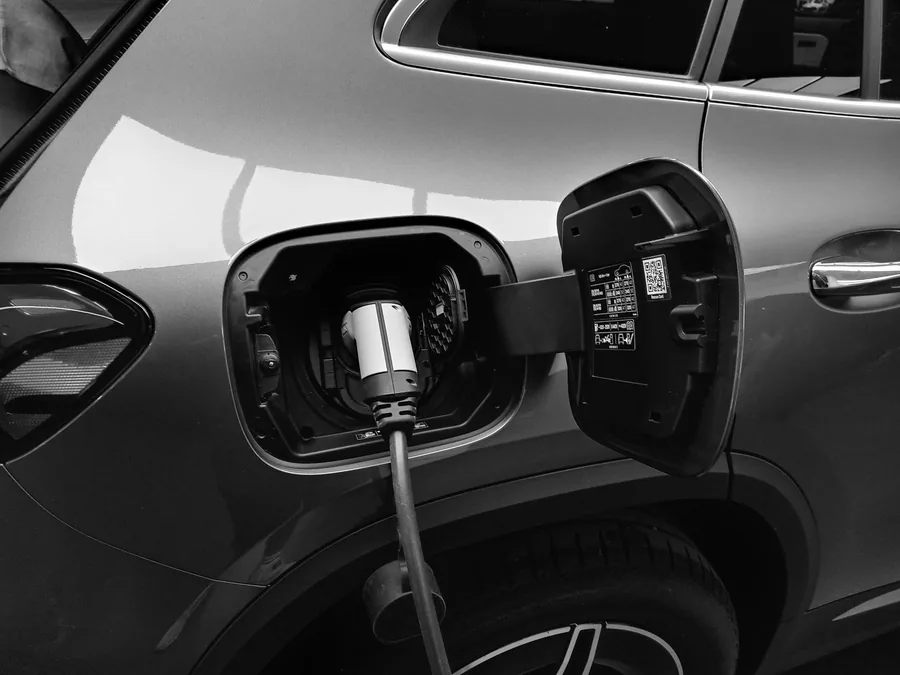
Electric running costs assume home charging at the household rate of £0.263 per kWh. Public rapid charging costs several times more per unit, so a driver who cannot charge at home will see the gap shrink.
What a monthly fuel budget actually buys you
If you know your monthly fuel budget, you can work backwards to how far you can drive. At the median consumption for each powertrain, here is how many miles a month a given energy budget covers at UK prices.
| Monthly energy budget | Petrol miles | Diesel miles | Hybrid miles | Electric miles |
|---|---|---|---|---|
| £50 | 240 | 304 | 321 | 699 |
| £75 | 360 | 456 | 482 | 1,049 |
| £100 | 480 | 607 | 642 | 1,398 |
| £150 | 719 | 911 | 963 | 2,097 |
| £200 | 959 | 1,215 | 1,284 | 2,796 |
| £300 | 1,439 | 1,822 | 1,927 | 4,194 |
A £100 monthly fuel budget runs a petrol car about 480 miles but an electric car roughly 1,400 miles on home charging. The table makes the trade-off plain: if you drive a long way, the powertrain you choose matters more than almost anything else you control.
Your annual mileage changes everything
Affordability is not a fixed number, because it depends on how far you drive. A car that is cheap to run and a car that is cheap to buy can swap places depending on your annual mileage, and the same medians spread across different annual distances show how quickly the gap opens.

| Powertrain | 6,000 mi/yr | 8,000 mi/yr | 12,000 mi/yr | 15,000 mi/yr | 20,000 mi/yr |
|---|---|---|---|---|---|
| Petrol | £104.25 | £139.00 | £208.51 | £260.63 | £347.51 |
| Diesel | £82.32 | £109.76 | £164.64 | £205.79 | £274.39 |
| Hybrid | £77.86 | £103.81 | £155.72 | £194.65 | £259.53 |
| Electric | £35.77 | £47.69 | £71.53 | £89.41 | £119.22 |
At 6,000 miles a year the monthly gap between petrol and electric is under £70; at 20,000 miles it is closer to £230. Lower mileage shrinks every running cost but leaves the fixed ones — insurance, tax and any finance payment — unchanged.
How many cars actually fit your monthly budget?
Plenty, at the right budget. Of the 14,920 UK models in our data, here is how many cost less than a given amount a month to fuel at 12,000 miles a year.
- £50 a month: 1 model
- £75 a month: 118 models
- £100 a month: 284 models
- £150 a month: 3,992 models
- £200 a month: 8,608 models
- £250 a month: 11,679 models
- £300 a month: 13,291 models
- £400 a month: 14,607 models
Read it as a sense-check. A £100 monthly energy budget is tight, with only 284 models inside it; £200 is comfortable, with 8,608. If your budget only covers a handful of cars, you are probably looking at something too big, too powerful or too thirsty for your income.
The cars that cost the least to run
The cheapest cars to run are almost all small, light and efficient. Taking one representative model per powertrain, the lowest monthly energy costs in the UK data at 12,000 miles a year look like this.
| Car | Year | Fuel | Cost per month | Cost per year |
|---|---|---|---|---|
| Dacia Spring | 2026 | Electric | £52.91 | £634.89 |
| Toyota Prius | 2018 | Hybrid | £79.18 | £950.16 |
| Peugeot 208 | 2017 | Diesel | £89.80 | £1,077.62 |
| Suzuki Celerio | 2016 | Petrol | £95.02 | £1,140.19 |
| Fiat 500 | 2025 | Electric | £56.29 | £675.52 |
| Mini Aceman | 2026 | Electric | £46.14 | £553.62 |
Consumption is the official test-cycle figure, and the year shown is the cheapest year for that model in the data. These are energy costs only — the cheapest car to run is not automatically the cheapest car to own.
The cars that blow the budget
At the other end, a big petrol engine or a heavy diesel can cost more than a month's rent just to fuel. The dearest petrol cars in the data cost £626 to £657 a month at 12,000 miles, and the thirstiest diesel, the Ineos Grenadier, costs £365 a month, more than four times the median diesel.
| Car | Year | Fuel | Cost per month | Cost per year |
|---|---|---|---|---|
| Lamborghini Diablo | 2000 | Petrol | £657.19 | £7,886.30 |
| McLaren GT | 2026 | Petrol | £625.52 | £7,506.24 |
| Ineos Grenadier | 2026 | Diesel | £365.19 | £4,382.31 |
| Volkswagen Touareg | 2004 | Diesel | £365.19 | £4,382.31 |
These are energy costs alone. A supercar's real ownership cost is dominated by depreciation, insurance and servicing, none of which is in this dataset — which is exactly why the purchase price tells you so little about what a car will cost each month.
A worked example: a median UK petrol car
Put the pieces together for a typical UK petrol car at 12,000 miles a year. Energy costs £208.51 a month. Vehicle tax adds about £15.83 a month if the car sits in the 111-130 g/km CO2 band, and the MOT, once the car is three years old, adds about £4.57 a month against the £54.85 cap.
| Monthly cost item | Per month | Per year |
|---|---|---|
| Fuel (petrol at £1.64/L) | £208.51 | £2,502.08 |
| Vehicle tax (VED, 111-130 g/km band) | £15.83 | £190.00 |
| MOT (once over three years old) | £4.57 | £54.85 |
| Running subtotal | £228.91 | £2,746.93 |
That £228.91 is a running subtotal before insurance, servicing and tyres, all of which vary too widely to average and none of which is in the official dataset. Then add the car itself, whether that is a finance payment or the depreciation you absorb if you paid cash.
What a £300 monthly budget actually leaves
Suppose your budget works out at £300 a month and you drive 12,000 miles a year in a median petrol car. Fuel alone takes £208.51 of that, leaving about £91 a month for everything else: insurance, vehicle tax, the MOT, servicing, tyres and any finance payment. On a car in the 111-130 g/km band, tax takes £15.83 and the MOT £4.57 of that £91, leaving a little over £70 a month for insurance, upkeep and the car itself.
That is the reality the sticker price hides. On a £300 budget the car you can finance with the remainder is not a £300-a-month car, because the running costs come first. An electric car changes the arithmetic sharply: at £71.53 a month in energy it leaves around £228 for everything else, which is the difference between a small used hatchback and something far newer on the same take-home pay.
These are energy, tax and MOT figures from our data at verified UK prices. Insurance and servicing vary too much to average, so the leftover is a ceiling on the car itself, not a promise.
Why a used car is the affordability shortcut
The single biggest lever on affordability is not the fuel type or the mileage: it is buying a car that has already taken its steepest depreciation. A new car typically loses 15-25% of its value in the first year and around half over five years, and that loss is a real cost of ownership even though it never appears on a receipt.
Buying at three or four years old hands you the largest part of that depreciation for free. The car is still modern, still efficient and still built to current emissions standards, but the price you pay already reflects the drop. That is why a used car can be both cheaper each month and better value than the new car sitting beside it on the forecourt.

Depreciation figures are approximate market behaviour, not a sourced statistic, and they vary enormously by model. A used car out of warranty also carries more repair risk, which belongs in the budget.
Insurance and the costs the data leaves out
Our dataset covers what a car consumes and, from that, what it costs to fuel. It does not cover insurance, servicing, tyres, repairs or parking, because those depend on the driver, the postcode and the car's history rather than on a certified test figure. They still belong in your monthly budget, and underestimating them is the most common way a budget that looks fine on paper fails in practice.
- Insurance: the biggest variable — get a real quote for the exact car before you commit.
- Servicing: routine intervals plus the risk of one large bill on an older car.
- Tyres: a set of four is a real cost every few years, more on performance cars.
- Repairs: budget for the unexpected, especially on a used car out of warranty.
We deliberately publish energy costs rather than invented insurance or servicing averages, because those numbers would be guesses and guesses are how budgets break.
Mileage, motorway driving and the real-world gap
Official consumption is measured on a test cycle, and real driving usually uses more. Short trips from cold, air conditioning, roof bars, a full boot and a heavy right foot all push fuel use above the official figure, and electric range drops in the cold. The monthly numbers here are built on the official figure, so treat them as a floor rather than a promise.
The biggest single factor is the kind of driving you do. Steady motorway miles get closer to the official figure than stop-start town driving, which is one reason a used car's history and an owner's typical journeys matter as much as its specification sheet when you are deciding what it will really cost you.
Official test-cycle figures are the only fair way to compare one car with another, but budget for real-world costs that are usually a little higher — especially on short, cold, urban journeys.
Where people go wrong on car affordability
Most affordability mistakes are the same few errors repeated, and they are all avoidable once you budget the monthly figure rather than the sticker price.
- Budgeting for the finance payment and forgetting the running costs.
- Buying to the limit a lender approves rather than the limit your budget allows.
- Leaving insurance until after the deal is agreed, then discovering it does not fit.
- Choosing a bigger or thirstier car for the same payment when a more efficient one fits the budget.
- Assuming a cheaper car is cheaper to run — consumption, not price, drives the fuel bill.
A car is affordable when the total monthly cost fits your budget with room left over, not when the payment alone happens to fit under some line you drew.
Putting a number on it with the calculators
You do not have to hold all these figures in your head. Our car affordability calculator turns your income and outgoings into a monthly budget, while the car cost calculator and the fuel cost calculator show what a specific car will cost to run each month at your mileage and your local prices.
The method behind this guide is the same one those tools use: start from the monthly figure you can afford, subtract a realistic estimate of running costs, and see what is left for the car itself. Run the numbers before you fall in love with a car, not after.

All our calculators run in your browser and use verified UK prices. No sign-up, no data stored.
Use the free calculators
Frequently asked questions
How much of my monthly income should a car cost?
Keep the total cost of the car — finance payment plus fuel, tax, MOT, insurance, servicing and tyres — inside 10-15% of your take-home pay, with 20% as the ceiling. The payment alone filling that range is the classic affordability trap, because the running costs on top push you straight past the limit.
How much car can I afford on £2,000 a month?
On £2,000 of net pay, the 10-15% rule gives a total monthly car budget of £200 to £300, with a £400 ceiling. That figure has to cover the payment and the running costs together. A median UK petrol car costs about £208.51 a month in fuel alone at 12,000 miles a year before insurance or servicing.
Is it cheaper to run an electric car than a petrol car?
Yes, on the figures. At verified UK prices and 12,000 miles a year, the median electric car costs £71.53 a month in energy against £208.51 for the median petrol car, more than £1,600 a year cheaper. The gap shrinks if you rely on public rapid charging rather than charging at home.
How much does it cost to run a car per month in the UK?
Energy alone for a median UK petrol car is £208.51 a month at 12,000 miles. Adding vehicle tax at about £15.83 and the MOT at about £4.57 brings a running subtotal to £228.91. Insurance, servicing and tyres sit on top of that and vary too widely to average into one figure.
Should I buy a used car to save money?
For most buyers, yes. A new car typically loses 15-25% of its value in the first year and around half over five years, so buying at three or four years old captures the steepest part of that loss. The trade-off is more repair risk out of warranty, which you should budget for.
How many miles a month does £100 of fuel buy?
At the median UK consumption for each powertrain, £100 a month covers about 480 miles in a petrol car, 607 miles in a diesel, 642 miles in a hybrid and 1,398 miles in an electric car on home charging. Driving a long way is where the powertrain you choose matters most.
What costs are missing from these monthly figures?
Our figures cover energy, plus vehicle tax and the MOT in the worked example. They leave out insurance, servicing, tyres, repairs, parking and depreciation. Those costs are real and belong in your budget, but they depend on the driver and the car rather than on a certified test figure, so we do not invent averages for them.