The Cheapest Cars to Run in Sweden in 2026

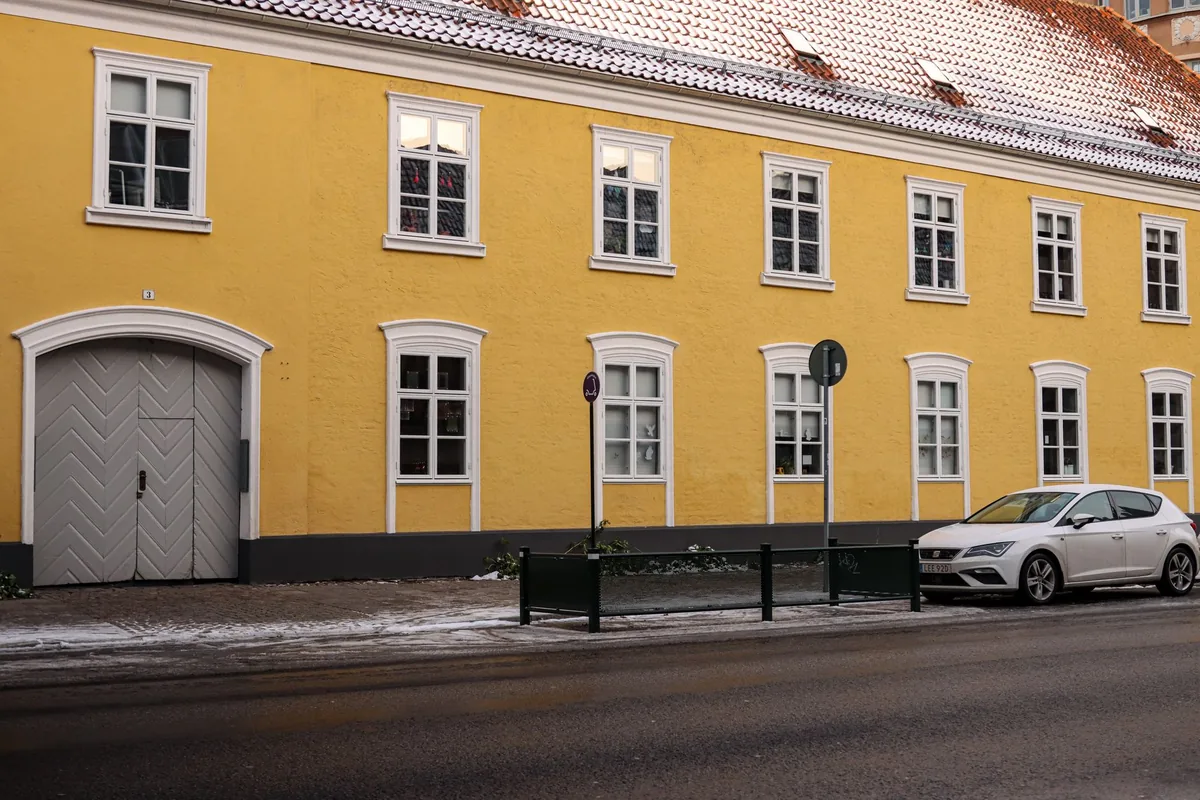
The billigaste bilen att äga in Sweden in 2026 is not the cheapest car on the forecourt — it is the car that burns the least over the mil you actually drive. Swedish petrol is the cheapest of the eleven markets we track, at 16.40 kr a litre, which sounds like good news until you notice that diesel costs 19.29 kr and that fordonsskatt and besiktning land on the bill whatever you drive. So this ranking prices every model we hold at Swedish pump prices and reports the answer the way Swedish drivers think about it: bensinkostnad per mil, and kronor per month.
We analysed 17,270 official type-approval records, cleaned them to 16,728 usable entries, and priced each one at the verified Swedish constants of 16.40 kr per litre petrol, 19.29 kr per litre diesel and 3.02 kr per kWh household electricity over 15,000 km a year. What follows is a pure efficiency index across petrol, diesel, hybrid and electric cars, the monthly cost of the cheapest new cars on sale in 2026, the models Swedish buyers actually cross-shop, and the two fixed charges nobody escapes — fordonsskatt and the besiktning test.
Billigaste bilen att äga 2026: how this Swedish ranking was built
Every figure on this page comes from the type-approval records we hold for the European market: three datasets with 17,270 rows between them, covering petrol, diesel, hybrid and electric cars from roughly model year 2000 to 2027. Because WLTP and NEDC consumption figures are approved EU-wide, the same certified figure applies to a car registered in Malmö as to one registered in Munich or Madrid — which is what makes a Swedish version of this ranking legitimate rather than a British one with the currency swapped.
Each record is filtered by a plausibility window — 2.5 to 25.0 litres per 100 km for combustion cars and 5.0 to 40.0 kWh per 100 km for electric cars — then de-duplicated to one entry per make, model, year and powertrain. That leaves 16,728 usable rows and 14,919 distinct make-model-year-fuel combinations. Annual cost is then calculated from the certified figure itself: litres or kWh per 100 km, divided by 100, multiplied by 15,000 km and then by the Swedish unit price.
One mileage and one price set for every car means the ranking reflects the car's own efficiency and nothing else. It does not know what you paid for the car, what your insurance costs, or how much you drive — which is exactly why we publish the arithmetic instead of a verdict. If you drive 25,000 km a year, every figure here understates your fuel bill; if you drive 8,000, it overstates it. The section on annual distance later in this page shows the same cars at four different mileages so you can pick the column that matches your life.
Every krona total in the tables is energy cost only. Fordonsskatt and besiktning are real annual costs of running a car in Sweden, but they are quoted separately in their own section and never mixed into the ranking figures.
Bensinkostnad per mil: what a Swedish mile actually costs
Sweden measures fuel in mil, and one mil is ten kilometres, so the per-mil figure is simply the per-kilometre number multiplied by ten. The average petrol car in our data uses 8.6 litres per 100 km, which at 16.40 kr a litre works out at 1.41 kr per kilometre — 14.07 kr per mil, 21,108 kr a year at 15,000 km, and 1,759 kr a month. That is the number to beat.
The average diesel car uses 5.9 litres per 100 km and costs 1.13 kr per km, or 11.32 kr per mil. Even though Swedish diesel is 2.89 kr a litre dearer than petrol, its 31% consumption advantage wins the arithmetic: 16,982 kr a year against 21,108 kr, a saving of 4,126 kr, or about 20%. The average non-plug hybrid sits between the two at 6.1 litres per 100 km and 10.06 kr per mil, and the average electric car is in a different category altogether at 17.5 kWh per 100 km and 5.27 kr per mil on household electricity at 3.02 kr per kWh.
A 50-litre tank of petrol costs 820 kr at the current Swedish price. Sixty litres of diesel costs 1,157 kr. Those two numbers explain most of the arguments about which fuel is cheaper in Sweden better than any league table can, because the pump price inversion is unusual: in most of Europe diesel is the cheaper fuel per litre, and in Sweden it is not.

Data quality: 537 plug-in hybrids and five rows we refused to publish
Before publishing any ranking we clean the source and say exactly what we removed. Three rows were dropped as implausible artefacts: a 2026 Toyota Land Cruiser hybrid at 26.2 L/100km, a 2007 Kia Sorento diesel at 35.8 L/100km and a 2022 Mazda CX-60 petrol at 141.2 L/100km. Those are data-entry errors or test artefacts no driver could reproduce, and leaving them in would distort the petrol and diesel averages on this page. Two further rows tagged as ordinary hybrids — a 2018 Land Rover Range Rover and a Range Rover Sport, both listed at 2.8 L/100km — carry plug-in test figures mislabelled in the source, so they are excluded from the hybrid table.
The remaining 537 removed rows are plug-in hybrids, whose official consumption is not one consistent driving mode because the test assumes a charged battery for part of every trip. A Swedish driver who never plugs in will not see the certified figure, and one who plugs in every night will beat it, so we publish no plug-in leaderboard rather than a number you cannot reproduce. After every exclusion the clean pool is 16,728 rows: 8,248 petrol, 6,046 diesel, 443 non-plug hybrid and 182 electric records, drawn from three datasets — 8,899 rows from the 2000-2013 archive, 7,136 from the merged 2011-2022 file and 693 from the current approval list.
One honest gap: the merged UK approval archive we rely on for used cars has no 2015 model-year rows at all, and no UK-only models for 2023-2025. Cars sold in both Britain and Sweden are covered by the shared approval data, so a Swedish search almost always finds its car, but a model that exists only in one market in one specific year can be missing. That is why the tables carry model years rather than model names alone.
Four of those five excluded rows are named above so anyone can check them. If a figure in this article looks wrong, it is more likely a source artefact we should have caught than a rounding difference — tell us and we will look.
The cheapest cars to run in Sweden in 2026: the overall winners
Ranked purely on the energy to move the car 15,000 km, every one of the ten cheapest models in Sweden is electric. That is not a marketing claim, it is what happens when household electricity is 3.02 kr per kWh and a car needs 11 to 15 kWh to travel 100 km: the cheapest model in the entire database, the MINI Aceman, costs 4,938 kr a year in energy, or 411 kr a month.
The comparison only becomes fair when you add the fixed charges, because a new electric car and a fifteen-year-old diesel hatchback do not sit on the same fordonsskatt bill. With 1,200 kr of fordonsskatt and a 500 kr besiktning added to both, the MINI Aceman comes to 6,638 kr a year and the cheapest petrol car, a 2000 Honda Insight, comes to 10,064 kr. The gap is 3,426 kr either way, because the same fixed charges applied to both cars leave the difference unchanged. What actually changes the picture is the purchase price, which is not in this data and which we refuse to invent.
The table below is the honest answer to billigaste bilen att äga 2026: the cheapest car to run in each powertrain, priced on the same mileage and the same Swedish prices.
| Powertrain | Cheapest model | Year | Consumption | Energy per year | Per month | All-in with 1,700 kr fixed |
|---|---|---|---|---|---|---|
| Electric | MINI Aceman | 2026 | 10.9 kWh/100km | 4,938 kr | 411 kr | 6,638 kr |
| Hybrid | Toyota Prius | 2018 | 3.0 L/100km | 7,380 kr | 615 kr | 9,080 kr |
| Petrol | Honda Insight | 2000 | 3.4 L/100km | 8,364 kr | 697 kr | 10,064 kr |
| Diesel | Peugeot 208 | 2017 | 3.0 L/100km | 8,680 kr | 723 kr | 10,380 kr |
The electric win is an energy-cost win. It does not account for the higher purchase price of a new EV, home charger installation, or the fact that a 2000 Honda Insight and a 2026 MINI Aceman are not the same purchase at all.
Cheapest petrol cars to run in Sweden
Petrol is still what most Swedish drivers buy, and the spread inside the petrol class is enormous: from 3.4 litres per 100 km at the frugal end to 24.9 at the other, a factor of seven. Among 1,893 distinct petrol models, the average is 8.4 litres per 100 km and 20,588 kr a year.
The cheapest petrol cars are small, light and old. The Honda Insight from 2000 leads at 3.4 L/100km and 8,364 kr a year, but it is a two-seat nostalgia exercise; the Suzuki Celerio from 2017 at 3.6 L/100km and 8,856 kr is the practical answer for someone who wants a real car with a real boot. Below that group sits a cluster of city cars — Citroën C1, Peugeot 108, Fiat 500, Kia Niro — all landing at 9,348 kr, and Hyundai i10, Smart fortwo and Peugeot 308 at 9,840 kr.
Note what is absent: nothing newer than 2018 appears in the top ten. The cheapest new petrol car in Sweden in 2026, the Škoda Fabia Hatch, uses 5.2 L/100km and costs 12,792 kr a year. A petrol car bought new in 2026 cannot match a 2017 city car on fuel, and the reason is weight, safety equipment and the tyres needed to carry it — not engine technology.
| Model | Year | L/100km | CO2 | Per year | Per month |
|---|---|---|---|---|---|
| Honda Insight | 2000 | 3.4 | 80 g/km | 8,364 kr | 697 kr |
| Suzuki Celerio | 2017 | 3.6 | 84 g/km | 8,856 kr | 738 kr |
| Citroën C1 | 2016 | 3.8 | 88 g/km | 9,348 kr | 779 kr |
| Fiat 500 & 500C | 2018 | 3.8 | 90 g/km | 9,348 kr | 779 kr |
| Peugeot 108 | 2014 | 3.8 | 88 g/km | 9,348 kr | 779 kr |
| Kia Niro | 2018 | 3.8 | 88 g/km | 9,348 kr | 779 kr |
| Hyundai i10 | 2017 | 4.0 | 93 g/km | 9,840 kr | 820 kr |
| Peugeot 308 | 2017 | 4.0 | 95 g/km | 9,840 kr | 820 kr |
| Nissan Micra | 2012 | 4.1 | 95 g/km | 10,086 kr | 840 kr |
| Volkswagen Polo | 2016 | 4.1 | 94 g/km | 10,086 kr | 840 kr |
Cheapest diesel cars to run in Sweden
Diesel is where the Swedish per-litre price cuts against the fuel's reputation. At 19.29 kr a litre, diesel is 2.89 kr more expensive than petrol, so a diesel car has to be genuinely efficient before it pays — and the best ones are. The Peugeot 208 from 2017 uses 3.0 litres per 100 km on the approval cycle, which at Swedish diesel prices is 8,680 kr a year, or 723 kr a month.
Among 1,342 diesel models the average is 5.6 litres per 100 km and 16,076 kr a year. That still beats the average petrol model's 20,588 kr by 4,512 kr, which tells you something about how skewed the diesel fleet is towards small, modern hatchbacks: the average diesel car in our data is a 1.5- or 1.6-litre compact from the mid-2010s, not a large estate or SUV.
That is the trap in this table. Diesel looks like a 20% saving against petrol on fleet averages, but the comparison is not like-for-like, because the two fleets are made of different cars. A Swedish buyer choosing between two versions of the same model should compare those two rows, not the two averages. The section on diesel against petrol later in this page sets the per-litre maths out in full, including the consumption figure a petrol car would need to match the average diesel.
| Model | Year | L/100km | CO2 | Per year | Per month |
|---|---|---|---|---|---|
| Peugeot 208 | 2017 | 3.0 | 79 g/km | 8,680 kr | 723 kr |
| Peugeot 308 | 2017 | 3.1 | 82 g/km | 8,970 kr | 747 kr |
| Ford Fiesta | 2017 | 3.2 | 82 g/km | 9,259 kr | 772 kr |
| Nissan Micra | 2018 | 3.2 | 85 g/km | 9,259 kr | 772 kr |
| Škoda Octavia | 2014 | 3.2 | 85 g/km | 9,259 kr | 772 kr |
| Kia Rio | 2011 | 3.2 | 85 g/km | 9,259 kr | 772 kr |
| Hyundai i20 | 2013 | 3.2 | 84 g/km | 9,259 kr | 772 kr |
| Volkswagen Golf | 2014 | 3.2 | 85 g/km | 9,259 kr | 772 kr |
| Peugeot 308 SW | 2017 | 3.2 | 85 g/km | 9,259 kr | 772 kr |
| Renault Clio | 2013 | 3.2 | 83 g/km | 9,259 kr | 772 kr |
Cheapest hybrids to run in Sweden
Non-plug hybrids are the quiet winners of Swedish running costs, because they combine a small petrol engine with an electric motor that recovers energy the brakes would otherwise lose, and they are priced on petrol rather than diesel. The Toyota Prius from 2018 leads at 3.0 litres per 100 km, 70 g/km of CO2 and 7,380 kr a year — 615 kr a month, and the cheapest non-electric car in our ranking once fixed charges are equalised.
There are 246 hybrid models in the clean pool, averaging 6.3 litres per 100 km and 15,540 kr a year, which is cheaper than both the petrol and diesel averages. That average is boosted by a large number of Toyota and Lexus models sharing one drivetrain, so treat it as a statement about the hybrid fleet as it exists in the approval data rather than a promise about any individual car.
Worth flagging for anyone shopping new: the Mazda2 Hybrid and the Toyota Aygo X HEV both reach 3.8 L/100km as 2026 models, at 9,348 kr a year. Those are the cheapest new hybrids we can price, and they undercut every new petrol car in the 2026 table by more than 3,400 kr a year.
| Model | Year | L/100km | CO2 | Per year | Per month |
|---|---|---|---|---|---|
| Toyota Prius | 2018 | 3.0 | 70 g/km | 7,380 kr | 615 kr |
| Toyota Yaris | 2018 | 3.3 | 75 g/km | 8,118 kr | 676 kr |
| Hyundai IONIQ | 2017 | 3.4 | 79 g/km | 8,364 kr | 697 kr |
| Toyota Auris | 2018 | 3.5 | 79 g/km | 8,610 kr | 718 kr |
| Lexus CT200h | 2018 | 3.6 | 82 g/km | 8,856 kr | 738 kr |
| Kia Niro | 2018 | 3.7 | 86 g/km | 9,102 kr | 759 kr |
| Mazda2 Hybrid | 2026 | 3.8 | 87 g/km | 9,348 kr | 779 kr |
| Toyota Aygo X HEV | 2026 | 3.8 | 87 g/km | 9,348 kr | 779 kr |
| Toyota C-HR | 2018 | 3.8 | 86 g/km | 9,348 kr | 779 kr |
| Toyota Prius 10 | 2011 | 4.0 | 92 g/km | 9,840 kr | 820 kr |
Cheapest electric cars to run in Sweden
Electricity is the cheapest way to move a car in Sweden, and the numbers are not close. At 3.02 kr per kWh, the average electric car in our data — 17.5 kWh per 100 km — costs 7,909 kr a year in energy, 659 kr a month. The average petrol car costs 21,108 kr. That is 13,199 kr a year less, or 1,100 kr a month, before anything else is considered.
The cheapest single model is the MINI Aceman at 10.9 kWh per 100 km and 4,938 kr a year, followed by the Mercedes-Benz CLA Saloon at 12.2 kWh and the Dacia Spring at 12.5 kWh. The Tesla Model 3 (13.8 kWh) and Model Y (14.2 kWh) sit just behind at 6,251 and 6,433 kr. The whole top ten uses between 10.9 and 14.3 kWh per 100 km, which is a much tighter spread than the petrol class — electric drivetrains are efficient across the board in a way combustion engines are not.
Two caveats belong in the same paragraph as the good news. First, this is household electricity at 3.02 kr per kWh; if you charge at a public rapid charger you will pay more, and none of that price is in this article because it is not in our verified data. Second, electricity is the only input here — a home charger, a higher purchase price and a bigger tyre bill are all real costs this ranking cannot see. The engines are comparing the cost of moving the car, not the cost of owning it.
| Model | Year | kWh/100km | Per year | Per month | Per mil |
|---|---|---|---|---|---|
| MINI Aceman | 2026 | 10.9 | 4,938 kr | 411 kr | 3.29 kr |
| Mercedes-Benz CLA Saloon | 2026 | 12.2 | 5,527 kr | 461 kr | 3.68 kr |
| Dacia Spring | 2026 | 12.5 | 5,662 kr | 472 kr | 3.78 kr |
| Fiat 500 | 2025 | 13.3 | 6,025 kr | 502 kr | 4.02 kr |
| Tesla Model 3 | 2026 | 13.8 | 6,251 kr | 521 kr | 4.17 kr |
| MINI Cooper Electric | 2026 | 14.2 | 6,433 kr | 536 kr | 4.29 kr |
| Peugeot 2008 | 2026 | 14.2 | 6,433 kr | 536 kr | 4.29 kr |
| Tesla Model Y | 2026 | 14.2 | 6,433 kr | 536 kr | 4.29 kr |
| Volkswagen ID.7 | 2026 | 14.2 | 6,433 kr | 536 kr | 4.29 kr |
| Hyundai Kona Electric | 2023 | 14.3 | 6,478 kr | 540 kr | 4.32 kr |
What the average car costs per year in Sweden
Averages are where the argument usually stops, so here is the whole fleet in one table. Across 8,248 petrol records the average is 8.6 litres per 100 km, 201 g/km of CO2 and 21,108 kr a year in fuel at 15,000 km. Diesel averages 5.9 litres, 155 g/km and 16,982 kr. Non-plug hybrids average 6.1 litres, 139 g/km and 15,085 kr. Electric cars average 17.5 kWh per 100 km and 7,909 kr.
Look at the CO2 column for a second, because it explains the Swedish tax conversation better than the fuel column. Under 100 g/km, only 2% of petrol records qualify, 8% of diesel records do, and 17% of hybrids do. A car's fordonsskatt is built on that CO2 figure, which is why the cheapest car to run in Sweden is not always the one with the lowest monthly fuel bill — the two costs pull in the same direction on hybrids and in opposite directions on older diesels.
The dearest end of the petrol class, for context, is the Lamborghini Diablo at 24.9 litres per 100 km and 61,254 kr a year, the McLaren GT at 23.7 and 58,302 kr, and the Maserati MC12 at 23.0 and 56,580 kr. Running one of those costs more in fuel than the average Swedish petrol car costs in fuel, fordonsskatt and testing combined — three times over.
| Powertrain | Records | Average consumption | Average CO2 | Per year | Per month | Per km |
|---|---|---|---|---|---|---|
| Petrol | 8,248 | 8.6 L/100km | 201 g/km | 21,108 kr | 1,759 kr | 1.41 kr |
| Diesel | 6,046 | 5.9 L/100km | 155 g/km | 16,982 kr | 1,415 kr | 1.13 kr |
| Hybrid | 443 | 6.1 L/100km | 139 g/km | 15,085 kr | 1,257 kr | 1.01 kr |
| Electric | 182 | 17.5 kWh/100km | not recorded | 7,909 kr | 659 kr | 0.53 kr |
Fordonsskatt 2026: the fixed charge nobody escapes
Fordonsskatt is the Swedish vehicle tax, and it is charged on the car rather than on the fuel, which means it lands whether you drive 2,000 km or 30,000. For a typical used car in our reference case we use 1,200 kr a year. Cars registered under the newer malus rules can be charged considerably more, and the exact figure depends on the car's CO2 output and when it was first registered — none of which is in our vehicle data, so we use the typical-used figure and show it separately rather than pretending it is precise.
That 1,200 kr matters more than it looks at the cheap end. On the average Swedish petrol car it is 5.7% of the energy bill and 7.5% of the total all-in running cost of 22,808 kr. On the cheapest electric car in our data it is 24% of the energy bill, because 1,200 kr against 4,938 kr of electricity is a much bigger share than 1,200 kr against 21,108 kr of petrol. Cheap cars are the ones where fixed charges dominate.
The practical consequence: when you are comparing two cars that are close on fuel, the fordonsskatt difference can decide it, and the fuel tables on this page cannot see that difference because they only carry consumption. That is why the all-in figures throughout this article add the same 1,700 kr to every car — 1,200 kr fordonsskatt plus 500 kr for one besiktning — instead of pretending each model has its own exact tax.
1,200 kr is a typical used-car figure, not a quote for your car. Newer cars, petrol or diesel, can sit in a higher CO2 band under the malus rules.
Besiktning: the test that adds to the bill
The besiktning is Sweden's roadworthiness inspection, and it costs about 500 kr per test. How often your car needs one depends on its age, so we do not attach a number of years to it — the price of one test is what we carry into the all-in figures.
Five hundred kronor is small next to fuel, but it is not small next to the difference between two efficient cars. The gap between the cheapest petrol car in our data and the tenth-cheapest is 1,722 kr a year in fuel; one besiktning is 500 of that, or 29%. Group the two fixed charges together and they are 1,700 kr — which is almost exactly the fuel gap between the cheapest petrol car in this data and the fifth-cheapest.
This is the part of Swedish car ownership that gets lost in fuel-price arguments. Every model on this page pays it, so it never changes the ranking, but it does change the arithmetic of whether a car is worth keeping. A fifteen-year-old car that costs 8,364 kr a year in petrol is not cheap if it needs work to pass; a newer car that costs 12,792 kr in petrol is not expensive if it needs nothing.
The cheapest new cars in Sweden in 2026
If you are buying new in 2026, the efficiency picture looks different, because new cars are heavier and the approval cycle has moved to WLTP. Among 193 petrol records for model year 2026, the cheapest is the Škoda Fabia Hatch at 5.2 litres per 100 km and 12,792 kr a year — 1,066 kr a month. The Renault Clio follows at 5.3 and 13,038 kr, then the Peugeot 208 and the Vauxhall Corsa at 5.4 and 13,284 kr.
Diesel is barely worth listing as a new-car option in this data: only 52 model-year 2026 diesel records exist, and the best of them, the Škoda Octavia and the Volkswagen Golf, use 4.7 litres per 100 km for 13,599 kr a year. That is 807 kr more than the best new petrol car, because Swedish diesel costs 2.89 kr more per litre and the consumption advantage is not large enough to close the gap at this end of the market.
Hybrids are the strong new-car play. There are 184 model-year 2026 hybrid records, and the Mazda2 Hybrid and Toyota Aygo X HEV both use 3.8 litres per 100 km for 9,348 kr a year. The Toyota Yaris costs 10,332 kr, the Renault Clio and Yaris Hybrid 10,578 kr, and the MG 3 10,824 kr. Every one of those beats every new petrol car we can price, and they beat most new diesels too.
Electric cars take the top of the table outright, with 142 model-year 2026 records and the MINI Aceman at 10.9 kWh per 100 km and 4,938 kr a year. The Mercedes-Benz CLA Saloon costs 5,527 kr and the Dacia Spring 5,662 kr. Whatever you think of the purchase prices, the running-cost league for new cars in Sweden in 2026 has no combustion car anywhere near the top of it.
| Fuel | Cheapest 2026 model | Consumption | Per year | Per month |
|---|---|---|---|---|
| Electric | MINI Aceman | 10.9 kWh/100km | 4,938 kr | 411 kr |
| Hybrid | Mazda2 Hybrid | 3.8 L/100km | 9,348 kr | 779 kr |
| Diesel | Škoda Octavia | 4.7 L/100km | 13,599 kr | 1,133 kr |
| Petrol | Škoda Fabia Hatch | 5.2 L/100km | 12,792 kr | 1,066 kr |
These are energy costs for model-year 2026 cars at Swedish prices. Purchase price, interest and depreciation are excluded everywhere on this page.
Popular cars Swedish buyers actually cross-shop
Nobody buys an average, so here are the models that actually turn up on Swedish shortlists, priced the same way. The Volvo estate is the national default, and the numbers are unremarkable in a good way: a 2017 V60 diesel at 3.8 litres per 100 km costs 10,995 kr a year, a 2014 V70 diesel at 4.1 costs 11,863 kr, and a 2017 XC60 diesel at 4.5 costs 13,021 kr. The XC60 is the expensive one of the three because it is heavier, and that is the whole story of SUV running costs in one row.
The German compacts are clustered tightly. A 2016 Golf diesel costs 9,838 kr, a 2013 Ford Focus diesel the same 9,838 kr, a 2017 Ford Fiesta diesel 9,259 kr, a 2017 Peugeot 208 diesel 8,680 kr. A 2018 Nissan Qashqai diesel comes to 10,995 kr and a 2018 Kia Sportage or 2017 Hyundai Tucson diesel to 13,310 kr. The family SUV costs about 4,000 kr a year more in fuel than the family hatchback, which is the price of the height and the weight.
Toyota's hybrids are the ones to watch if you want a used car with a low fuel bill and no charging: a 2018 Yaris hybrid costs 8,118 kr, a 2018 C-HR hybrid 9,348 kr, a 2018 Prius 7,380 kr and a 2018 Kia Niro hybrid 9,102 kr. A 2025 Corolla hybrid at 4.7 litres costs 11,562 kr, which shows how much a newer, larger body adds even with the same drivetrain philosophy.
On the electric side, a 2026 Volkswagen ID.4 at 15.8 kWh per 100 km costs 7,157 kr a year, a Tesla Model 3 6,251 kr and a Model Y 6,433 kr. For a Swedish household doing 15,000 km a year, those are the numbers that make the home-charging case, and they are 13,000 to 15,000 kr a year below the equivalent petrol SUV.
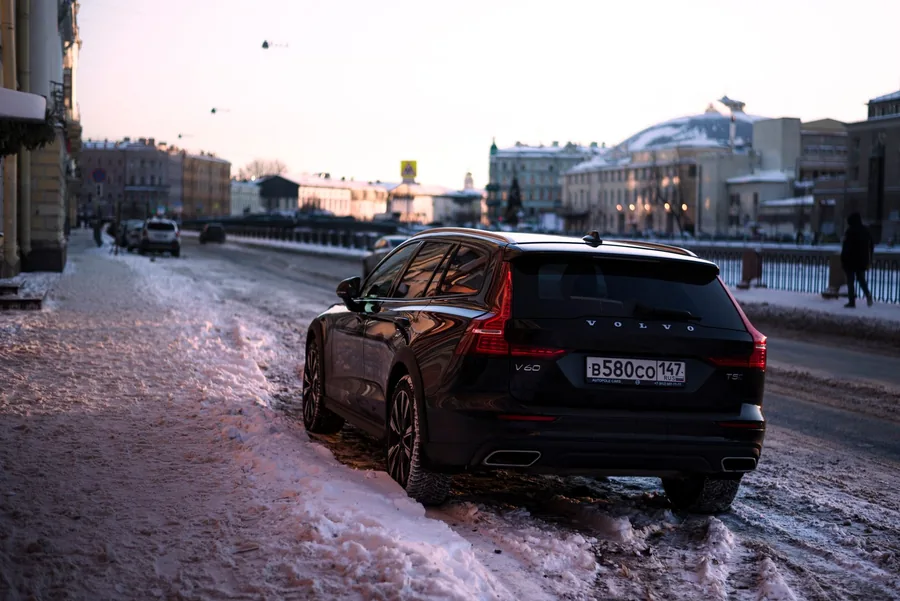
Diesel or petrol in Sweden? The per-litre maths flipped
Sweden is one of the few markets where diesel costs more per litre than petrol: 19.29 kr against 16.40 kr, a gap of 2.89 kr or 18%. That inverts the usual advice, so it is worth doing the arithmetic rather than repeating what a British or German article would say.
Take the two fleet averages. Petrol: 8.6 litres per 100 km at 16.40 kr is 21,108 kr a year. Diesel: 5.9 litres per 100 km at 19.29 kr is 16,982 kr. Diesel still wins by 4,126 kr, or 20%, because a 31% consumption advantage more than covers an 18% price disadvantage. Diesel is cheaper per mil — 11.32 kr against 14.07 kr — and that is true at every mileage, because both scale linearly.
Now the caveat that makes this table honest. A petrol car would need to use 10.09 litres per 100 km before it cost the same as the average diesel, which means almost every petrol car beats the average diesel on paper. The reason the diesel average still comes out ahead is that the diesel fleet is made of small modern hatchbacks while the petrol fleet includes everything from a Celerio to a Diablo. Comparing the averages is comparing two different populations of car.
So the rule for a Swedish buyer is: compare the diesel and petrol versions of the same model, at these prices, and let the consumption difference decide. On a model where the diesel uses 30% less fuel, diesel wins even at 19.29 kr. On a model where the difference is 15%, it does not. And if you drive mostly short trips in a Swedish winter, the diesel's cold-start penalty is not in the approval figure at all.
The 10.09 L/100km breakeven is arithmetic on the two fleet averages, not a recommendation. Same-model comparison is the only fair test.
Electric or petrol in Sweden? 3.02 kr per kWh changes the answer
Swedish household electricity averaged 3.02 kr per kWh in the Eurostat band we use — well below the EU average of €0.220, and about two-thirds of Ireland's €0.404. That single number is why electric cars dominate every table in this article: at 3.02 kr, the average EV's 17.5 kWh per 100 km costs 7,909 kr a year, and the average petrol car's 8.6 litres costs 21,108 kr.
The gap is 13,199 kr a year, or 1,100 kr a month, on 15,000 km. Put differently: electric costs 0.53 kr per km and petrol 1.41 kr, so every mil you drive electrically saves 8.80 kr against the petrol average. A household doing 1,500 mil a year saves 13,199 kr; one doing 2,500 mil saves 21,998 kr, because the saving scales with distance and the fixed charges do not.
What this comparison deliberately leaves out matters, and it should be said plainly: the purchase price difference, the cost of a home charger, and public rapid charging, where the per-kWh price is higher than household electricity and is not in our verified data. A Swede who cannot charge at home is not getting 3.02 kr per kWh, and this ranking does not pretend otherwise. It compares the cost of the energy that moves the car, at the price a household actually pays for that energy.
For a household that can charge at home, the arithmetic in this data is not marginal. The cheapest electric car costs 4,938 kr a year in energy and 6,638 kr with fordonsskatt and besiktning added. The cheapest petrol car costs 8,364 kr and 10,064 kr all-in. The gap survives every fixed charge we can put a verified number on.
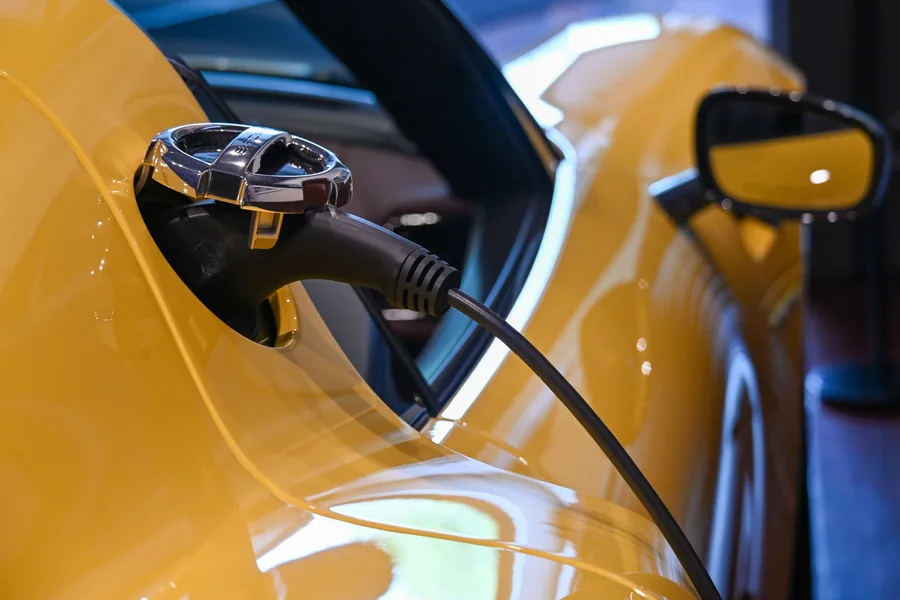
How far you drive decides more than which car you buy
Every figure above assumes 15,000 km a year, which is roughly the Swedish average but nowhere near every household. Because fuel cost is linear in distance, the table below is simply the fleet averages scaled — and it is the most useful table on the page for anyone whose driving is unusual.
A petrol car at 10,000 km costs 14,072 kr in fuel; at 25,000 km it costs 35,179 kr. The same car, same price per litre, 21,107 kr of difference. An electric car goes from 5,273 kr to 13,181 kr over the same range — the absolute saving grows with distance but so does the absolute cost, and the fuel saving per extra 1,000 km is 1,407 kr for petrol against 527 kr for electricity.
The practical reading: if you drive very little, the fixed charges and the purchase price dominate your total cost and fuel efficiency barely matters, so buying the cheapest car you can is rational. If you drive a lot — a commuting household, a rural household, anyone doing 2,000 mil or more — efficiency is the single biggest lever you control, and the gap between a 3.4 L/100km car and an 8.6 L/100km car is worth about 12,700 kr a year at Swedish prices.
Winter belongs in this section too, because it is the one Swedish cost that no approval figure captures. Cold starts, heater use, winter tyres and snow-covered roads all raise real consumption above the certified number; the tests are run in conditions no Swedish January reproduces. Treat every figure here as a floor for summer driving and expect more between November and March.

Sweden against the rest of Europe: the cheapest pump price we track
Converted to a common currency at the ECB reference rate, Swedish petrol is the cheapest of the markets we price in euros here. At 16.40 kr a litre and 11.1495 kr to the euro, that is €1.471 — against €1.733 in Spain, €1.840 in Ireland, €1.885 in Belgium, €2.073 in France, €2.203 in Finland, €2.236 in Germany and €2.350 in the Netherlands. The UK sits at €1.909.
On the same average car — 8.6 litres per 100 km, 15,000 km — the annual fuel bill is €1,893 in Sweden, €2,230 in Spain, €2,368 in Ireland, €2,426 in Belgium, €2,457 in the UK, €2,668 in France, €2,835 in Finland, €2,878 in Germany and €3,025 in the Netherlands. A Swedish driver pays about €1,131 a year less for the same driving than a Dutch driver, and about €337 less than a Spanish one.
The gap in kronor is easier to feel: Swedish petrol is about 2.92 kr a litre cheaper than Spanish petrol once both are converted. Those comparisons are all on the same day's rates and the same approved consumption figures, which is the only way to make them honestly — a comparison of raw local prices without conversion would rank kronor against euros and be meaningless.
One structural note: Sweden's diesel is dearer per litre than petrol, and that is not true everywhere. German diesel is marginally cheaper than German petrol; French and Belgian diesel are dearer. So a fuel-type comparison that works in one country can invert in another, and the fleet averages in this article are Swedish-specific for exactly that reason.
| Market | Petrol (EUR/L) | Annual fuel, 8.6 L/100km | Difference vs Sweden |
|---|---|---|---|
| Sweden | 1.471 | €1,893 | — |
| Spain | 1.733 | €2,230 | +€337 |
| Ireland | 1.840 | €2,368 | +€475 |
| Belgium | 1.885 | €2,426 | +€533 |
| United Kingdom | 1.909 | €2,457 | +€564 |
| France | 2.073 | €2,668 | +€775 |
| Finland | 2.203 | €2,835 | +€942 |
| Germany | 2.236 | €2,878 | +€985 |
| Netherlands | 2.350 | €3,025 | +€1,131 |
The fuel-tax cut expires on 30 September 2026: what that does to these numbers
The Swedish prices used throughout this article come from the EU Oil Bulletin week of 31 August 2026, during the period when Sweden's temporary fuel-tax cut held petrol and diesel at EU minimum tax levels. That cut expires on 30 September 2026. After it, the pump price rises, and every krone figure on this page that depends on 16.40 kr a litre or 19.29 kr a litre will understate what you actually pay.
We are not going to guess the new price. What we can say is how the ranking behaves when the price moves: every fuel cost on this page is proportional to the price per litre, so a 10% rise in the petrol price raises every petrol figure by 10% and changes no ranking at all. Diesel rises the same way, so the diesel-versus-petrol comparison moves only if the two fuels are taxed differently — which is what a minimum-tax change can do.
The sensible response is to treat 16.40 kr as the reference point and put your own pump price into the calculator. The ranking of cars stays intact because it depends on consumption, and consumption does not change with tax; the absolute kronor amounts are what move. Anyone budgeting on the old price should add a margin, and anyone deciding between two cars should ignore the tax question entirely, because it applies equally to both.
Prices in this article: petrol 16.40 kr/L, diesel 19.29 kr/L, household electricity 3.02 kr/kWh. Source: EU Oil Bulletin and Eurostat, as documented in our market data. Re-check the pump price before you budget.
What these figures leave out
This page compares the cost of energy, plus the two fixed charges we can price from a verified source. It does not compare the cost of owning a car, and the difference matters. Insurance, servicing, tyres, repairs, parking, finance and depreciation are all real and all excluded — none of them is in the type-approval data, and we will not invent a national average to fill the gap.
Depreciation is the largest of them for a new car, and it is the reason a new electric car can win every table on this page and still lose on total cost of ownership. A car that loses a large share of its value in the first years can cost more per month than the fuel it saves. We publish no depreciation percentages here because we have no verified Swedish residual-value data, and a made-up number would be worse than no number.
The method has one more honest limit: these are type-approval figures, not real-world measurements. WLTP and NEDC tests are run on a rolling road in controlled conditions. Real consumption in a Swedish winter, with winter tyres, heater, roof box and motorway speeds, will be higher — often materially. The ranking holds because every car is measured the same way, but the kronor amounts are a floor rather than a forecast.
Everything here is an estimate for comparing cars, not financial advice. If a number in this article looks wrong to you, it is more likely a source artefact than a rounding difference, and the data-quality section above lists exactly which rows we removed and why.
How to run your own number
Every calculation on this page is available as a tool that runs in your browser, using the market you select and the prices we hold for it. If your petrol station is charging something other than 16.40 kr, or you drive 2,200 mil rather than 1,500, put your own figures in and see the answer change — the arithmetic is the same, only the inputs differ.
The most useful starting points are the car ownership cost calculator for a full annual figure, the fuel cost calculator for a per-mil number, and the electric car cost calculator if you are weighing an EV against a petrol car at Swedish electricity prices. For a direct comparison of powertrains on the same mileage, the petrol versus diesel versus hybrid versus electric tool puts all four side by side.
One last thing worth doing before you buy: look up the specific model-year page for the car you are considering. Each one carries that car's certified consumption, its CO2 figure, its annual cost at 15,000 km, and how it ranks against every other car of its fuel type in the same market — which is a more useful number than any average in this article.
- Car ownership cost calculator — the full annual figure for a specific car and market
- Fuel cost calculator — cost per mil and per km at your own pump price
- Electric car cost calculator — EV running costs at Swedish household electricity prices
- Petrol vs diesel vs hybrid vs electric — all four powertrains on the same mileage
Use the free calculators
Frequently asked questions
What is the cheapest car to run in Sweden in 2026?
On energy cost alone, the MINI Aceman electric car at 10.9 kWh per 100 km, which is 4,938 kr a year at 3.02 kr per kWh over 15,000 km. With 1,200 kr fordonsskatt and 500 kr besiktning added it comes to 6,638 kr. Among petrol cars the cheapest is the 2000 Honda Insight at 8,364 kr, and among hybrids the 2018 Toyota Prius at 7,380 kr.
What is bensinkostnad per mil in Sweden?
For the average petrol car in our data, 14.07 kr per mil. That is 8.6 litres per 100 km at 16.40 kr a litre, which works out at 1.41 kr per kilometre and 21,108 kr a year at 15,000 km. Average diesel is 11.32 kr per mil and the average electric car about 5.27 kr per mil on household electricity.
How much is fordonsskatt in 2026?
For a typical used car we use 1,200 kr a year. The exact figure depends on the car's CO2 output and when it was first registered, and newer cars under the malus rules can be charged considerably more. We quote it separately from fuel rather than folding an estimate into every car, because we hold no per-car tax data.
Is diesel or petrol cheaper to run in Sweden?
Diesel is cheaper per mil despite costing 2.89 kr more per litre. The average diesel car uses 5.9 litres per 100 km for 16,982 kr a year against 21,108 kr for the average petrol car. But the fleets are different cars, so the fair test is the diesel and petrol versions of the same model at 19.29 kr and 16.40 kr a litre.
How much does it cost to charge an electric car at home in Sweden?
At 3.02 kr per kWh household electricity, the average electric car in our data uses 17.5 kWh per 100 km, which is 7,909 kr a year at 15,000 km, or 659 kr a month. The cheapest models use 10.9 to 14.3 kWh per 100 km, costing between 4,938 kr and 6,478 kr a year. Public rapid charging costs more and is not included.
Does the Swedish fuel tax cut ending change which car is cheapest?
No. Every fuel cost here is proportional to the price per litre, so a tax-driven price rise lifts every petrol and diesel figure by the same percentage and changes no ranking. What it changes is the absolute kronor amounts, so re-run your own pump price in the calculator before budgeting.
Why are plug-in hybrids not in the ranking?
Because their official consumption is not one consistent driving mode — the test assumes a charged battery for part of every trip, so a driver who never plugs in will not reproduce the figure and one who charges nightly will beat it. We removed 537 plug-in records rather than publish a number you cannot reproduce.