Cheapest cars to run in the Netherlands in 2026: the zuinigste auto, ranked


The zuinigste auto in the Netherlands in 2026 is not the cheapest car in the showroom — it is the car that uses the least energy over the kilometres you actually drive. With Dutch petrol the most expensive of the eleven markets we cover, at €2.35 a litre, the difference between a frugal car and a thirsty one is worth more here than almost anywhere else in Europe, so this ranking prices every model at Dutch pump prices and reports the answer as autokosten per maand rather than as a brochure figure.
We analysed 17,270 official type-approval records, cleaned them down to 16,728 usable entries, and priced each one at the verified Dutch constants of €2.35 per litre petrol, €2.326 per litre diesel and €0.256 per kWh household electricity over 15,000 km a year. What follows is a pure efficiency index across petrol, diesel, hybrid and electric cars, the monthly cost of the cheapest new cars on sale in 2026, the popular models Dutch buyers actually cross-shop, and the two fixed charges nobody escapes — wegenbelasting (MRB) and the APK test.
Zuinigste auto 2026: how this Dutch ranking was built
Every figure on this page comes from the type-approval records we hold for the European market: three datasets with 17,270 rows between them, covering petrol, diesel, hybrid and electric cars from roughly model year 2000 to 2027. Because WLTP and NEDC consumption figures are approved EU-wide, the same certified figure applies to a car registered in Utrecht as to one registered in Munich — which is what makes a Dutch version of this ranking legitimate rather than a copy of a British one with different symbols.
Each record is filtered by a plausibility window — 2.5 to 25.0 litres per 100 km for combustion cars and 5.0 to 40.0 kWh per 100 km for electric cars — then de-duplicated to one entry per make, model, year and powertrain. That leaves 16,728 usable rows and 14,919 distinct make-model-year-fuel combinations. Annual cost is then calculated from the certified figure itself: litres or kWh per 100 km, divided by 100, multiplied by 15,000 km and then by the Dutch unit price. One mileage and one price set for every car means the ranking reflects the car's own efficiency and nothing else.
Every euro total in the tables is energy cost only. MRB and the APK are real annual costs of running a car in the Netherlands, but they are quoted separately and never mixed into the ranking figures.
Data quality: 537 plug-in hybrids and five rows we refused to publish
Before publishing any ranking we clean the source and say exactly what we removed. Three rows were dropped as implausible artefacts: a 2026 Toyota Land Cruiser hybrid at 26.2 L/100km, a 2007 Kia Sorento diesel at 35.8 L/100km and a 2022 Mazda CX-60 petrol at 141.2 L/100km. Those are data-entry errors or test artefacts no driver could reproduce, and leaving them in would distort the diesel and petrol averages on this page. Two further rows tagged as ordinary hybrids — a 2018 Land Rover Range Rover and a Range Rover Sport, both listed at 2.8 L/100km — carry plug-in test figures mislabelled in the source, so they are excluded from the hybrid table.
The remaining 537 removed rows are plug-in hybrids, whose official consumption is not one consistent driving mode because the test assumes a charged battery for part of every trip. A Dutch driver who never plugs in will not see the certified figure, and one who plugs in every night will beat it, so we publish no plug-in leaderboard rather than a number you cannot reproduce. After every exclusion the clean pool is 16,728 rows: 8,248 petrol, 6,046 diesel, 443 non-plug hybrid and 182 electric records, drawn from three datasets — 8,899 rows from the 2000-2013 archive, 7,136 from the merged 2011-2022 file and 693 from the current approval list.
Average running cost by fuel type in the Netherlands
Across the clean pool the average petrol car consumes 8.6 L/100km and emits 201 g/km of CO₂ — about €3,025 a year in fuel at Dutch prices over 15,000 km, or €252 a month. The average diesel uses 5.9 L/100km and 155 g/km, or €2,048 a year and €171 a month. The average non-plug hybrid sits at 6.1 L/100km and 139 g/km, or €2,162 a year, and the average electric car uses 17.5 kWh/100km, which at €0.256 per kWh costs €670 a year on household electricity — €56 a month.
Two things stand out in the Dutch data. Electricity is so much cheaper per unit of energy than petrol that the average electric car costs about a third of the average petrol car to move, even though the EV pool is full of heavy SUVs and the petrol pool is not. And the hybrid average lands slightly above the diesel average, at €2,162 against €2,048 — the hybrid pool is dominated by larger family cars, while the diesel pool is full of the small hatchbacks that chased low CO₂ bands through the 2010s.
| Powertrain | Records | Average consumption | Average CO₂ | Energy per year | Per month |
|---|---|---|---|---|---|
| Petrol | 8,248 | 8.6 L/100km | 201 g/km | €3,025 | €252 |
| Diesel | 6,046 | 5.9 L/100km | 155 g/km | €2,048 | €171 |
| Hybrid (non-plug) | 443 | 6.1 L/100km | 139 g/km | €2,162 | €180 |
| Electric | 182 | 17.5 kWh/100km | not recorded in source | €670 | €56 |
Kosten per kilometer: what a kilometre really costs in the Netherlands
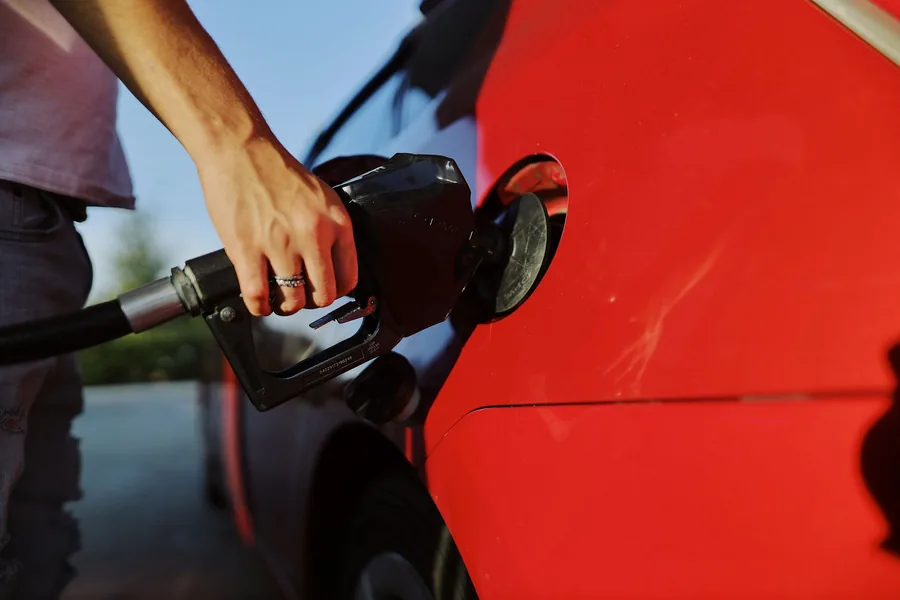
Dividing the same certified figures by distance gives the number that is easiest to compare between cars: the cost per kilometre. The average petrol car in our Dutch pool costs €0.20 per kilometre in fuel, the average diesel and the average hybrid €0.14, and the average electric car €0.04. Put the other way round, a petrol car costs about €20 of fuel to cover 100 km at Dutch prices, a diesel or hybrid about €14, and an electric car about €4.
That gap is the reason autokosten per maand reads so differently depending on what is on your driveway. The table below shows the same four averages at 10,000, 15,000, 20,000 and 25,000 km a year, because mileage is the one variable a driver genuinely controls. A household that covers 10,000 km a year spends €2,016 on petrol for an average car; a long-distance commuter at 25,000 km spends €5,041 for exactly the same car. The powertrain ranking never changes with distance, but the size of the gap does: the more kilometres you drive, the more the efficient car wins.
| Powertrain | Per km | 10,000 km | 15,000 km | 20,000 km | 25,000 km |
|---|---|---|---|---|---|
| Petrol | €0.20 | €2,016 | €3,025 | €4,033 | €5,041 |
| Diesel | €0.14 | €1,365 | €2,048 | €2,730 | €3,413 |
| Hybrid (non-plug) | €0.14 | €1,441 | €2,162 | €2,882 | €3,603 |
| Electric | €0.04 | €447 | €670 | €894 | €1,117 |
Autokosten per maand: what a car costs a Dutch household every month
Monthly figures are how most people actually feel a car, because fuel, MRB and insurance arrive in different rhythms and the tank never empties in a tidy annual pattern. Looking at the model averages rather than the row averages — one entry per make and model, so a badge with fifteen trims does not distort the picture — the average petrol car in our Dutch pool costs €246 a month in fuel, the average diesel €162, the average hybrid €186 and the average electric car €55.
The cheapest cars change the shape of that number completely. The 2017 Peugeot 208 diesel that tops the diesel table costs €87 a month in fuel; the MINI Aceman that tops the electric table costs €35. Set those against the average petrol car at €246 and the spread inside a single market is roughly a factor of seven — which is far wider than the spread between two adjacent model years of the same car, and it is the reason the model you choose matters more than the year you choose it in.
Fuel and electricity only. MRB, insurance, tyres, servicing and depreciation are separate costs and are covered further down the page or excluded entirely — see 'What this ranking leaves out'.
Why Dutch pump prices make this ranking so decisive
The Netherlands has the highest pump prices of the eleven markets we hold data for: €2.35 per litre for petrol against €2.236 in Germany, €2.203 in Finland, €2.073 in France, €1.885 in Belgium, €1.84 in Ireland, €1.733 in Spain and the equivalent of €1.471 in Sweden. Filling a 50-litre tank costs about €118 here. That has a direct consequence for anyone choosing between two cars: every litre per 100 km you save is worth more in the Netherlands than anywhere else we cover.
Dutch diesel is a different story. At €2.326 a litre it is marginally cheaper than petrol, by €0.024 — the same direction as Germany, where diesel is €0.004 cheaper, and the opposite of Belgium, where diesel costs €0.323 more per litre, and France, where it costs €0.136 more. Because the average diesel also burns 31% less fuel per kilometre than the average petrol car, a Dutch buyer gets the cheaper litre and the more efficient engine at the same time, which is a combination Spanish, Belgian and French drivers do not get.
Petrol and diesel prices are the EU Oil Bulletin national averages for the week of 31 August 2026; electricity is the Eurostat household price for the second half of 2025, including taxes. The EU average is €1.840 for petrol and €1.966 for diesel.
The cheapest petrol cars to run in the Netherlands in 2026
The petrol table is topped by cars that were never sold as anything special. A 2000 Honda Insight leads at 3.4 L/100km and €1,199 a year in fuel — a two-seat experiment with a figure that small city cars took another fifteen years to match. Behind it sits a cluster of little hatchbacks at 3.6 to 3.8 L/100km: the Suzuki Celerio, the Citroën C1, the Peugeot 108, the Fiat 500 and, less obviously, a 2018 Kia Niro.
The whole top of the table costs between €1,199 and €1,410 a year in fuel at Dutch prices, which is markedly less than half of the €3,025 average petrol car in the same pool — a saving of €1,826 a year for the very best of them. Every car on the list emits between 80 and 98 g/km of CO₂, which matters in a country where CO₂ bands follow the car through its whole life.
| Model | Year | L/100km | CO₂ | Fuel per year | Per month |
|---|---|---|---|---|---|
| Honda Insight | 2000 | 3.4 | 80 g/km | €1,199 | €100 |
| Suzuki Celerio | 2017 | 3.6 | 84 g/km | €1,269 | €106 |
| Citroën C1 | 2016 | 3.8 | 88 g/km | €1,340 | €112 |
| Fiat 500 & 500C | 2018 | 3.8 | 90 g/km | €1,340 | €112 |
| Peugeot 108 | 2014 | 3.8 | 88 g/km | €1,340 | €112 |
| Kia Niro | 2018 | 3.8 | 88 g/km | €1,340 | €112 |
| Hyundai i10 | 2017 | 4.0 | 93 g/km | €1,410 | €118 |
| Smart fortwo coupé | 2016 | 4.0 | 98 g/km | €1,410 | €118 |
The cheapest diesel cars to run in the Netherlands
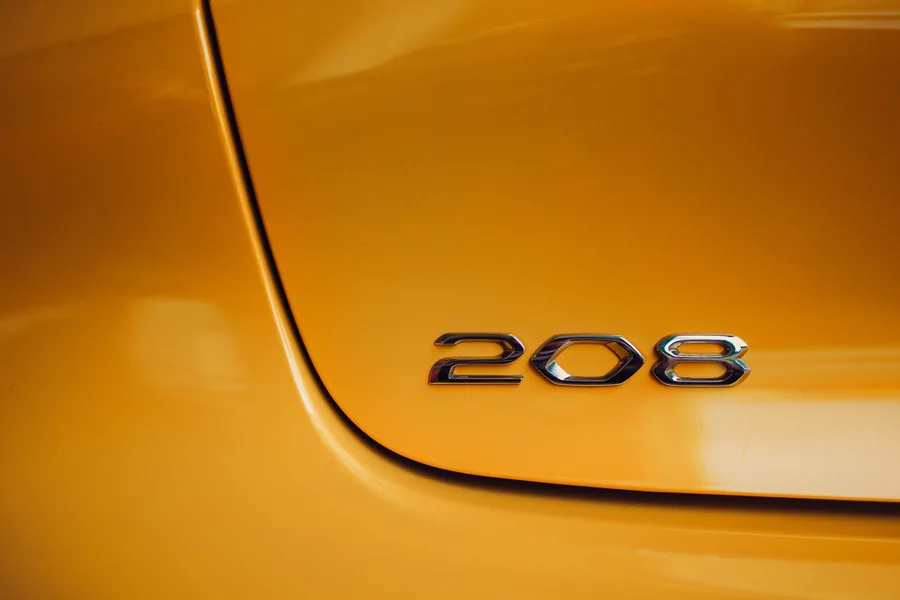
Diesel produces the lowest fuel bill of any combustion option here. A 2017 Peugeot 208 approved at 3.0 L/100km costs €1,047 a year in fuel at €2.326 a litre — the cheapest combustion figure in the entire 16,728-row pool, and cheaper per year than every petrol car on the previous table. The Peugeot 308 follows at 3.1 L/100km and €1,082 a year.
Behind those two comes a very tight pack at 3.2 L/100km: the Ford Fiesta, Nissan Micra, Škoda Octavia, Volkswagen Golf, Renault Clio and Hyundai i20 all land at €1,116 a year, all with CO₂ between 82 and 85 g/km. That uniformity is not a coincidence. 3.2 L/100km was the number a lot of European manufacturers aimed at in the mid-2010s to sit inside low company-car and tax bands, and the Dutch used market is full of those cars. Against the average petrol car in the same pool at €3,025, the cheapest diesel saves €1,978 a year in fuel alone.
| Model | Year | L/100km | CO₂ | Fuel per year | Per month |
|---|---|---|---|---|---|
| Peugeot 208 | 2017 | 3.0 | 79 g/km | €1,047 | €87 |
| Peugeot 308 | 2017 | 3.1 | 82 g/km | €1,082 | €90 |
| Ford Fiesta | 2017 | 3.2 | 82 g/km | €1,116 | €93 |
| Nissan Micra | 2018 | 3.2 | 85 g/km | €1,116 | €93 |
| Škoda Octavia | 2014 | 3.2 | 85 g/km | €1,116 | €93 |
| Volkswagen Golf | 2014 | 3.2 | 85 g/km | €1,116 | €93 |
| Renault Clio | 2013 | 3.2 | 83 g/km | €1,116 | €93 |
| Hyundai i20 | 2013 | 3.2 | 84 g/km | €1,116 | €93 |
The cheapest hybrids to run in the Netherlands
There are only 443 non-plug hybrid records in the pool against 8,248 petrol ones, and the reason is visible in the table: the hybrid market in Europe is essentially one manufacturer's family plus a handful of imitators. A 2018 Toyota Prius leads at 3.0 L/100km and €1,058 a year — €88 a month — and the Toyota Yaris follows at 3.3 L/100km and €1,163.
What makes the hybrid column interesting in the Netherlands is how narrow it is. Every car in the top seven sits between 3.0 and 3.8 L/100km, so the whole list lives inside €1,058 to €1,340 a year. A hybrid is therefore a low-variance choice: it will not match the best diesel's certified figure, but it also will not collapse to 7 L/100km in stop-start city traffic the way a small petrol engine can, and 74 of the 443 hybrid records — 17% — sit below the 100 g/km CO₂ line, against 2% of petrol records.
| Model | Year | L/100km | CO₂ | Fuel per year | Per month |
|---|---|---|---|---|---|
| Toyota Prius | 2018 | 3.0 | 70 g/km | €1,058 | €88 |
| Toyota Yaris | 2018 | 3.3 | 75 g/km | €1,163 | €97 |
| Hyundai IONIQ | 2017 | 3.4 | 79 g/km | €1,199 | €100 |
| Toyota Auris | 2018 | 3.5 | 79 g/km | €1,234 | €103 |
| Lexus CT200h | 2018 | 3.6 | 82 g/km | €1,269 | €106 |
| Kia Niro | 2018 | 3.7 | 86 g/km | €1,304 | €109 |
| Mazda2 Hybrid (2026) | 2026 | 3.8 | 87 g/km | €1,340 | €112 |
The cheapest electric cars to run in the Netherlands in 2026
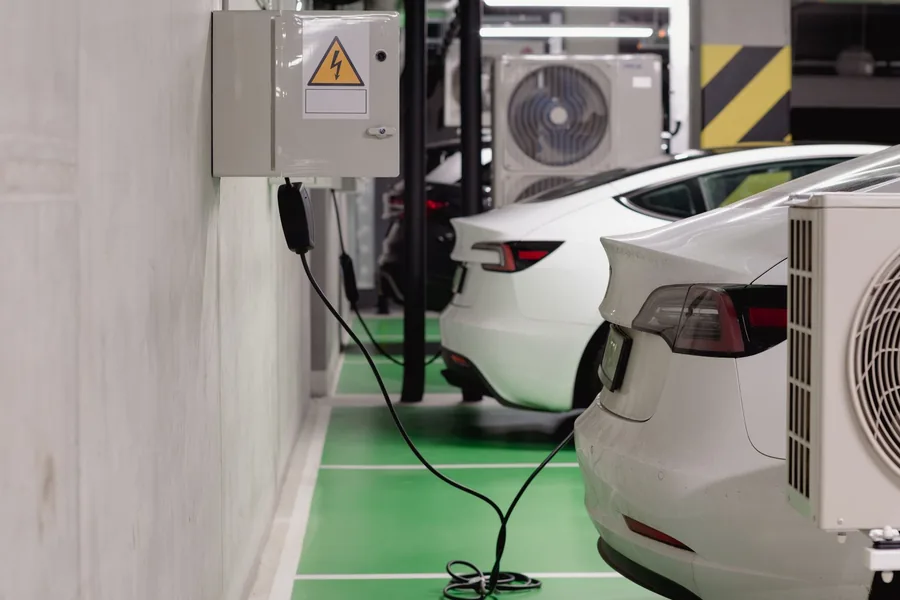
The electric table is where the Dutch numbers get dramatic, because €0.256 per kWh is a third of the price of a litre of petrol per unit of energy. A 2026 MINI Aceman approved at 10.9 kWh/100km costs €419 a year on household electricity — €35 a month — and the Mercedes-Benz CLA Saloon and Dacia Spring follow at €468 and €480. Even the Tesla Model 3 at 13.8 kWh/100km comes in at €530 a year, or €44 a month.
For scale: the average petrol car in this pool costs €3,025 a year in fuel. The average electric car costs €670, which is €2,361 less — about €197 a month. That comparison holds only for charging at home, and it holds only on energy: it says nothing about purchase price, resale value or the cost of a public fast charger, which is a materially more expensive way to buy the same kWh. But on the thing this page measures, no combustion car in 16,728 records gets close to the electric column.
| Model | Year | kWh/100km | Electricity per year | Per month |
|---|---|---|---|---|
| MINI Aceman | 2026 | 10.9 | €419 | €35 |
| Mercedes-Benz CLA Saloon | 2026 | 12.2 | €468 | €39 |
| Dacia Spring | 2026 | 12.5 | €480 | €40 |
| Fiat 500 | 2025 | 13.3 | €511 | €43 |
| Tesla Model 3 | 2026 | 13.8 | €530 | €44 |
| MINI Cooper Electric | 2026 | 14.2 | €545 | €45 |
| Peugeot 2008 | 2026 | 14.2 | €545 | €45 |
| Tesla Model Y | 2026 | 14.2 | €545 | €45 |
Zuinigste auto 2026: the most efficient new cars on sale this year
Used-car rankings are useful, but a Dutch buyer walking into a showroom in 2026 needs the new-car picture, and it looks different. Among 2026 model-year petrol cars the most efficient is the Škoda Fabia Hatch at 5.2 L/100km, costing €1,833 a year in fuel — €153 a month — with the Renault Clio, Peugeot 208, Vauxhall Corsa, SEAT Ibiza and Volkswagen Polo packed between 5.3 and 5.5 L/100km.
Two things are worth saying plainly about that. First, a brand-new petrol car cannot beat a 2017 diesel hatchback on energy: the Fabia at €1,833 a year is €786 a year dearer than the Peugeot 208 diesel at €1,047. Second, the cheapest new car in the whole dataset on energy is an electric one — the MINI Aceman at €419 — which is less than a quarter of the new petrol leader. The hybrid leader among 2026 cars, the Mazda2 Hybrid and Toyota Aygo X HEV at 3.8 L/100km, lands at €1,340 a year, which is the best a new combustion car can do without a plug.
| Powertrain | Most efficient 2026 model | Figure | Energy per year | Per month |
|---|---|---|---|---|
| Petrol | Škoda Fabia Hatch | 5.2 L/100km | €1,833 | €153 |
| Diesel | Škoda Octavia / VW Golf | 4.7 L/100km | €1,640 | €137 |
| Hybrid | Mazda2 Hybrid / Toyota Aygo X HEV | 3.8 L/100km | €1,340 | €112 |
| Electric | MINI Aceman | 10.9 kWh/100km | €419 | €35 |
What a Golf, Polo, Clio or Qashqai costs to run in the Netherlands
Leaderboards are made of cars most people will never buy. The models Dutch drivers actually cross-shop tell a more practical story, and almost all of them appear in the diesel column because that is where the efficient mid-sized cars live. A used Volkswagen Golf's cheapest variant sits at 3.4 L/100km and €1,186 a year — €99 a month — and the Ford Focus matches it exactly at €1,186.
The compact SUVs are more expensive to move than the hatchbacks they are based on, which is a weight story rather than an engine story: a used Nissan Qashqai's cheapest variant is certified at 3.8 L/100km for €1,326 a year, a Peugeot 3008 at 4.2 L/100km for €1,465, and a Hyundai Tucson or Kia Sportage at 4.6 L/100km for €1,605 each. On the hybrid side the numbers are remarkably stable — a Toyota Yaris at €1,163, a Toyota C-HR at €1,340 and a 2025 Toyota Corolla at €1,657 — and the Corolla's figure is a reminder that a newer car is not automatically a cheaper one to fuel.
| Model (cheapest variant) | Year | Powertrain | Figure | Energy per year | Per month |
|---|---|---|---|---|---|
| Peugeot 208 | 2017 | Diesel | 3.0 L/100km | €1,047 | €87 |
| Ford Fiesta | 2017 | Diesel | 3.2 L/100km | €1,116 | €93 |
| Toyota Yaris | 2018 | Hybrid | 3.3 L/100km | €1,163 | €97 |
| Volkswagen Golf | 2016 | Diesel | 3.4 L/100km | €1,186 | €99 |
| Ford Focus | 2013 | Diesel | 3.4 L/100km | €1,186 | €99 |
| Volkswagen Polo | 2011 | Diesel | 3.5 L/100km | €1,221 | €102 |
| Renault Clio / Captur | 2011 | Diesel | 3.6 L/100km | €1,256 | €105 |
| Nissan Qashqai | 2018 | Diesel | 3.8 L/100km | €1,326 | €110 |
| Toyota C-HR | 2018 | Hybrid | 3.8 L/100km | €1,340 | €112 |
| Peugeot 3008 | 2013 | Diesel | 4.2 L/100km | €1,465 | €122 |
| Hyundai Tucson | 2017 | Diesel | 4.6 L/100km | €1,605 | €134 |
| Kia Sportage | 2018 | Diesel | 4.6 L/100km | €1,605 | €134 |
Wegenbelasting 2026: MRB, weight, and why the same car costs different amounts
The motorrijtuigenbelasting — MRB, the Dutch road tax, universally called wegenbelasting — is the fixed charge that decides whether a frugal car is genuinely cheap to run in the Netherlands. It is assessed on the weight of the car and on the province you live in, paid quarterly, and it does not care how few kilometres you drive. Our calculator default of roughly €700 a year is a typical figure for a petrol car in the 1.2 to 1.4 tonne range; the Belastingdienst's own worked example of about €126 per quarter at 1,000 kg comes to around €504 a year.
That weight basis has an effect most rankings ignore. A small city car with a 3.6 L/100km certified figure and a light kerb weight pays materially less MRB than a heavier car with the same engine and a similar consumption figure, so the ranking on fuel is not automatically the ranking on total cost. It also means the gap between two cars can be narrower — or wider — than the fuel table suggests, depending on which one weighs more.
APK 2026: what the Dutch roadworthiness test adds to the bill
The APK is the Dutch periodic roadworthiness test, and at about €65 a test it is one of the cheapest statutory inspections in the markets we cover — well below the German HU/AU at around €160, the French contrôle technique at around €78 and the Irish NCT at €55 for a test that runs on a two-year cycle for most cars. Independent stations typically charge €35 to €70, with the main chains sitting at the top of that range.
How often your car needs one depends on what it is and how old it is, so we do not annualise the APK into the totals on this page — a figure that varies by vehicle age would make the ranking less honest, not more. What matters for planning is that it is a small, predictable cost compared with fuel, and it is the one line on a Dutch car's annual bill that a frugal driver and a thirsty driver pay identically.
What a Dutch driver actually pays: energy plus the fixed charges
Adding the fixed charge to the fuel figure gives the closest thing to a total running cost this page can support. Using the typical €700 MRB and the light-car example of €504 side by side, the cheapest petrol car in our pool — the Honda Insight at €1,199 in fuel — lands at €1,899 a year with the higher figure and €1,703 with the lower one. The cheapest diesel, the Peugeot 208 at €1,047, lands at €1,747 and €1,551. The Toyota Prius lands at €1,758 and €1,562. The MINI Aceman, at €419 of electricity, lands at €1,119 and €923.
The most useful number in that table is the last one: an average petrol car in the Dutch pool costs €3,725 a year in energy and MRB combined. That is the number a household is really choosing against when it decides whether to change cars, and it is roughly two and a half times what an efficient small car and roughly three times what a home-charged electric car costs on the same basis.
| Car | Energy per year | + MRB at €700 | + MRB at €504 |
|---|---|---|---|
| MINI Aceman (electric) | €419 | €1,119 | €923 |
| Peugeot 208 (diesel) | €1,047 | €1,747 | €1,551 |
| Toyota Prius (hybrid) | €1,058 | €1,758 | €1,562 |
| Honda Insight (petrol) | €1,199 | €1,899 | €1,703 |
| Suzuki Celerio (petrol) | €1,269 | €1,969 | €1,773 |
| Citroën C1 (petrol) | €1,340 | €2,040 | €1,844 |
| Average petrol car | €3,025 | €3,725 | — |
How the Netherlands compares with its neighbours
Because the certified consumption figures are EU-wide, the same car can be priced in every market we cover and the only thing that changes is the pump. Take the average petrol car in our pool — 8.6 L/100km — and price it at each country's own pump price: the Netherlands is the dearest at €3,032 a year, followed by Germany at €2,884, Finland at €2,842, France at €2,674, the UK at €2,463, Belgium at €2,432, Ireland at €2,374, Spain at €2,236 and Sweden at €1,897.
That is a spread of €1,134 a year for the identical car and the identical number of kilometres, purely because of where it is parked. For a Dutch driver the practical reading is that the same car costs €796 a year more to fuel than it would in Spain and €147 more than in Germany — which is why a car that looks expensive to run in a German review may look considerably more expensive in a Dutch one.
| Market | Petrol price | Same car per year | Difference vs the Netherlands |
|---|---|---|---|
| Netherlands | €2.350/L | €3,032 | — |
| Germany | €2.236/L | €2,884 | €147 less |
| Finland | €2.203/L | €2,842 | €190 less |
| France | €2.073/L | €2,674 | €357 less |
| United Kingdom | €1.909/L | €2,463 | €569 less |
| Belgium | €1.885/L | €2,432 | €600 less |
| Ireland | €1.840/L | €2,374 | €658 less |
| Spain | €1.733/L | €2,236 | €796 less |
| Sweden | €1.471/L | €1,897 | €1,134 less |
Diesel versus petrol in the Netherlands: cheaper litre, cheaper kilometres
The Netherlands is one of the few markets we cover where diesel is both cheaper per litre and more efficient per kilometre, so the usual trade-off does not apply. The average petrol car here costs €3,032 a year in fuel at €2.35 a litre; the average diesel costs €2,048 at €2.326 a litre. That is €973 a year, or 32%, in favour of diesel before you consider anything else.
The break-even is worth stating exactly, because it is the kind of number that decides a purchase. A petrol car would need to burn 8.51 L/100km or less to match the average diesel car's annual energy bill at Dutch prices. That is achievable — the whole top of the petrol table is well below it — but only for small, light cars. For a mid-sized or family car, a petrol engine will almost never beat diesel on energy in the Netherlands on the certified figures we hold.
This comparison is energy cost only. It ignores the difference in purchase price, the resale market for each fuel, and any local restrictions on older diesel vehicles — none of which the type-approval data can answer.
The thirsty end of the Dutch market
A ranking of cheap cars is only half the picture, and the other half is what the expensive ones cost. The thirstiest petrol model in our Dutch pool is a 2000 Lamborghini Diablo at 24.9 L/100km, which costs €8,777 a year in fuel at €2.35 a litre. A 2026 McLaren GT at 23.7 L/100km costs €8,354, a 2005 Maserati MC12 at 23.0 L/100km costs €8,108, and a 2000 Ferrari at 22.3 L/100km costs €7,861.
Nothing on that list is a realistic Dutch daily driver, and that is precisely the point: the gap between the cheapest and the dearest car in the same dataset is more than €7,500 a year in energy alone. Most real purchasing decisions sit somewhere in the middle of that range, between a €1,047 diesel hatchback and a €3,725 all-in average — which is where the fuel tables above are actually useful.
What this ranking leaves out
This page prices energy and, in the all-in table, MRB. It deliberately excludes four costs that matter to a real Dutch car owner, because we hold no verified national figures for them and we will not invent any. Insurance depends on your postcode, your claims history and the car, and Dutch premiums vary enormously between drivers of the same model. Servicing and repairs depend on the individual car, its mileage and its workshop. Tyres depend on size and brand. Depreciation is the largest single cost of most new cars and depends on the market rather than on the car's efficiency.
It also excludes the one-off purchase taxes a Dutch buyer pays. BPM is charged when a car is registered and is banded on CO₂, so a car with a low certified figure will generally attract less of it than a thirsty one — but the amount depends on the car, and a percentage quoted here would be wrong for almost everyone reading it.
Nothing on this page is financial advice. Every figure is an estimate built from published type-approval data and national average energy prices, and your own costs will differ with your driving, your tariff and your car's condition.
How to check your own car's running cost in the Netherlands
The tables on this page use one mileage — 15,000 km — and national average prices, which is the right basis for a fair comparison but the wrong basis for your own household. If you drive 8,000 km a year, the fuel column shrinks accordingly; if your electricity tariff is above the national average because you charge mostly at public points, the electric column grows fast.
The practical approach is to take the certified figure for the car you are considering, put it alongside your own annual mileage and the price you actually pay, and add your own MRB band from the weight of the car. Our calculators run entirely in the browser, take the Dutch market's own currency and units, and let you change the price of a litre or a kWh to whatever is on your own fuel card. Start with the car cost calculator for the annual picture, the fuel cost calculator for the litre-by-litre arithmetic, and the electric car cost calculator if you are weighing up a home charger.
Use the free calculators
Frequently asked questions
Wat is de zuinigste auto in 2026 in Nederland?
On energy alone, the most efficient car in our 16,728-row Dutch dataset is the electric MINI Aceman at 10.9 kWh/100km, which costs €419 a year on household electricity — €35 a month. Among petrol cars the Honda Insight at 3.4 L/100km is cheapest at €1,199 a year, among diesels the 2017 Peugeot 208 at 3.0 L/100km and €1,047, and among hybrids the Toyota Prius at 3.0 L/100km and €1,058.
Wat zijn de autokosten per maand in Nederland in 2026?
Energy only, the average petrol car in our Dutch pool costs €252 a month at 15,000 km a year, the average diesel €171, the average non-plug hybrid €180 and the average electric car €56. Cheap models sit far below those averages: the Peugeot 208 diesel costs €87 a month in fuel and the MINI Aceman €35. Add MRB at the typical €700 a year and an average petrol car reaches €3,725 a year in energy and road tax.
Hoeveel wegenbelasting betaal je in 2026?
MRB, the wegenbelasting, is assessed on the weight of the car and the province you live in and is paid quarterly. Our calculator default of about €700 a year is typical for a petrol car in the 1.2 to 1.4 tonne range; the Belastingdienst's worked example of €126 per quarter at 1,000 kg comes to roughly €504 a year. Because it is weight-based, a light city car pays less than a heavier car with the same engine.
Is diesel goedkoper dan benzine in Nederland in 2026?
Yes. At €2.326 a litre diesel is €0.024 cheaper than petrol at €2.35, and the average diesel car also uses 31% less fuel per kilometre — 5.9 L/100km against 8.6. That combination means diesel saves €973 a year, or 32%, over petrol on average. A petrol car would have to burn 8.51 L/100km or less to match the average diesel's annual energy bill at Dutch prices.
Wat kost een auto per kilometer in Nederland in 2026?
Fuel only, the average petrol car costs €0.20 per kilometre at Dutch pump prices, the average diesel and hybrid €0.14, and the average electric car €0.04. Over 100 km that is about €20 of petrol against about €4 of home electricity. The cheapest diesel in our dataset, the 2017 Peugeot 208 at 3.0 L/100km, works out at €0.07 per kilometre.
Is een elektrische auto goedkoper in gebruik dan een benzineauto in Nederland?
On energy, yes, and by a wide margin: the average electric car in our pool costs €670 a year on household electricity against €3,025 for the average petrol car, a difference of €2,361, or about €197 a month. That applies to charging at home on a household tariff. It does not include purchase price, resale value or public fast-charging prices, and it is not a claim that an electric car is cheaper to own overall.
Wat kost de APK in 2026?
The APK costs about €65 a test, with independent stations typically charging €35 to €70. That makes it one of the cheapest statutory inspections in the markets we cover — below the German HU/AU at around €160 and the French contrôle technique at around €78. How often your car needs one depends on the vehicle and its age, so we do not spread it into the annual totals on this page.