Cost of Owning a Car in Spain — 2026 Full Breakdown

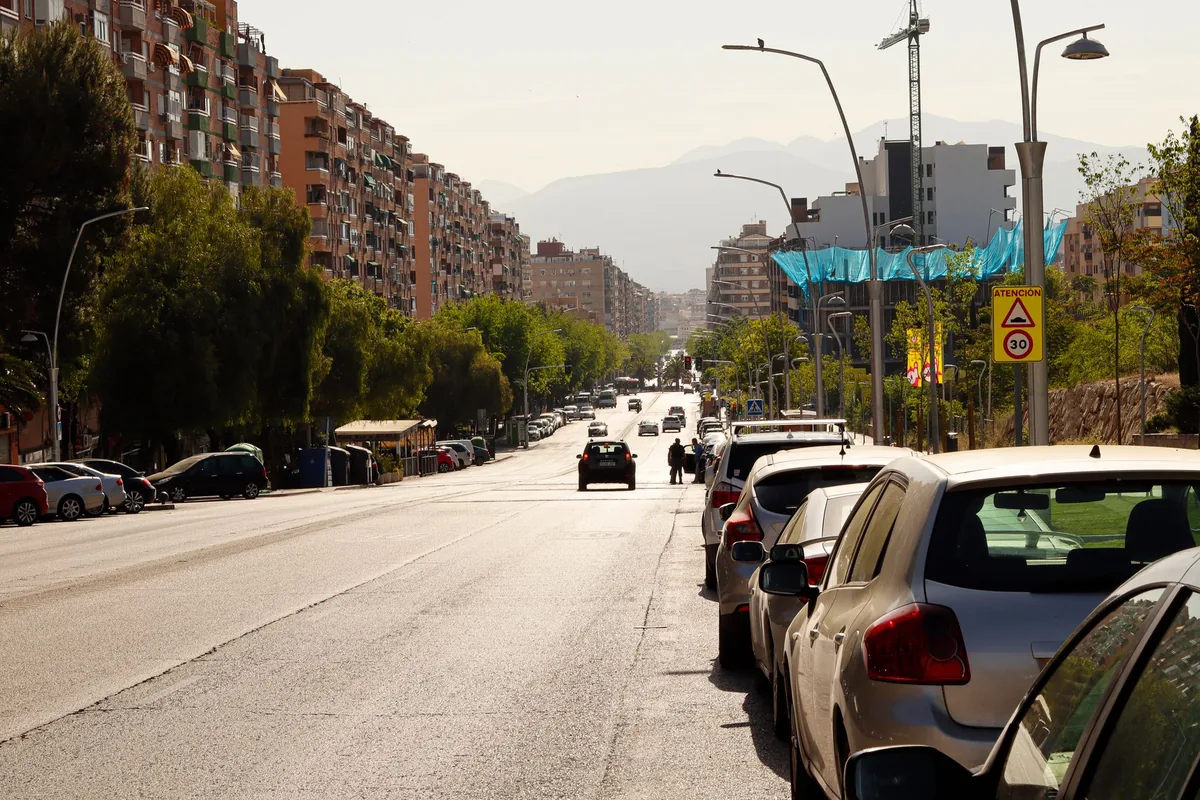
Car costs Spain owners actually face start at the pump: petrol averages €1.733 per litre and diesel €1.865 (EU Oil Bulletin, week of 31 August 2026), both below the EU averages of €1.840 and €1.966, so Spanish drivers are better off than almost anyone in Western Europe. Household electricity cuts the other way at €0.267 per kWh (Eurostat, H2 2025, band DC including taxes), above the EU average of €0.220, which squeezes the running-cost advantage of an electric car charged at home.
This guide rebuilds the picture from 17,130 official type-approval consumption records, priced at Spanish energy costs and 15,000 km a year: annual energy cost by powertrain with means and medians, cost per 100 km, the cheapest and dearest models, the IVTM municipal tax and ITV inspection, and an honest line between what the numbers cover and what only your insurer can tell you.
Car costs Spain starts with: what fuel and electricity really cost
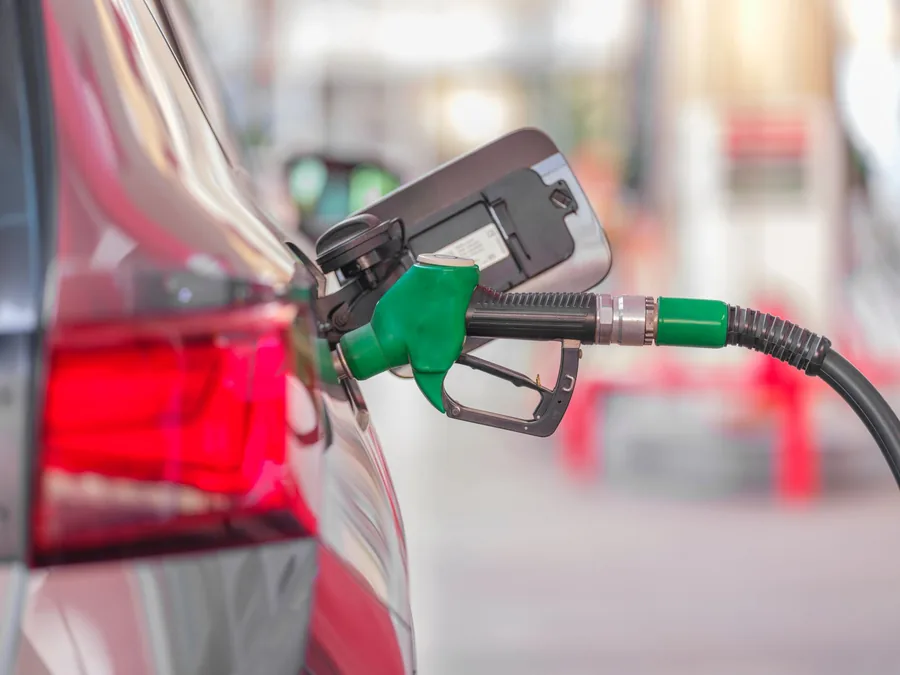
Spain's pump prices undercut most of its neighbours. Petrol at €1.733 per litre is €0.107 below the EU average of €1.840; diesel at €1.865 is €0.101 below €1.966. Against Germany the gap is far wider — €0.503 per litre on petrol (22% cheaper) and €0.367 on diesel (16%) — and against France Spain is €0.340 cheaper on petrol and €0.344 on diesel, roughly 16% on both.
Diesel keeps a premium over petrol in Spain — €0.132 per litre, or 7.6% — one of the smallest in the EU, where diesel averages €0.126 more than petrol. A 50-litre tank of petrol costs about €87 to fill, the same tank of diesel about €93; the EU Oil Bulletin resets these weekly, so treat them as a snapshot.
| Market | Petrol | Diesel | Household electricity |
|---|---|---|---|
| Spain | €1.733/L | €1.865/L | €0.267/kWh |
| EU average | €1.840/L | €1.966/L | €0.220/kWh |
| Germany | €2.236/L | €2.232/L | €0.387/kWh |
| France | €2.073/L | €2.209/L | €0.256/kWh |
| Ireland (dearest power in the EU) | €1.84/L | €1.92/L | €0.404/kWh |
Sources: EU Oil Bulletin week of 31 August 2026 for pump prices; Eurostat nrg_pc_204, H2 2025, household band DC including taxes, for electricity.
Cost per 100 km in Spain, by powertrain
Cost per 100 km compares a petrol supermini, a diesel estate and an electric SUV on the same terms because it strips out distance driven. At Spanish prices the average petrol record works out at €0.148 per kilometre, or €14.78 per 100 km; the average diesel and the average non-plug hybrid both land near €0.11 per kilometre (€10.89 and €10.54 per 100 km), and the average electric car at €0.047 per kilometre, or €4.66 per 100 km. These are averages, not best cases, and inside a single powertrain the best-to-worst gap is often wider than the gap between powertrains.
Put another way: 100 km of driving costs the average Spanish petrol car about €15, the average diesel about €11 and the average electric car about €5, so 20,000 km of electric driving costs less than 7,000 km of average petrol driving.
| Powertrain | Mean consumption | Median consumption | Mean cost per km | Mean cost per 100 km |
|---|---|---|---|---|
| Petrol | 8.53 L/100km | 7.80 L/100km | €0.148 | €14.78 |
| Diesel | 5.84 L/100km | 5.50 L/100km | €0.109 | €10.89 |
| Hybrid (non-plug) | 6.08 L/100km | 5.85 L/100km | €0.105 | €10.54 |
| Electric | 17.46 kWh/100km | 16.90 kWh/100km | €0.047 | €4.66 |
Both cost columns are the same figure in different units, at mean certified consumption and Spanish prices; cost per 100 km is cost per km multiplied by 100.
Annual energy cost by powertrain: the averages behind the headlines
Across all 17,130 records the average petrol car uses 8.53 L/100km and costs €2,217 a year in fuel at 15,000 km; the median petrol car is more efficient at 7.80 L/100km and €2,028, because performance cars, large SUVs and older automatics pull the mean up. Diesel averages 5.84 L/100km (median 5.50) for €1,632 mean and €1,539 median, non-plug hybrids 6.08 L/100km (median 5.85) for €1,581 and €1,521, and electric cars 17.46 kWh/100km (median 16.90) for €699 and €677.
The mean-versus-median gap matters most in petrol, where the long tail of thirsty cars is heaviest, and least in electric. Plug-in hybrids sit in the data at a mean of 6.19 L/100km, but that mixes electric and engine kilometres in a proportion nobody can predict, so we exclude PHEVs from the rankings and averages rather than pretend a single number represents them.
| Powertrain | Records | Mean annual energy | Median annual energy | Difference |
|---|---|---|---|---|
| Petrol | 9,201 | €2,217 | €2,028 | €189 |
| Diesel | 6,855 | €1,632 | €1,539 | €93 |
| Hybrid (non-plug) | 490 | €1,581 | €1,521 | €60 |
| Electric | 182 | €699 | €677 | €22 |
| Plug-in hybrid (excluded) | 402 | not meaningful | not meaningful | — |
All figures: 15,000 km a year at Spanish prices. Energy only — no insurance, tyres, servicing, tax or inspection.
Data quality disclosure: the eleven records we removed
Eleven of the 17,141 rows cannot represent a real car and every one of them is listed below. Nine sit outside the plausible consumption band we set for litres (2.5 to 25.0 L/100km): a petrol record at 141.2 L/100km, a diesel at 35.8 L/100km and a 2026 hybrid at 26.2 L/100km at the top end, plus six plug-in hybrids reporting 1.1 to 2.1 L/100km, official test results no owner can reproduce on the road. The remaining two are hybrid-tagged rows at 2.8 L/100km — plug-in numbers carrying a non-plug label — dropped from the hybrid average and the hybrid leaderboard.
No kWh record had to be discarded: every electric row sat inside the 5.0 to 40.0 kWh/100km band we applied, and the extremes are genuine — the 2026 Mini Aceman at 10.9 kWh/100km and the 2026 Mercedes-Benz G-Class at 30.3 kWh/100km are both certified values for cars on sale. Disclosure of this kind is not decoration: an unremarked 1.1 L/100km plug-in hybrid would flatter the hybrid average by enough to change the ranking.
| Fuel tagged | Figure | Why excluded | Dataset |
|---|---|---|---|
| Petrol | 141.2 L/100km | outside 2.5-25.0 band | vca-mega |
| Diesel | 35.8 L/100km | outside 2.5-25.0 band | vca-archive |
| Hybrid | 26.2 L/100km | outside 2.5-25.0 band | vca-uk |
| Hybrid | 2.8 L/100km | plug-in figure on a hybrid tag | vca-mega |
| Hybrid | 2.8 L/100km | plug-in figure on a hybrid tag | vca-mega |
| Plug-in hybrid | 2.1 L/100km | outside 2.5-25.0 band | vca-archive |
| Plug-in hybrid | 1.8 L/100km | outside 2.5-25.0 band | vca-archive |
| Plug-in hybrid | 1.3 L/100km | outside 2.5-25.0 band | vca-mega |
| Plug-in hybrid | 1.2 L/100km | outside 2.5-25.0 band | vca-archive |
| Plug-in hybrid | 1.2 L/100km | outside 2.5-25.0 band | vca-archive |
| Plug-in hybrid | 1.1 L/100km | outside 2.5-25.0 band | vca-mega |
Cheapest petrol cars to run in Spain
The cheapest petrol model a Spanish buyer could realistically find used is the 2017 Suzuki Celerio at 3.6 L/100km, €936 a year in fuel at 15,000 km — €1,281 less than the petrol average. Behind it sits a cluster of city cars and superminis at 3.8 L/100km and €988: the Citroën C1, the 2018 Fiat 500 and 500C, the Kia Niro and the Peugeot 108. The lowest certified petrol figure in all 9,201 petrol records is the 2000-2003 Honda Insight at 3.4 L/100km (€884 a year), but that two-seat aluminium special has all but gone from Spanish roads.
Notice what is absent: anything with a large boot, a raised ride height or an automatic gearbox. Petrol efficiency in the official data belongs to lightweight, small-engined cars. If you need family space the honest choice is a hybrid or a diesel — petrol in a mid-size car simply does not deliver 4 L/100km.
| Make | Model | Year | Consumption | CO₂ | Annual fuel in Spain |
|---|---|---|---|---|---|
| Honda | Insight | 2000-2003 | 3.4 L/100km | 80 g/km | €884 |
| Suzuki | Celerio | 2017 | 3.6 L/100km | 84 g/km | €936 |
| Citroën | C1 | 2016 | 3.8 L/100km | 88 g/km | €988 |
| Fiat | 500 & 500C | 2018 | 3.8 L/100km | 90 g/km | €988 |
| Kia | Niro | 2018 | 3.8 L/100km | 88 g/km | €988 |
| Peugeot | 108 | 2014 | 3.8 L/100km | 88 g/km | €988 |
| Fiat | 500 and 500C | 2013 | 4.0 L/100km | 92 g/km | €1,040 |
Cheapest diesel cars to run in Spain
Diesel is where the Spanish used market has historically put its money. The 2017 Peugeot 208 at 3.0 L/100km is the cheapest combustion car in the dataset at €839 a year — less than the cheapest petrol car and €793 below the diesel average. The 2017 Peugeot 308 follows at 3.1 L/100km (€867), then a broad group at 3.2 L/100km and €895: the Citroën C4 Cactus, the Ford Fiesta, the Hyundai i20 and three body variants of the Kia Rio.
The efficiency advantage of diesel is real but not free: diesel costs 7.6% more per litre in Spain, so a diesel wins only if it uses at least 7.1% less fuel than the petrol alternative. Every model in this table clears that bar — the 208 uses 3.0 L/100km against 4.3 L/100km for the petrol 208 in the same dataset, a 30% reduction. The catch sits elsewhere: diesel is the powertrain most exposed to city access restrictions, and a diesel variant's higher purchase price must be recovered from a saving of a few hundred euros a year at 15,000 km.
| Make | Model | Year | Consumption | CO₂ | Annual fuel in Spain |
|---|---|---|---|---|---|
| Peugeot | 208 | 2017 | 3.0 L/100km | 79 g/km | €839 |
| Peugeot | 308 | 2017 | 3.1 L/100km | 82 g/km | €867 |
| Citroën | C4 Cactus | 2014 | 3.2 L/100km | 82 g/km | €895 |
| Ford | Fiesta | 2017 | 3.2 L/100km | 82 g/km | €895 |
| Hyundai | i20 | 2016 | 3.2 L/100km | 84 g/km | €895 |
| Kia | Rio | 2011-2014 | 3.2 L/100km | 85 g/km | €895 |
Diesel gets a hard time in Spanish cities because of low-emission zone (ZBE) rules, not because of its running cost — check the rules in your municipality before buying.
Hybrids: the cheapest petrol-burning option for most Spanish drivers
Non-plug hybrids are the quiet winners of this dataset. The 2018 Toyota Prius at 3.0 L/100km costs €780 a year, the cheapest car in the database that burns any fuel at all. The Yaris Hybrid sits at 3.3 L/100km (€858), the Hyundai Ioniq at 3.4 L/100km (€884), the Auris and Auris Touring Sports at 3.5 L/100km (€910) and the Lexus CT200h at 3.6 L/100km (€936). Toyota and Lexus take six of the top ten places, the result of two decades refining a system built for stop-start urban driving rather than laboratory numbers.
The economics are straightforward once you compare like with like: the hybrid average of €1,581 a year is €635 below the petrol average, and the best hybrid beats the best petrol model by €156 a year while offering a normal four-seat cabin and a boot. A non-plug hybrid needs no charger and its certified figure is reproducible without behaviour change, which is why it suits drivers who park on the street in a Spanish city.
| Make | Model | Year | Consumption | Annual fuel in Spain | vs petrol average |
|---|---|---|---|---|---|
| Toyota | Prius | 2018 | 3.0 L/100km | €780 | −€1,437 |
| Toyota | Yaris Hybrid | 2018 | 3.3 L/100km | €858 | −€1,359 |
| Hyundai | Ioniq | 2017 | 3.4 L/100km | €884 | −€1,333 |
| Toyota | Auris | 2018 | 3.5 L/100km | €910 | −€1,307 |
| Toyota | Auris Touring Sports | 2018 | 3.5 L/100km | €910 | −€1,307 |
| Lexus | CT200h | 2018 | 3.6 L/100km | €936 | −€1,281 |
Electric cars: the lowest running cost in Spain, if you charge at home
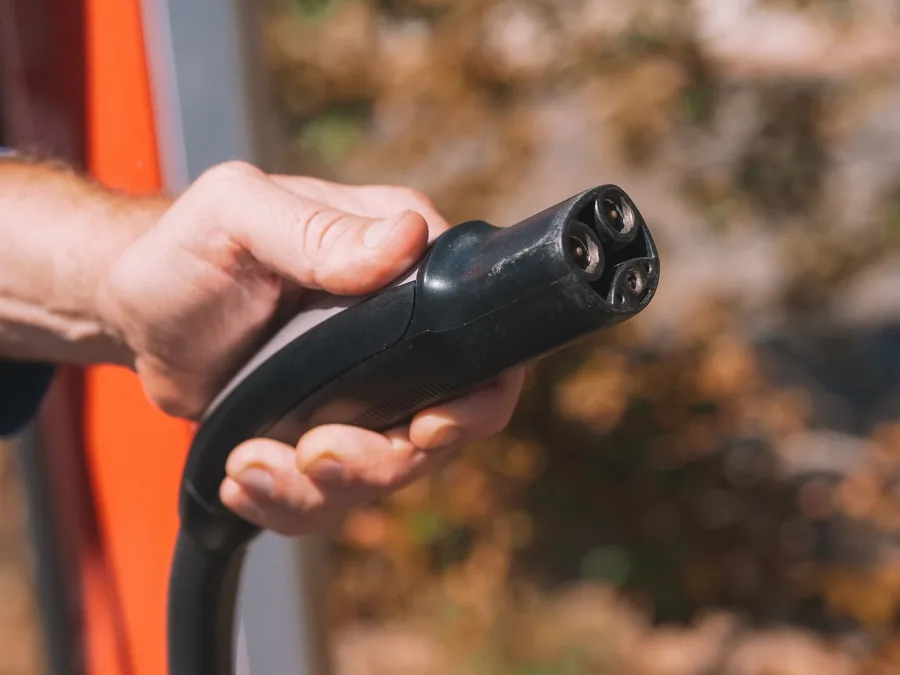
The 2026 Mini Aceman at 10.9 kWh/100km costs €437 a year in household electricity at 15,000 km — less than half the cheapest petrol car and a fifth of the petrol average. Then come the 2026 Mercedes-Benz CLA Saloon (12.2 kWh/100km, €489), the Dacia Spring (12.5 kWh/100km, €501), the Fiat 500 at 13.3 kWh/100km (€533), the Tesla Model 3 at 13.8 kWh/100km (€553) and a four-way tie at 14.2 kWh/100km and €569 between the Mini Cooper Electric, Peugeot 2008, Tesla Model Y and Volkswagen ID.7. Across all 182 electric records the average is €699 a year — €1,517 less than the average petrol car, or 68% cheaper.
Two conditions make that advantage real. First, home charging: Spanish household electricity at €0.267 per kWh is above the EU average of €0.220 and well above French rates, so an EV charged on a public rapid network at a commercial tariff loses much of its edge. Second, efficiency discipline: the spread inside the electric table is only €777 a year between the cheapest and dearest EV, but the dearest model — a 2026 Mercedes-Benz G-Class at 30.3 kWh/100km, €1,214 a year — costs nearly three times the best. Electric is not a marginal saving in Spain; it is a structural one.
| Make | Model | Year | Consumption | Annual electricity in Spain |
|---|---|---|---|---|
| Mini | MINI Aceman | 2026 | 10.9 kWh/100km | €437 |
| Mercedes-Benz | CLA Saloon | 2026 | 12.2 kWh/100km | €489 |
| Dacia | Spring | 2026 | 12.5 kWh/100km | €501 |
| Fiat | 500 | 2025 | 13.3 kWh/100km | €533 |
| Tesla | Model 3 | 2026 | 13.8 kWh/100km | €553 |
| Mini | Mini Cooper Electric | 2026 | 14.2 kWh/100km | €569 |
| Peugeot | 2008 | 2026 | 14.2 kWh/100km | €569 |
| Tesla | Model Y | 2026 | 14.2 kWh/100km | €569 |
| Volkswagen | ID.7 | 2026 | 14.2 kWh/100km | €569 |
| Hyundai | Kona Electric | 2023 | 14.3 kWh/100km | €573 |
Public rapid charging is billed per kWh or per minute and is typically dearer than the household rate used here — these figures assume home charging.
The thirsty end of the Spanish market
At the top of the consumption range the numbers stop being a running-cost question and become a lifestyle one. A 2001 Lamborghini Diablo at 24.9 L/100km would cost €6,473 a year in petrol at 15,000 km, the 2026 McLaren GT at 23.7 L/100km €6,161. Behind them come the Maserati MC12 at 23.0 L/100km (€5,979), a 2000 Ferrari at 22.3 L/100km (€5,797), the Lamborghini Murciélago at 21.5 L/100km (€5,589), the Dodge SRT10 at 21.1 L/100km (€5,485) and the Hummer H3 at 20.5 L/100km (€5,329). The spread from the cheapest petrol car to the dearest is €5,589 a year — more than the total annual fuel bill of the cheapest hybrid and the cheapest electric car put together.
Diesel and hybrid have their own extremes. The thirstiest diesels are big 4x4s and SUVs at 11.3 to 12.2 L/100km: a 2004 Volkswagen Touareg or a 2026 INEOS Grenadier at €3,413 a year, the Toyota Land Cruiser and Nissan Patrol at 11.8 L/100km (€3,301). Heavy hybrids are performance and luxury SUVs: the Mercedes-Benz G-Class at 14.7 L/100km (€3,821), Audi RS Q8 at 13.5 L/100km (€3,509) and BMW X5 M at 12.8 L/100km (€3,327). A hybrid badge does not make a heavy car cheap to run.
| Powertrain | Dearest model | Consumption | Annual energy | Spread vs cheapest in class |
|---|---|---|---|---|
| Petrol | Lamborghini Diablo | 24.9 L/100km | €6,473 | €5,589 |
| Diesel | Volkswagen Touareg / INEOS Grenadier | 12.2 L/100km | €3,413 | €2,574 |
| Hybrid | Mercedes-Benz G-Class | 14.7 L/100km | €3,821 | €3,041 |
| Electric | Mercedes-Benz G-Class | 30.3 kWh/100km | €1,214 | €777 |
Why cheap Spanish fuel changes the ranking for a German or French driver
The same car costs a different amount to run depending on which side of a border it is registered. An ordinary 6.0 L/100km petrol car driven 15,000 km drinks €1,560 of fuel a year in Spain, €1,866 in France and €2,012 in Germany; pushed to 10.0 L/100km the German bill reaches €3,354 against €2,600 in Spain — €755 a year more for identical driving. On diesel the gap narrows but does not close: 6.0 L/100km costs €1,678 in Spain against €2,009 in Germany.
That shrinks the absolute prize for efficiency: a German driver who moves from a 10 L/100km car to a 6 L/100km car saves €1,342 a year, a Spanish driver making the same move saves €1,040, and cheaper fuel means a longer payback on any fuel-saving technology. The one place Spain is not cheap is electricity, where €0.267 per kWh compares with €0.256 in France and a €0.220 EU average, so the petrol-versus-electric calculation is less lopsided in Spain than in France and Germany, where power costs €0.387 per kWh.
| Consumption | Spain, petrol | France, petrol | Germany, petrol | German driver pays extra |
|---|---|---|---|---|
| 4.0 L/100km | €1,040 | €1,244 | €1,342 | +€302 |
| 6.0 L/100km | €1,560 | €1,866 | €2,012 | +€453 |
| 8.0 L/100km | €2,080 | €2,488 | €2,683 | +€604 |
| 10.0 L/100km | €2,600 | €3,110 | €3,354 | +€755 |
All four columns use 15,000 km a year and the same certified consumption; only the fuel price changes. Sources: EU Oil Bulletin week of 31 August 2026, Eurostat H2 2025.
Diesel versus petrol in Spain: the 7.1% break-even rule
Because diesel costs 7.6% more per litre in Spain, a diesel car must use at least 7.1% less fuel than the petrol alternative to break even on energy cost — a low bar for a modern diesel, a high one for an old one. A 6.0 L/100km petrol car needs its diesel twin to post 5.58 L/100km or better; an 8.0 L/100km petrol SUV needs 7.43 L/100km. In our dataset the diesel versions clear it easily — the Peugeot 208 diesel at 3.0 L/100km against the petrol at 4.3 L/100km, a 30% reduction.
Where diesel loses is outside the fuel column: diesel variants usually cost more to buy new, the fuel is more expensive per litre, and access rules in Spanish cities increasingly discriminate against older oil-burners. Because Spanish pump prices are below the EU average, the same 30% efficiency gain on a 6.0 L/100km car saves €385 a year in Spain against €606 in Germany, which makes diesel a high-mileage and towing argument here rather than a default choice.
| Petrol consumption | Diesel break-even | Petrol cost a year | Diesel cost a year at break-even |
|---|---|---|---|
| 4.0 L/100km | 3.72 L/100km | €1,040 | €1,040 |
| 5.0 L/100km | 4.65 L/100km | €1,300 | €1,300 |
| 6.0 L/100km | 5.58 L/100km | €1,560 | €1,560 |
| 7.0 L/100km | 6.50 L/100km | €1,820 | €1,820 |
| 8.0 L/100km | 7.43 L/100km | €2,080 | €2,080 |
IVTM: the municipal road tax Spanish owners actually pay
The Impuesto sobre Vehículos de Tracción Mecánica, or IVTM, is an annual municipal tax paid to your ayuntamiento. It is calculated from fiscal horsepower (caballos fiscales) — displacement and cylinder count, not power output or CO2 — with rates set locally within a national band. For a typical car of 8 to 11.99 fiscal horsepower, most mid-size family cars, Madrid charges about €60 a year, and two identical cars in neighbouring towns can face different bills.
Next to the energy numbers in this guide, IVTM is small: €60 is about 2.7% of the average petrol car's annual fuel bill of €2,217 and barely 9% of the average electric car's €699. It matters more as a differentiator between powertrains: many municipalities discount electric vehicles heavily — a 75% reduction is common and some towns exempt them entirely — while the treatment of hybrids varies by council. Because the rate is local, the only reliable figure is the one on your own receipt from the ayuntamiento.
IVTM is administered by each ayuntamiento under national band limits. Ask your town hall or check your receipt for the exact amount for your car and municipality.
ITV cost in Spain: price, schedule and what the test covers
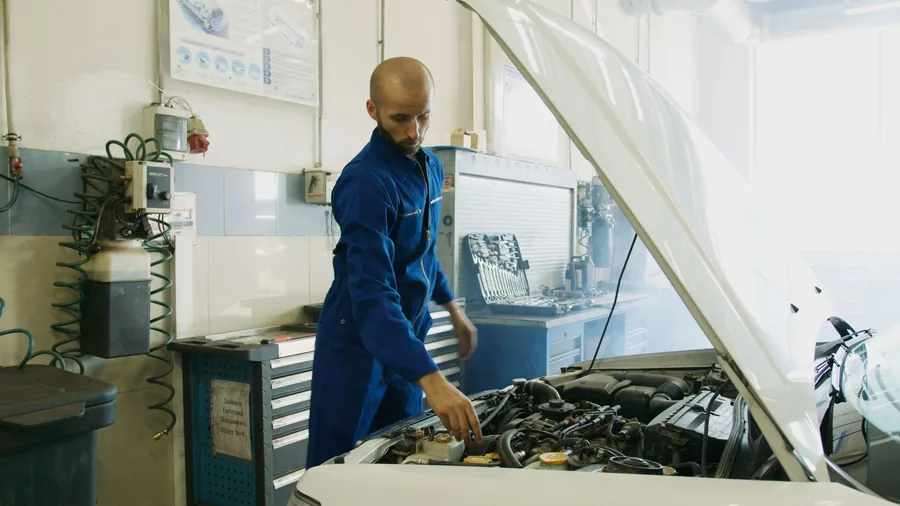
The Inspección Técnica de Vehículos is Spain's compulsory roadworthiness test, and it costs about €45 — though fees vary by region from roughly €21 to €64 because the competences are devolved and different operators set different tariffs. A new car gets its first ITV at 48 months, then every 24 months until it reaches 10 years old and annually after that: €22.50 a year amortised on the two-year cycle, the full €45 every year past 10.
Amortised or not, ITV is a rounding error next to fuel: €22.50 a year is 1% of the average petrol car's fuel bill. The test covers braking, steering, suspension, lighting, tyres, emissions and structural integrity, and a failed car must be repaired and re-presented within the period stated on the rejection sheet. The real trap is time: in provinces with fewer stations, waiting times stretch, and a car off the road costs money without returning any mobility.
Re-presenting after a failure may itself be free or charged depending on the station and the region — ask when you book.
Total cost of ownership in Spain: the part the data can support
The sourced figures give a total that covers energy, IVTM and ITV — and nothing else. An average petrol car costs €2,217 in fuel, €60 in IVTM and €22.50 in amortised ITV: €2,299 a year. The average diesel comes to €1,715, the average non-plug hybrid €1,664 and the average electric car €782; the cheapest realistic package in the data is an efficient electric car at €437 of electricity plus €83 of tax and inspection, about €519 a year.
The gap between a typical petrol car and a typical electric car is roughly €1,517 a year before insurance, which is precisely why the missing costs matter. Insurance is the largest cost this guide cannot quantify — premiums depend on your age, claims history, province, declared mileage and cover level — so quote your own car and postcode rather than budgeting from an average. Tyres, servicing, repairs and parking depend on model and location, and parking in central Madrid or Barcelona can exceed the energy bill itself. Depreciation, the largest single cost for most owners, follows the general market pattern of roughly 15% to 25% in year one and about 50% over five years. Below this line we deliberately stop adding numbers, because the database holds certified consumption and nothing about what you personally pay an insurer, a tyre fitter or a mechanic in your province.

| Powertrain | Mean annual energy | IVTM (Madrid, 8-11.99 fiscal hp) | ITV (amortised at €22.50/yr) | Total |
|---|---|---|---|---|
| Petrol | €2,217 | €60 | €22.50 | €2,299 |
| Diesel | €1,632 | €60 | €22.50 | €1,715 |
| Hybrid (non-plug) | €1,581 | €60 | €22.50 | €1,664 |
| Electric | €699 | €60 | €22.50 | €782 |
| Electric (cheapest model) | €437 | €60 | €22.50 | €519 |
Components are rounded independently, so a total may differ by about a euro from adding up the displayed figures. Insurance, tyres, servicing, repairs, parking, ITV re-tests, finance and depreciation are excluded because the vehicle database contains no Spanish figures for them. Do not read this table as a full cost of ownership.
How the Spanish bill scales with mileage
Mileage is the biggest single lever after powertrain choice, and it is linear: doubling the distance doubles the energy cost, because almost all of a car's running cost per kilometre is energy. Take the median car in each powertrain class: at 10,000 km a year the median petrol car costs €1,352 in fuel, at 30,000 km €4,055, and the same shift takes the median electric car from €451 to €1,354.
Two practical consequences follow. Low-mileage Spanish drivers — the second-car owner who does 8,000 km a year to the shops and back — get very little from chasing 2 L/100km of efficiency and should optimise purchase price and insurance instead. High-mileage drivers should care about nothing else: at 30,000 km the median petrol car costs €2,701 a year more than the median electric and €978 more than the median diesel, and driving 20,000 km or more with home charging means the median electric car costs €1,128 a year less in energy than the median petrol. Fixed costs do not scale at all: IVTM and ITV are the same whether you drive 5,000 km or 50,000 km.
| Annual distance | Median petrol | Median diesel | Median hybrid | Median electric |
|---|---|---|---|---|
| 10,000 km | €1,352 | €1,026 | €1,014 | €451 |
| 15,000 km | €2,028 | €1,539 | €1,521 | €677 |
| 20,000 km | €2,703 | €2,052 | €2,028 | €902 |
| 25,000 km | €3,379 | €2,564 | €2,535 | €1,128 |
| 30,000 km | €4,055 | €3,077 | €3,041 | €1,354 |
Same model, different powertrain: what the choice is worth in Spain
Comparing one model across powertrains removes the body-shape and weight differences that make cross-model comparisons misleading. The Peugeot 208 is the clearest example in our data: the diesel at 3.0 L/100km costs €839 a year, the electric at 15.2 kWh/100km €609, the petrol at 4.3 L/100km €1,118 and the 2026 hybrid at 5.1 L/100km €1,326. The Kia Niro tells the same story in a different order: the electric variant at 16.2 kWh/100km costs €649, the hybrid at 3.7 L/100km €962 and the petrol at 3.8 L/100km €988.
The pattern holds across the Toyota Yaris, the Hyundai Kona and the Fiat 500 as well: in every case the electric version is the cheapest to run and the petrol version the most expensive, with the hybrid close behind the electric and clearly ahead of petrol in urban use. The margins vary — a 500's electric version saves €455 a year over its petrol version, a 208's saves €509 — but the ordering never flips. One caveat: these are certified figures on consistent test cycles, and a plug-in hybrid, which is what many current 208s are, cannot be compared this way.
| Model | Powertrain | Consumption | Annual energy in Spain |
|---|---|---|---|
| Peugeot 208 | Diesel | 3.0 L/100km | €839 |
| Peugeot 208 | Electric | 15.2 kWh/100km | €609 |
| Peugeot 208 | Petrol | 4.3 L/100km | €1,118 |
| Kia Niro | Hybrid | 3.7 L/100km | €962 |
| Kia Niro | Electric | 16.2 kWh/100km | €649 |
| Toyota Yaris | Hybrid | 3.3 L/100km | €858 |
| Toyota Yaris | Diesel | 3.5 L/100km | €979 |
| Toyota Yaris | Petrol | 4.3 L/100km | €1,118 |
| Fiat 500 | Electric | 13.3 kWh/100km | €533 |
| Fiat 500 | Diesel | 3.4 L/100km | €951 |
| Fiat 500 | Petrol | 3.8 L/100km | €988 |
Use the free calculators
Frequently asked questions
How much does car fuel cost per year in Spain?
At 15,000 km a year and Spanish pump prices of €1.733 petrol and €1.865 diesel, the average petrol car in our 17,130-record dataset costs €2,217 a year and the average diesel €1,632; the medians are lower, €2,028 and €1,539, because thirsty cars pull the averages up.
How much does the ITV inspection cost in Spain?
The ITV costs about €45 on average, but fees vary by region from roughly €21 to €64 because the service is devolved and operators set their own tariffs. A new car has its first test at 48 months, then every 24 months until 10 years old and annually after that — about €22.50 a year amortised.
What is IVTM and how much is it in Madrid?
IVTM is the Impuesto sobre Vehículos de Tracción Mecánica, an annual municipal road tax based on fiscal horsepower rather than CO2. Madrid charges roughly €60 a year for a typical car of 8 to 11.99 fiscal hp; each ayuntamiento sets rates within national limits, and many municipalities discount or exempt electric vehicles.
Is an electric car cheaper to run than petrol in Spain?
Yes. Household electricity at €0.267 per kWh, above the EU average of €0.220, still makes electric driving cheap: the average electric car in our data costs €699 a year at 15,000 km against €2,217 for the average petrol car, and the cheapest model, the 2026 Mini Aceman at 10.9 kWh/100km, costs €437 — assuming you charge at home.
Is diesel cheaper than petrol in Spain?
Only if the diesel car uses at least 7.1% less fuel per 100 km, because diesel costs 7.6% more per litre (€1.865 against €1.733). Modern diesels clear that easily — the Peugeot 208 diesel at 3.0 L/100km costs €839 a year against €1,118 for the petrol version, though the margin is smaller in Spain than in Germany.
Which is the cheapest car to run in Spain?
In our data the 2026 Mini Aceman electric costs €437 a year in household electricity at 15,000 km, the lowest of all 17,130 records. Among cars that burn fuel, the 2018 Toyota Prius hybrid at 3.0 L/100km costs €780 and the 2017 Peugeot 208 diesel at 3.0 L/100km costs €839.
Do these costs include insurance, tyres and servicing?
No. The tables cover energy, and the ownership summary adds only IVTM and ITV because those are the only additional figures we can source. Insurance varies widely by driver, province and cover level, and tyres, servicing, repairs and parking depend on model, mileage and location — quote insurance yourself before budgeting.
Are there low-emission zones in Spanish cities?
Yes. Madrid and Barcelona operate low-emission zones — Madrid Central and the Barcelona ZBE Rondes — where access depends on the DGT environmental badge. The badge is inexpensive but eligibility follows the car's emissions classification, so older diesel and petrol cars may be excluded. Rules and boundaries change, so check current municipal guidance before buying.