What It Really Costs to Own a Car in Canada in 2026


Working out what it costs to own a car in Canada comes down to one honest question: what does the car take out of your pocket every month, not what you paid for it at the dealer. Fuel is the part we can price exactly, because the official fuel-consumption ratings Natural Resources Canada publishes for every model year meet a national pump price you can check in any week of the year.
This guide prices 18,328 official Canadian fuel-consumption records — every trim of every model from 1995 to 2026 — at 15,000 km a year and C$1.75 a litre. It shows what the typical Canadian car burns, what a hybrid saves, what an electric car costs to charge at home, and which ownership costs we will not invent a number for. Every figure below is reproducible from the official data, and anything we cannot source is labelled as such.
How we built these cost of owning a car in Canada figures
Every number in this guide comes from two sources. The consumption figures are the official fuel ratings that Natural Resources Canada publishes for each model year, which we hold as a database of 18,328 records covering model years 1995 to 2026 — 56 makes and 4,492 make-and-model combinations, down to individual trims. The prices are the national averages we can verify: petrol at C$1.75 a litre from the Canadian Automobile Association, and household electricity at C$0.169 a kilowatt-hour.
Annual fuel cost is litres per 100 km, divided by 100, multiplied by 15,000 km, multiplied by the pump price. Because every term except the car's own consumption is fixed, the formula collapses to one constant: each litre per 100 km a car burns costs C$262.50 a year. A car rated at 7 L/100km costs C$1,838; one at 12 L/100km costs C$3,150. Re-run it for your own mileage in the fuel cost calculator.
Constants: petrol C$1.75/L (CAA national average, Sep 2026); electricity C$0.169/kWh (GlobalPetrolPrices household, Dec 2025); 15,000 km a year.
The cost of owning a car in Canada per month: the five lines that matter
Most people who ask what it costs to own a car in Canada per month are really asking about five separate bills, and only one of them is fuel. Those five lines are fuel or electricity, insurance, maintenance and repairs, depreciation, and the fixed charges your province adds, such as registration, plates and any inspection. Fuel is the line we can price exactly from official data. The other four depend on your car, your province, your driving record and your insurer, so we publish what we can source and label everything else honestly rather than inventing an average.
Taken on its own, fuel is the most predictable of the five. The median car in our Canadian dataset, across model years 2015 to 2026, burns 10.9 litres per 100 km. At C$1.75 a litre and 15,000 km a year that is C$2,861, or about C$238 a month. That single figure is the floor most Canadian drivers should plan around, and the rest of this guide shows how far a hybrid or an electric car moves it down.
The monthly fuel figure assumes 15,000 km a year at C$1.75/L. It excludes insurance, maintenance and depreciation, which we cannot verify nationally.
Gas price in Canada in 2026: what a litre actually costs
Petrol in Canada averaged C$1.75 a litre in September 2026, the national figure the Canadian Automobile Association publishes as 174.9 cents per litre. That national number hides a wide spread, because pump prices are set regionally and the difference between a low-tax province and a high-tax one can be tens of cents on the same litre of fuel. Use C$1.75 as the planning baseline and check your own city's price before you commit to a budget.
On that average a 50-litre fill costs about C$87.50. If your car takes premium petrol the price per litre is higher again, which is one reason a performance car costs more to run than its consumption figure alone suggests. Pump prices also move week to week with crude oil and the exchange rate, so treat every figure here as a September 2026 baseline and re-price it before you buy.

Petrol at C$1.75/L is a national average (CAA, Sep 2026). Your province, and premium versus regular, will change it.
Why consumption, not the gas price, is what moves your fuel bill
You cannot control the price of petrol, but you choose the car, and the car's certified consumption is the only term in the calculation you influence. Because 1 L/100km equals C$262.50 a year at these prices, the gap between a frugal car and a thirsty one dwarfs a few cents at the pump. A car rated at 7 L/100km costs C$1,838 a year in fuel, while one at 12 L/100km costs C$3,150. That C$1,312 difference is several months of fuel.
The table below is the whole fuel half of the cost equation. Find a car's official L/100km rating, read across, and you have its annual fuel bill at 15,000 km and C$1.75 a litre. Any figure in a car advert can be checked against this grid in seconds.
| Certified consumption | Annual fuel cost (C$) |
|---|---|
| 5 L/100km | 1,312 |
| 6 L/100km | 1,575 |
| 7 L/100km | 1,838 |
| 8 L/100km | 2,100 |
| 9 L/100km | 2,362 |
| 10 L/100km | 2,625 |
| 12 L/100km | 3,150 |
| 14 L/100km | 3,675 |
| 16 L/100km | 4,200 |
At C$1.75/L and 15,000 km. Halve these figures for 7,500 km and double them for 30,000 km.
What the typical car in our Canadian data burns
Our Canadian database holds 17,415 petrol records, but counting every trim of every model overstates the picture, because trucks and luxury brands carry far more variants than a compact sedan. To describe a typical car rather than a typical database row, we grouped the records into 7,880 individual make, model and year combinations and took each one's most efficient certified trim. The median of those cars burns 10.9 litres per 100 km.
That median is not as low as you might expect, because the Canadian vehicle mix is truck- and SUV-heavy. Half the models burn more than 10.9 L/100km, and the thirstiest tenth run past 14.5. The table shows the full spread, priced at C$1.75 a litre and 15,000 km.
| Percentile | L/100km | Annual fuel (C$) |
|---|---|---|
| Frugal tenth (p10) | 8.1 | 2,126 |
| Lower quarter (p25) | 9.2 | 2,415 |
| Median | 10.9 | 2,861 |
| Upper quarter (p75) | 12.7 | 3,334 |
| Thirstiest tenth (p90) | 14.5 | 3,806 |
n = 7,880 make, model and year combinations, model years 2015 to 2026, each at its most efficient certified trim.
What popular cars cost to fuel in Canada in 2026
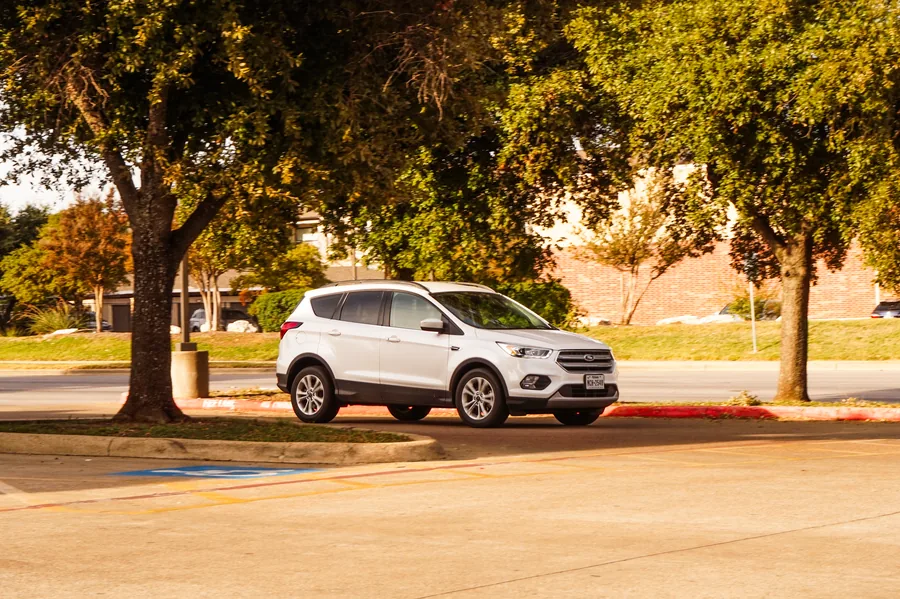
Fleet averages are useful, but most people buy a specific car. The table below prices thirteen of the most common models on Canadian roads, each at its newest certified petrol figure, C$1.75 a litre and 15,000 km. The pattern is consistent: a compact sedan or hatchback costs roughly C$1,838 to C$1,916 a year in fuel, a compact crossover about C$2,048 to C$2,336, and a full-size pickup around C$3,150.
The pickup line is the one that surprises people. A Ford F-150 rated at 12.0 L/100km spends C$3,150 a year on petrol, which is C$1,260 more than a Honda CR-V and C$1,286 more than a Toyota Corolla. If you drive a truck because you need one, that is a fair trade. If you drive one out of habit, it is the single largest avoidable running cost on this list.
| Model | Year | L/100km | Annual fuel (C$) |
|---|---|---|---|
| Volkswagen Jetta | 2024 | 7.0 | 1,838 |
| Toyota Corolla | 2022 | 7.1 | 1,864 |
| Hyundai Elantra | 2024 | 7.2 | 1,890 |
| Nissan Rogue | 2024 | 7.2 | 1,890 |
| Honda Accord | 2024 | 7.3 | 1,916 |
| Kia Forte | 2024 | 7.5 | 1,969 |
| Honda CR-V | 2024 | 7.8 | 2,048 |
| Toyota RAV4 | 2023 | 7.9 | 2,074 |
| Ford Escape | 2024 | 8.0 | 2,100 |
| Chevrolet Equinox | 2024 | 8.5 | 2,231 |
| Subaru Outback | 2024 | 8.9 | 2,336 |
| Toyota Highlander | 2021 | 10.3 | 2,704 |
| Ford F-150 | 2024 | 12.0 | 3,150 |
Newest certified petrol figure per model in our NRCan data, priced at C$1.75/L over 15,000 km.
Hybrids in Canada: the cheapest way to burn petrol
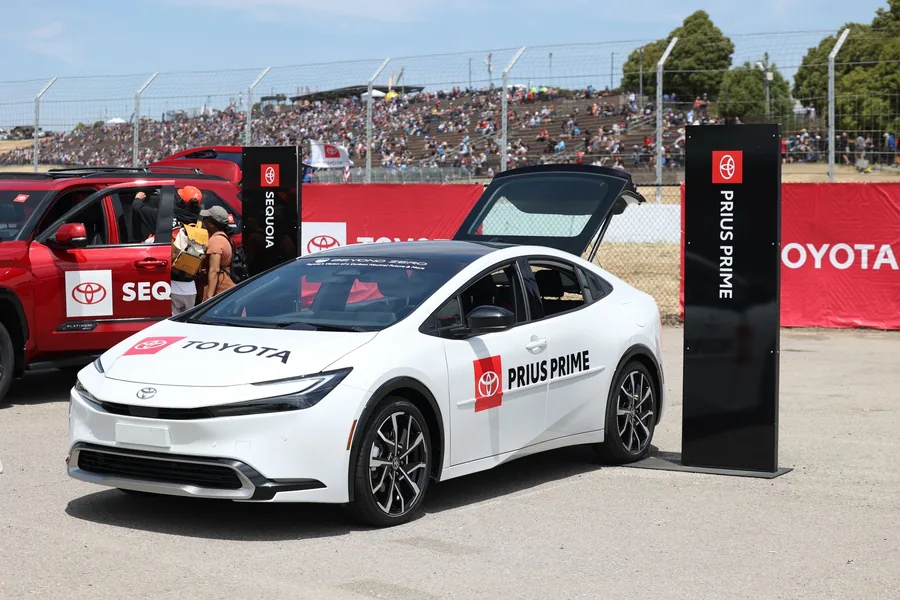
Canada has no national rule that forces you towards an electric car, and a hybrid is the simplest way to cut a fuel bill without changing how you drive or where you charge. Our data holds 457 self-charging hybrid model-years, and they are far more efficient than the petrol fleet. The median hybrid burns 6.9 litres per 100 km, which costs C$1,811 a year at C$1.75 a litre, about C$1,050 or 37 percent less than the median petrol car.
The best hybrids go further still. The Hyundai Elantra Hybrid and the Toyota Corolla Hybrid sit at 4.4 to 4.7 L/100km, roughly C$1,155 to C$1,234 a year, and the newer Honda Civic Sedan Hybrid is close behind at 4.9. Compare that with the petrol Corolla at 7.1 L/100km and C$1,864 a year and you can see why hybrids dominate any list of the cheapest cars to run in Canada.
| Hybrid model | Year | L/100km | Annual fuel (C$) |
|---|---|---|---|
| Hyundai Elantra Hybrid Blue | 2022 | 4.4 | 1,155 |
| Toyota Corolla Hybrid | 2022 | 4.5 | 1,181 |
| Hyundai Elantra Hybrid | 2024 | 4.7 | 1,234 |
| Toyota Corolla Hybrid | 2024 | 4.7 | 1,234 |
| Honda Civic Sedan Hybrid | 2026 | 4.9 | 1,286 |
Self-charging hybrids only. Plug-in hybrids are not ranked here because their official figures assume a full battery.
Hybrid versus petrol: the same car, two fuel bills
The clearest comparison is the same nameplate sold in both forms. A 2022 Toyota Corolla at 7.1 L/100km costs C$1,864 a year in petrol; the Corolla Hybrid of the same year at 4.5 L/100km costs C$1,181. That is C$683 a year, or about C$57 a month, from the same size of car with the same badge on the boot. A 2024 Hyundai Elantra shows the same pattern, saving C$656 a year in hybrid form.
Because these are certified figures rather than real-world estimates, the relative gap holds almost everywhere in Canada. What changes is the buy-in: a hybrid usually costs more up front, so the question is how many years of C$650 to C$700 in annual fuel savings it takes to earn back that premium. Work the premium into the car ownership cost calculator alongside your own mileage and the answer becomes specific to you.
| Model | Petrol L/100km | Petrol C$/yr | Hybrid L/100km | Hybrid C$/yr | Annual saving |
|---|---|---|---|---|---|
| Toyota Corolla (2022) | 7.1 | 1,864 | 4.5 | 1,181 | 683 |
| Hyundai Elantra (2024) | 7.2 | 1,890 | 4.7 | 1,234 | 656 |
Savings are annual fuel only, at C$1.75/L over 15,000 km. They exclude any purchase-price premium.
Diesel in Canada: efficient, but a small and shrinking share
Diesel barely registers in the Canadian passenger-car market. Our data holds 456 diesel model-years against 17,415 petrol ones, about one for every thirty-eight vehicles, because Canadian buyers overwhelmingly chose petrol and most diesel passenger cars have been dropped. We therefore do not publish a Canadian diesel cost, because we hold no verified national diesel price to base it on.
What the data does show is that diesel was efficient where it existed. The median diesel model-year burns 9.9 litres per 100 km, and the most economical, the Chevrolet Cruze Diesel, managed 6.4. If diesel is cheaper or dearer than petrol by more than that efficiency gap where you live, the pumps will tell you faster than any average can.
We hold no verified Canadian diesel price, so this section reports consumption only, never a cost in dollars.
Electric cars in Canada: what charging at home costs
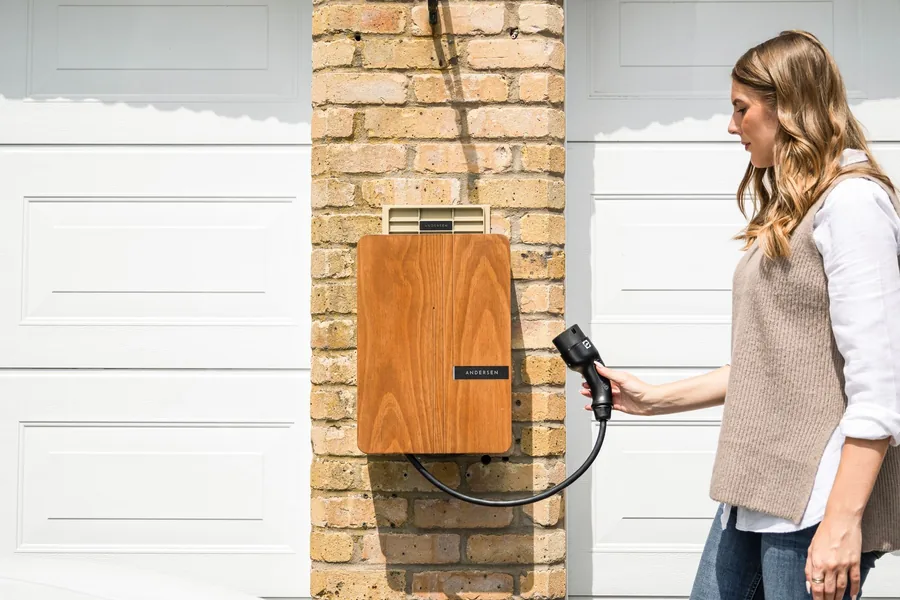
Charging an electric car at home is by far the cheapest way to move a car in Canada. Our electric figures come from the United States Environmental Protection Agency's certified ratings, because the models sold in Canada share those certifications, and we price them at the Canadian household electricity rate of C$0.169 a kilowatt-hour over 15,000 km. The median electric car in that data uses 22.8 kWh per 100 km, which costs C$578 a year, about C$48 a month or C$3.85 per 100 km.
Set that against petrol: the median electric car costs C$578 a year in energy where the median petrol car costs C$2,861, a saving of C$2,283, or roughly 80 percent. The catch is that this assumes you charge at home on a residential tariff. Public fast charging costs several times more per kilowatt-hour and erodes much of the advantage.
| Electric model | Year | kWh/100km | Annual electricity (C$) |
|---|---|---|---|
| Lucid Air Pure RWD | 2026 | 14.3 | 363 |
| Hyundai Ioniq 6 Long Range RWD | 2024 | 15.0 | 380 |
| Tesla Model 3 Standard RWD | 2026 | 15.1 | 383 |
| Tesla Model Y Standard RWD | 2026 | 15.2 | 385 |
| Tesla Model 3 Long Range RWD | 2024 | 15.3 | 388 |
kWh/100km are US EPA certified figures, priced at the Canadian household rate of C$0.169/kWh over 15,000 km.
Petrol vs hybrid vs electric: the annual energy bill side by side
Putting the three powertrains side by side makes the cost order clear. At 15,000 km a year and Canadian prices, the median petrol car spends C$2,861 on fuel, the median hybrid C$1,811, and the median electric car C$578 on home electricity. In per-100-km terms that is C$19.08 for petrol against C$12.08 for a hybrid and C$3.85 for an electric car.
The gap between petrol and hybrid is real but modest; the gap between petrol and electric is transformational. What the table cannot show is the purchase price, which is where the honest answer lives: an electric car that saves C$2,283 a year still has to earn back any premium. Load your own purchase price, insurance and mileage into the car ownership cost calculator to see which one wins for you.
| Powertrain | Median consumption | Annual energy (C$) | Per 100 km (C$) |
|---|---|---|---|
| Petrol | 10.9 L/100km | 2,861 | 19.08 |
| Hybrid | 6.9 L/100km | 1,811 | 12.08 |
| Electric | 22.8 kWh/100km | 578 | 3.85 |
Medians of the model-years in our data, at C$1.75/L petrol and C$0.169/kWh electricity over 15,000 km.
Depreciation: the biggest cost most Canadian owners ignore
Fuel is the cost you feel every week, but depreciation is usually the largest single cost of owning a new car, and it never appears on a receipt. As a rough market rule, a new car loses between 15 and 25 percent of its value in the first year and about half of it over five years, though the exact figure depends on the model, its demand and its condition. We state that as approximate because no dataset we hold turns it into a precise dollar figure.
The practical consequence is that a car's sticker price is a poor guide to its cost. Two cars that cost the same to buy can cost very different amounts to own once one holds its value and the other does not, and because depreciation is invisible it is the line most buyers forget to weigh. Treat the range above as a prompt to check resale values for your shortlist, not as a number to budget to the dollar.
Car insurance in Ontario and across Canada: why one number does not exist
If you have searched for the average car insurance in Ontario, you have probably found a different answer on every site. That is because there is no single figure to find. Premiums are set by your insurer from your driving record, your vehicle, your coverage, your annual mileage and your address, and the regulated rate system means even neighbours can pay different amounts. British Columbia and Ontario are widely the most expensive provinces for coverage, while Alberta and Quebec are typically cheaper, but any precise average is an average of someone else's circumstances.
We deliberately do not publish a car insurance average, because we cannot verify one and a made-up number would be worse than none. What we can do is place insurance correctly in the budget: it is a fixed annual cost that does not fall when you drive less, which is why a cheap-to-insure car can beat a cheap-to-fuel one on total cost.
We hold no verified national or provincial insurance average, so we publish none. Your own quote is the only reliable figure.
Registration, plates and the provincial safety inspection in Canada
Canada has no federal annual vehicle tax. Where the Netherlands charges a national road tax and the United Kingdom runs a national VED band system, Canada leaves vehicle registration, plates and any inspection to the provinces and territories, so the fixed part of your bill depends on where you live. Registration and plate fees vary by province and vehicle, and some provinces run a periodic safety or emissions inspection while others do not.
Because these charges are set provincially and change with provincial budgets, we do not publish a national figure, because there is no such thing. When you compare two cars, remember that the fixed charges are largely the same whichever one you buy, so they cancel out of the choice. It is the fuel, insurance and depreciation that actually differ between models.
Putting it together: a monthly budget for a car in Canada
Here is how to build a realistic monthly number without inventing anything. Start with the one figure we can verify: fuel. A 2024 Hyundai Elantra at 7.2 L/100km costs C$1,890 a year, or about C$158 a month, at C$1.75 a litre and 15,000 km. A 2024 Ford F-150 at 12.0 L/100km costs C$3,150 a year, about C$105 more every month than the Elantra before you count anything else.
Then add the four costs we cannot verify nationally, each from your own paperwork: your annual insurance premium divided by twelve, your maintenance and repair spending, any provincial registration or inspection charges, and a realistic depreciation figure. Fuel is the only line an outsider can price for you accurately, and on this car it is roughly C$158 a month. Our car ownership cost calculator holds all five lines in one place.
The worked example uses verified fuel costs only. Insurance, maintenance and depreciation must come from your own figures.
How your annual mileage changes everything
Every annual figure in this guide assumes 15,000 km, close to the Canadian average for a private car. Fuel cost scales in a straight line with distance, so the ranking never changes but the money does. The median petrol car at 10.9 L/100km costs C$1,908 a year at 10,000 km, C$2,861 at 15,000 km and C$3,815 at 20,000 km — the same car, the same litre price, three very different bills.
This is why the honest way to answer what a car costs to run is to start from your own annual distance. A low-mileage driver and a high-mileage commuter can reach opposite conclusions about whether a hybrid or an electric car is worth its price premium, even for identical models.
| Annual distance | Median petrol fuel (C$) |
|---|---|
| 10,000 km | 1,908 |
| 15,000 km | 2,861 |
| 20,000 km | 3,815 |
Median petrol consumption of 10.9 L/100km, priced at C$1.75/L, scaled to each distance.
Eight ways to cut what you spend on your car in Canada
Everything below follows from the figures in this guide, and the first two matter far more than the rest, because fuel and depreciation are the largest lines you can actually influence.
- Budget around a verified fuel number, not a guess. The median car burns 10.9 L/100km, about C$2,861 a year, so check any car's certified rating against the grid above before you buy.
- Move down the consumption scale. Going from a 12 L/100km vehicle to a 7 L/100km one saves C$1,312 a year at these prices, and that saving repeats every year you own the car.
- Consider a hybrid for a city commute. The median hybrid costs C$1,050 a year less to fuel than the median petrol car, and the best hybrids cut more.
- Charge an electric car at home if you can. At C$0.169/kWh the median electric car costs C$578 a year, but public fast charging costs several times more per kWh and shrinks the advantage.
- Shop insurance separately from the car. Premiums vary far more between vehicles and drivers than fuel does, so a quote before you buy can change which car is cheapest overall.
- Weigh depreciation before the sticker price. A car that loses value slowly can cost less to own than a cheaper one that does not.
- Drive less where you can. Fuel cost scales linearly, so cutting 5,000 km off the clock cuts roughly a third off the fuel line.
- Do not buy premium petrol out of habit. If the manual does not require it, you are paying more per litre for no benefit on a car designed for regular.
Savings scale with distance: halve them at 7,500 km and double them at 30,000 km.
The data, the exclusions and what we cannot tell you
Our Canadian fuel figures are built from 18,328 official records covering model years 1995 to 2026 — 17,415 petrol, 457 hybrid and 456 diesel — and we publish our exclusions so you can audit them. We removed a handful of records whose consumption fell outside a plausible range, such as a Bugatti Chiron at 26.1 L/100km and a Ferrari Enzo at 27.5, which are real cars but not useful comparisons. We also removed 117 records filed as petrol that are in fact hybrids, so the petrol figures are not flattered by Prius and IONIQ economy.
Two limits are worth stating plainly. First, the electric figures come from United States EPA certification rather than a Canadian dataset, because the models are shared. Second, a few hybrids are certified under petrol codes and cannot be reliably separated from ordinary petrol cars, so a small number of very efficient hybrids may still sit inside the petrol numbers. Everything else is on this page, and every figure is reproducible from the official data.
Run your own Canadian numbers
The tables above are a ranking, not a quote for your own car and province. Add your mileage, insurance and provincial charges in the car ownership cost calculator, and run your shortlist side by side.
Use the free calculators
Frequently asked questions
How much does it cost to own a car in Canada per month?
The one line we can verify nationally is fuel. The median car in our Canadian data burns 10.9 L/100km, which costs about C$238 a month at C$1.75 a litre and 15,000 km. Add your own insurance, maintenance and depreciation, plus provincial registration, for the full figure, because we do not hold verified national averages for those.
What is the gas price in Canada in 2026?
Petrol averaged C$1.75 a litre in September 2026, the national figure the Canadian Automobile Association publishes as 174.9 cents per litre. Prices vary by province and move weekly with crude oil and the exchange rate, so treat C$1.75 as a planning baseline and check your local pump.
What is the average car insurance in Ontario?
There is no single verifiable figure. Ontario premiums depend on your driving record, vehicle, coverage, mileage and address, so published averages describe other drivers, not you. Ontario and British Columbia are widely the most expensive provinces and Alberta and Quebec typically cheaper, but your own quote is the only number worth budgeting.
Is a hybrid cheaper to run than petrol in Canada?
Yes, on fuel. The median hybrid in our data burns 6.9 L/100km and costs C$1,811 a year against C$2,861 for the median petrol car, about C$1,050 or 37 percent less. The best hybrids, such as the Toyota Corolla Hybrid, reach 4.5 to 4.7 L/100km and about C$1,234 a year.
Is an electric car cheaper to run in Canada?
On energy, by a wide margin. The median electric car uses 22.8 kWh/100km and costs about C$578 a year at the C$0.169/kWh household rate, roughly 80 percent less than the median petrol car. That assumes home charging, because public fast charging costs several times more per kWh and narrows the gap.
How much does it cost to fuel a Ford F-150 in Canada?
A 2024 Ford F-150 rated at 12.0 L/100km costs about C$3,150 a year in petrol at C$1.75 a litre and 15,000 km. That is roughly C$1,286 more than an entry compact car and C$1,260 more than a Honda CR-V, which makes it the largest single running cost in our popular-model table.
Does Canada have an annual car tax?
Canada has no federal annual vehicle tax. Registration, plate fees and any safety or emissions inspection are set by each province and territory, so the fixed part of the bill depends on where you live. Because these charges are broadly the same whatever car you buy, they cancel out of any model comparison.