Irish motor tax explained: your CO2 bands and costs

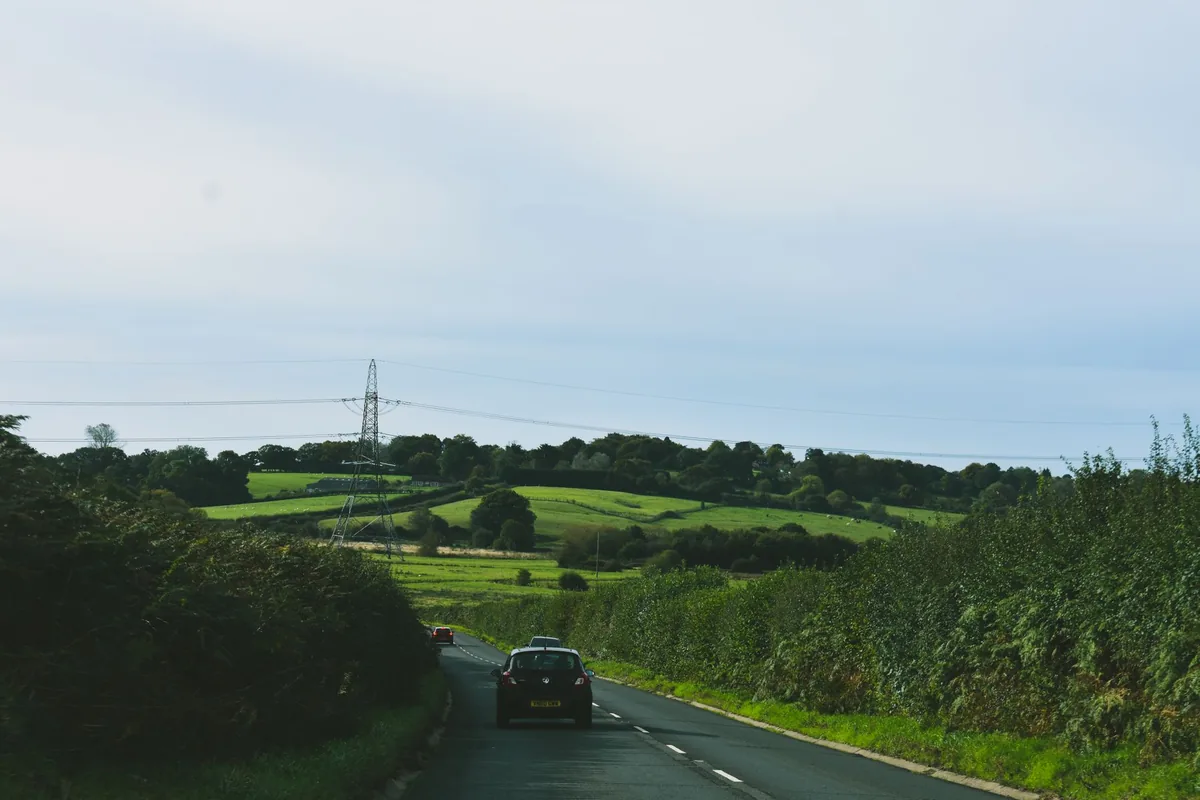
Motor tax Ireland is a CO2-band system: the car's official emissions figure, in grams of CO2 per kilometre, decides what you pay each year. Cars in the 111–120 g/km band — the bracket most ordinary family cars land in — carry an annual charge of around €210.
That €210 is only part of the bill. For a typical car in that band, energy costs several times more per year than the tax itself. This guide prices 17,132 official vehicle records at Irish fuel and electricity rates to show what each CO2 band actually costs to run.
Motor tax Ireland: how the CO2 bands work
Irish motor tax for cars registered since mid-2008 is charged on CO2 emissions in grams per kilometre, not on engine size. The band is fixed when the car is first registered and follows the car for life in Ireland — selling it does not change the charge, and neither does the price of fuel or the number of kilometres you drive.
The one rate we can quote with confidence is the band that covers most mainstream cars: 111–120 g/km, at around €210 a year. Below that band the charge is lower; above it the charge rises with every step up the scale, so a large-engined SUV pays more each year than a small hatchback.
Because each rate is set by legislation and reviewed periodically, look up the current Revenue motor tax rate for your exact CO2 figure rather than trusting any single table. The CO2 number is on the registration documents and on the motor tax record, and it — not your real-world fuel consumption — sets the bill.
Motor tax is based on the car's official CO2 test figure, not on how much fuel you actually burn.
What changed in 2008: CO2 bands replaced engine size
Before July 2008, Irish motor tax followed engine capacity: a 1.0-litre car paid one rate and a 2.0-litre paid much more, regardless of how much fuel either used. The switch to a CO2 system broke that link. Two cars with identical engines could now sit in different bands, and a small-engined car that was thirsty lost its automatic discount.
The registration date therefore matters as much as the model. A pre-2008 car is charged under the older engine-size system and can cost less than a far cleaner car registered a year later — which is why identical models can appear with very different annual charges in Ireland. Imported used cars land on whichever side of the divide matches the date they were first registered anywhere.
The constants behind every euro figure in this guide
Every energy figure below is calculated from an official consumption record. We use Irish pump prices of €1.84 per litre for petrol and €1.92 per litre for diesel, and household electricity at €0.38 per kWh — from the EU Oil Bulletin for the week of 31 August 2026 and Eurostat household electricity data for the second half of 2025.
The distance assumption is 15,000 km a year, which makes the numbers easy to scale: at 30,000 km, double the energy line. Annual energy cost is consumption divided by 100, multiplied by 15,000, multiplied by the price; for an electric car the same formula uses kWh per 100 km.
For motoring charges we hold one verified reference: motor tax of about €210 a year in the 111–120 g/km band, plus the NCT fee of €55 every two years — €27.50 a year in our totals. For every other band we deliberately quote no rate, because rates change and we will not publish a number we cannot verify.

Petrol €1.84/L, diesel €1.92/L, electricity €0.38/kWh, 15,000 km a year, NCT €55 every two years, motor tax ~€210/yr in the 111–120 g/km band.
Where the data comes from and what we excluded
Consumption and CO2 figures come from the UK Vehicle Certification Agency, the official source for type-approval data. We used three VCA datasets — 823 current records, 7,522 covering 2011 to 2022, and 8,925 from 2000 to 2013, 17,270 rows in total. After filtering, 17,132 records remain: 4,735 distinct models with a published CO2 figure, plus 182 electric records covering 160 models.
We filter obvious data faults rather than publishing them as facts. Anything below 2.5 or above 25.0 L/100km was excluded, along with electric figures outside 5.0 to 40.0 kWh/100km. That removed 138 of the 17,270 rows, including a 2022 Mazda CX-60 listed at 141.2 L/100km, a Kia Sorento diesel at 35.8 L/100km, and plug-in hybrids recorded at 1.1 to 1.8 L/100km — test figures that assume a full battery on every trip.
Two 2018 Land Rover Range Rover hybrid rows at 2.8 L/100km sit inside our range and survive the filter, but they are plug-in figures rather than the consumption of a self-charging hybrid. We treat them as an illustration of what official testing can produce, not as an achievable running cost.
CO2 bands across 17,132 vehicle records
Grouping the cleaned records by CO2 shows where the car parc actually sits. The 111–120 g/km band is the busiest single band, with 1,332 rows covering 735 distinct models — a reflection of how many mainstream petrol and diesel cars were engineered to land there.
Above it the numbers grow fast: 1,213 rows in 121–130 g/km, 2,765 in 131–150 g/km and 9,897 at 151 g/km or more — more than half the dataset. At the clean end the population thins sharply: 847 rows between 81 and 100 g/km, 41 between 51 and 80, and only 11 at 50 g/km or less, all plug-in hybrids. A separate group of 182 records covers pure electric cars, 160 distinct models; the VCA source publishes no CO2 column for them, and the Irish system treats zero-emission vehicles as their own category.
| CO2 band | Records | Distinct models | Diesel | Petrol | Hybrid | Plug-in hybrid |
|---|---|---|---|---|---|---|
| 1–50 g/km | 11 | 11 | 0 | 0 | 0 | 11 |
| 51–80 g/km | 41 | 30 | 2 | 6 | 28 | 5 |
| 81–100 g/km | 847 | 417 | 538 | 213 | 64 | 32 |
| 101–110 g/km | 838 | 440 | 528 | 205 | 61 | 44 |
| 111–120 g/km | 1,332 | 735 | 783 | 446 | 47 | 56 |
| 121–130 g/km | 1,213 | 675 | 617 | 520 | 43 | 33 |
| 131–150 g/km | 2,765 | 1,341 | 1,303 | 1,283 | 100 | 79 |
| 151+ g/km | 9,897 | 3,404 | 3,084 | 6,528 | 149 | 136 |
What each CO2 band costs in energy: representative models
The table below picks a mainstream model-year from each band and prices it for 15,000 km at Irish rates. It shows that the band and the energy bill are related but not identical. A 122 g/km Skoda Octavia diesel at 4.7 L/100km costs about €1,354 a year, while a 127 g/km Kia Sportage hybrid at 5.6 L/100km costs €1,546 — higher band, higher fuel bill.
Further up the gap widens: a 137 g/km BMW X1 diesel at 5.0 L/100km costs roughly €1,440, while a 160 g/km Kia Sportage petrol at 7.0 L/100km costs about €1,932. Nearly €500 a year separates them in energy alone, before any motor tax difference.
Read the table as a band-by-band index and then add motor tax for your own car. If you drive 10,000 km rather than 15,000, multiply every energy figure by two thirds.
| Make | Model | Year | Fuel | Consumption | CO2 | Band | Annual energy |
|---|---|---|---|---|---|---|---|
| Toyota | Aygo X HEV | 2026 | Hybrid | 3.8 L/100km | 87 g/km | 81–100 | €1,049 |
| Mazda | Mazda2 Hybrid | 2026 | Hybrid | 3.8 L/100km | 87 g/km | 81–100 | €1,049 |
| Toyota | Yaris | 2026 | Hybrid | 4.2 L/100km | 95 g/km | 81–100 | €1,159 |
| Lexus | LBX | 2026 | Hybrid | 4.6 L/100km | 103 g/km | 101–110 | €1,270 |
| Dacia | Bigster | 2026 | Hybrid | 4.7 L/100km | 106 g/km | 101–110 | €1,297 |
| Toyota | Yaris Cross | 2027 | Hybrid | 4.8 L/100km | 109 g/km | 101–110 | €1,325 |
| Kia | Niro HEV | 2026 | Hybrid | 4.9 L/100km | 111 g/km | 111–120 | €1,352 |
| Honda | Civic | 2026 | Hybrid | 5.0 L/100km | 114 g/km | 111–120 | €1,380 |
| Dacia | Duster | 2026 | Hybrid | 5.1 L/100km | 114 g/km | 111–120 | €1,408 |
| Skoda | Octavia Hatch | 2026 | Diesel | 4.7 L/100km | 122 g/km | 121–130 | €1,354 |
| Kia | Sportage HEV | 2027 | Hybrid | 5.6 L/100km | 127 g/km | 121–130 | €1,546 |
| Hyundai | Tucson | 2027 | Hybrid | 5.8 L/100km | 131 g/km | 131–150 | €1,601 |
| BMW | X1 | 2026 | Diesel | 5.0 L/100km | 137 g/km | 131–150 | €1,440 |
| Kia | Sportage | 2027 | Petrol | 7.0 L/100km | 160 g/km | 151+ | €1,932 |
| Hyundai | Tucson | 2027 | Petrol | 7.1 L/100km | 160 g/km | 151+ | €1,960 |
What a 111–120 g/km car really costs each year
Take the €210 band and add the charges that apply to every car regardless of emissions. The NCT is €55 every two years, or €27.50 a year. Energy depends on the car: the band averages about €1,324 a year across its 1,332 records, from €1,187 at the efficient end to €1,932 at the top.
For a 2026 Kia Niro hybrid at 4.9 L/100km and 111 g/km, the annual stack is roughly €1,352 of petrol, €210 of motor tax and €27.50 of NCT — about €1,590 in total. Energy is around 85% of that, motor tax about 13% and the NCT under 2%.
That balance is worth remembering when choosing a car by tax band alone. The motor tax difference between two bands is a legislative figure you must look up, but the energy difference between a 5.1 L/100km and a 7.0 L/100km car over 15,000 km is several hundred euro a year, every year.
| 111–120 g/km car | Consumption | Energy | Motor tax | NCT | Annual total |
|---|---|---|---|---|---|
| Kia Niro HEV (2026, hybrid) | 4.9 L/100km | €1,352 | €210 | €27.50 | €1,590 |
| Honda Civic (2026, hybrid) | 5.0 L/100km | €1,380 | €210 | €27.50 | €1,618 |
| Dacia Duster (2026, hybrid) | 5.1 L/100km | €1,408 | €210 | €27.50 | €1,645 |
| Peugeot 208 (2026, hybrid) | 5.1 L/100km | €1,408 | €210 | €27.50 | €1,645 |
| Skoda Fabia Hatch (2026, petrol) | 5.2 L/100km | €1,435 | €210 | €27.50 | €1,673 |
€210 is the only band rate we can verify. Totals exclude insurance, servicing and depreciation.
Inside the €210 band: a wider spread than you would expect
The 111–120 g/km band holds 1,332 records and 735 distinct models, and its energy costs span €745 a year. At one end a 2013 Mercedes-Benz E-Class plug-in hybrid is recorded at 4.3 L/100km and 111 g/km, about €1,187 a year of petrol; at the other a 2020 Volvo XC90 plug-in hybrid is recorded at 7.0 L/100km and 112 g/km, roughly €1,932. Both sit in the same tax band.
Some of that spread is the plug-in measurement problem: an official plug-in figure assumes regular charging, and a large SUV with a flat battery burns far more. Strip the plug-ins out and the band still ranges from a 2009 Ford Ka diesel at 4.2 L/100km and 112 g/km (about €1,210 of diesel) to a 2026 Skoda Scala petrol at 5.5 L/100km and 116 g/km (about €1,518).
Two cars paying identical motor tax can therefore differ by €300 or more a year in energy — over five years, more than the tax itself.
Below the €210 band: what cleaner cars pay
Cars in the 81–100 g/km band average about €1,078 a year in energy across 847 records, roughly €250 below the 111–120 g/km band. The best are modern hybrids: the 2026 Toyota Aygo X HEV and Mazda2 Hybrid both record 3.8 L/100km at 87 g/km, about €1,049 a year, and a 2026 Toyota Yaris at 4.2 L/100km and 95 g/km comes in near €1,159.
The 101–110 g/km band sits just above, with its most efficient mainstream entries between €1,270 and €1,325: a 2026 Lexus LBX at 4.6 L/100km and 103 g/km, a Dacia Bigster at 4.7 L/100km and 106 g/km, and a 2027 Toyota Yaris Cross at 4.8 L/100km and 109 g/km. Each saves a few hundred euro a year in energy against a €210-band car.
We publish no euro rate for these bands. The 81–100 g/km band costs less in motor tax than the €210 reference, but the exact figure is set by legislation — check the current rate for the band you are buying before treating the saving as real.
Lower band, lower motor tax — but €210 is the only rate we can verify, so confirm yours with Revenue.
Above the €210 band: where energy and tax both rise
Above 120 g/km the two costs move together. In the 121–130 g/km band a 2026 Skoda Octavia diesel at 4.7 L/100km costs about €1,354 in fuel and a 2027 Kia Sportage hybrid at 5.6 L/100km about €1,546. In the 131–150 g/km band a 2027 Hyundai Tucson hybrid at 5.8 L/100km costs about €1,601, though a 2026 BMW X1 diesel at 5.0 L/100km undercuts it at roughly €1,440 — a higher CO2 figure can still cost less to fuel.
In the 151 g/km and above bracket, which holds 9,897 records, average energy is about €2,496 a year — twice the 111–120 g/km average. Mainstream examples are the 2027 Kia Sportage and Hyundai Tucson petrols, both at 160 g/km and €1,932 to €1,960 a year. At the extreme, a 2000 Lamborghini Diablo recorded at 24.9 L/100km and 575 g/km would use about €6,872 of petrol a year.
The gap between the cheapest car in the €210 band and that thirstiest car is €5,686 a year — and all of it is energy, before motor tax, insurance or servicing.
Petrol vs diesel inside the same CO2 band
Because the band is set by CO2 and the energy bill is set by litres, two cars in the same band can differ sharply by fuel. In the 121–130 g/km band a 2026 Audi A1 Sportback petrol at 5.6 L/100km and 127 g/km costs about €1,546 a year, while a 2026 Seat Leon Estate diesel at 4.9 L/100km and the same 127 g/km costs about €1,411.
Those two pay the same motor tax, so the €135 difference is pure fuel — roughly €675 over five years. Diesel is not automatically cheaper, though: Irish diesel at €1.92 a litre carries a premium over petrol at €1.84, so the advantage depends entirely on litres per 100 km, not on the pump's colour.
| Car | Fuel | Consumption | CO2 | Energy | Energy + tax + NCT |
|---|---|---|---|---|---|
| Honda Jazz (2022) | Petrol | 4.8 L/100km | 110 g/km | €1,325 | €1,562 |
| Ford Focus (2022) | Diesel | 4.0 L/100km | 106 g/km | €1,152 | €1,390 |
| Renault Clio (2026) | Petrol | 5.3 L/100km | 120 g/km | €1,463 | €1,700 |
| Citroën C4 (2022) | Diesel | 4.3 L/100km | 114 g/km | €1,238 | €1,476 |
| Audi A1 Sportback (2026) | Petrol | 5.6 L/100km | 127 g/km | €1,546 | €1,783 |
| Seat Leon Estate (2026) | Diesel | 4.9 L/100km | 127 g/km | €1,411 | €1,649 |
Rows in the same band share a motor tax figure. Only the €210 rate for 111–120 g/km is verified; it is used here as a fixed reference so the fuel comparison stays clean.
Electric cars: zero emissions and the cheapest energy line
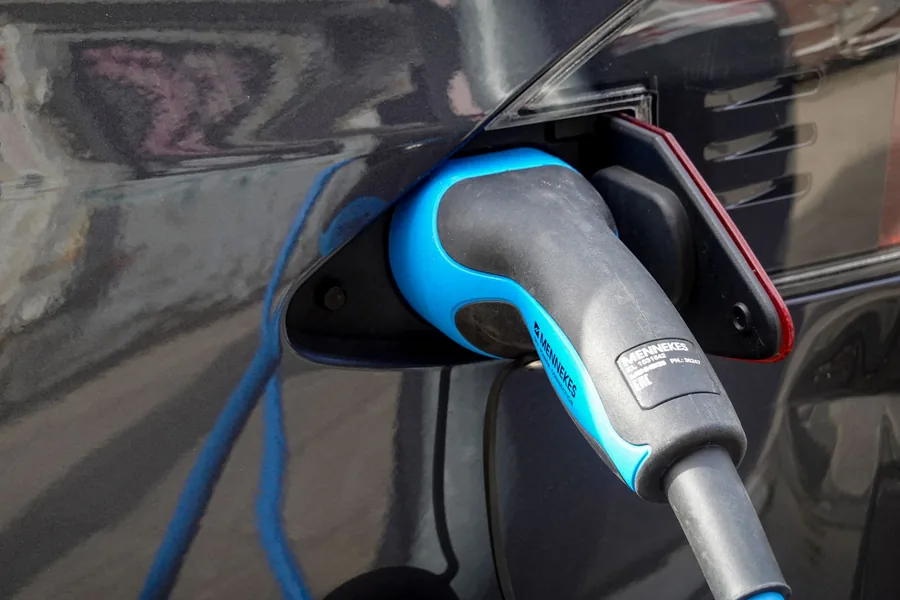
Battery-electric cars sit outside the CO2 bands because they have no tailpipe emissions, and Irish rules give zero-emission vehicles a reduced rate — lower than the bottom petrol or diesel band, but not zero. Check the current rate before buying, because electric rates are the least stable part of the system.
On energy alone, electric cars are the cheapest group in our data. Across 182 UK VCA electric records the annual electricity cost at 15,000 km runs from €621 to €1,727, typically around €963 — against €1,324 average for the whole 111–120 g/km band. The best performer, a 2026 Mini Aceman at 10.9 kWh/100km, costs about €621 a year.
The electric spread is far narrower than the petrol spread, so once you have chosen an EV, energy cost matters less than size, range and access to charging.
| Make | Model | Year | Consumption | Annual electricity |
|---|---|---|---|---|
| Mini | Aceman | 2026 | 10.9 kWh/100km | €621 |
| Mercedes-Benz | CLA Saloon | 2026 | 12.2 kWh/100km | €695 |
| Dacia | Spring | 2026 | 12.5 kWh/100km | €712 |
| Fiat | 500 | 2025 | 13.3 kWh/100km | €758 |
| Tesla | Model 3 | 2026 | 13.8 kWh/100km | €787 |
| Peugeot | 2008 | 2026 | 14.2 kWh/100km | €809 |
| Tesla | Model Y | 2026 | 14.2 kWh/100km | €809 |
| Hyundai | Kona Electric | 2023 | 14.3 kWh/100km | €815 |
Why Irish electricity prices matter as much as the CO2 figure
The electric advantage depends on charging at home. Our €0.38 per kWh is a household rate, and Irish household electricity is the most expensive in the European Union — Eurostat put it at €0.404 per kWh for the second half of 2025, against an EU average of €0.220, with Germany at €0.387 and France at €0.256.
That makes Ireland unusual: an EV charged at home is far cheaper per kilometre than a petrol car, but the margin is thinner here than in France or Spain because the electricity itself costs so much. Use public rapid charging and much of the advantage disappears, since public rates are typically well above the household figure used here.
If you cannot charge at home, treat the electric figures as a best case and run your own tariff through the electric car cost calculator.
The NCT: €55 every two years
The National Car Test is Ireland's roadworthiness inspection, and the fee is €55, paid every two years for a car that passes — €27.50 a year in our totals. It is a fixed cost that applies however clean or polluting the car is, which is why it never changes the ranking between bands: it sits at under 2% of a typical annual running total.
Older cars are tested more often, and a failed test adds a retest or repair bill on top. Those vary enormously by car and fault, so we do not model them. Motor tax and the NCT are the two charges here set by the State rather than the market, which is why both are worth checking on the official portals rather than taking a dealer's word for it.

NCT €55 every two years is verified; retest, repair and emissions-related repair costs vary and are not modelled here.
What this guide does not include
Insurance, servicing and depreciation are all excluded, and for most owners depreciation is the biggest of the three. A typical new car loses roughly 15–25% of its value in the first year and about half over five years — far more than any motor tax band difference will ever be worth.
Insurance varies with the driver, the car group, the county and the claims history, so there is no honest single figure to publish. Servicing depends on the model, mileage and whether you use a main dealer. That is why we present energy, motor tax and the NCT as a floor rather than a total: they are the parts of Irish running cost that are predictable and comparable between cars.
How to check the motor tax before you buy
Buying a car and only then discovering its band is the most common mistake in this market. The check takes a few minutes and can change your shortlist.
- Find the car's CO2 figure in grams per kilometre — it is on the registration certificate and on the motor tax record.
- Confirm the year of first registration, because pre-July 2008 cars are taxed on engine size rather than CO2.
- Look up the current Revenue rate for that exact band — do not rely on a rate quoted in an advertisement.
- Scale the energy figure for that model to your own annual kilometres.
- Add the NCT at €55 every two years, plus any known upcoming work, before comparing two cars on price.
Two cars can cost the same to buy and differ by several hundred euro a year to run — the band plus the litres per 100 km is where that difference lives.
Building your own total running cost
Start from the three verified numbers — energy, motor tax and the NCT — then add the costs that are personal to you. Energy is the largest line and the most sensitive to how much you drive and how you charge or refuel.
- Energy: consumption from the VCA data multiplied by your annual kilometres and today's Irish price — €1.84/L petrol, €1.92/L diesel, €0.38/kWh home electricity.
- Motor tax: the current Revenue rate for your exact CO2 band, not a figure from an older guide.
- NCT: €55 every two years, so €27.50 a year on average.
- Insurance, servicing, tyres and depreciation: get real quotes for your model before comparing cars on sticker price.
- Depreciation: roughly 15–25% in year one and about 50% over five years for a typical new car — usually the largest line of all.
Use the car ownership cost calculator to combine all five lines with your own mileage, prices and ownership period.
The limits of official CO2 and consumption figures
Every figure here comes from an official type-approval test, and no official test reproduces your commute. Petrol and diesel consumption in real driving is typically higher than the certified number, electric cars lose efficiency in winter, and plug-in hybrids can miss their official figure by a wide margin if the battery is rarely charged.
CO2 is measured in the same laboratory cycle, which is why the band is fixed at first registration and why a car can feel thirstier than its label without its tax changing. The comparison value remains high: if one car is certified at 4.9 L/100km and another at 7.1 L/100km, the first will almost always cost less to run in the same hands.
Use the free calculators
Frequently asked questions
How much is motor tax in Ireland per year?
It depends on the car's CO2 band. Cars in the 111–120 g/km band, which covers most mainstream family cars, pay around €210 a year. Cars below that band pay less, and cars above it pay progressively more as emissions rise. Check the current Revenue rate for your car's exact band.
Does Irish motor tax depend on engine size?
Only for cars first registered before July 2008, which are charged on engine capacity under the older system. Cars registered from mid-2008 onward are charged on official CO2 emissions in grams per kilometre, so two cars with identical engines can pay different rates if their emissions differ.
How much of a car's annual cost is motor tax?
Less than most drivers assume. For a car in the 111–120 g/km band with a 4.9 L/100km hybrid engine, motor tax of €210 is about 13% of the €1,590 annual total, while energy is around 85% and the NCT under 2%. Fuel, not tax, dominates the running cost.
Do electric cars pay motor tax in Ireland?
Yes. Zero-emission vehicles pay a reduced rate that is lower than the bottom petrol or diesel CO2 band, but it is not zero. Electric rates have been revised more than once, so check the current figure before buying rather than relying on an older guide or a dealer's estimate.
What is the cheapest CO2 band for motor tax?
In our data the lowest-emitting cars are 182 pure electric records and 11 plug-in hybrids at 50 g/km or less. Electric cars sit in a separate zero-emission category with a reduced rate. The cheapest petrol or diesel bands are the lowest CO2 brackets, and rates rise with every band above them.
How do I check a used car's motor tax before buying?
Get the CO2 figure in grams per kilometre from the registration documents, confirm the year of first registration, then look up the current Revenue rate for that band. Add the energy cost for that model at your own annual kilometres, plus the NCT at €55 every two years.