Cost of Owning a Car in Germany — 2026 Full Breakdown

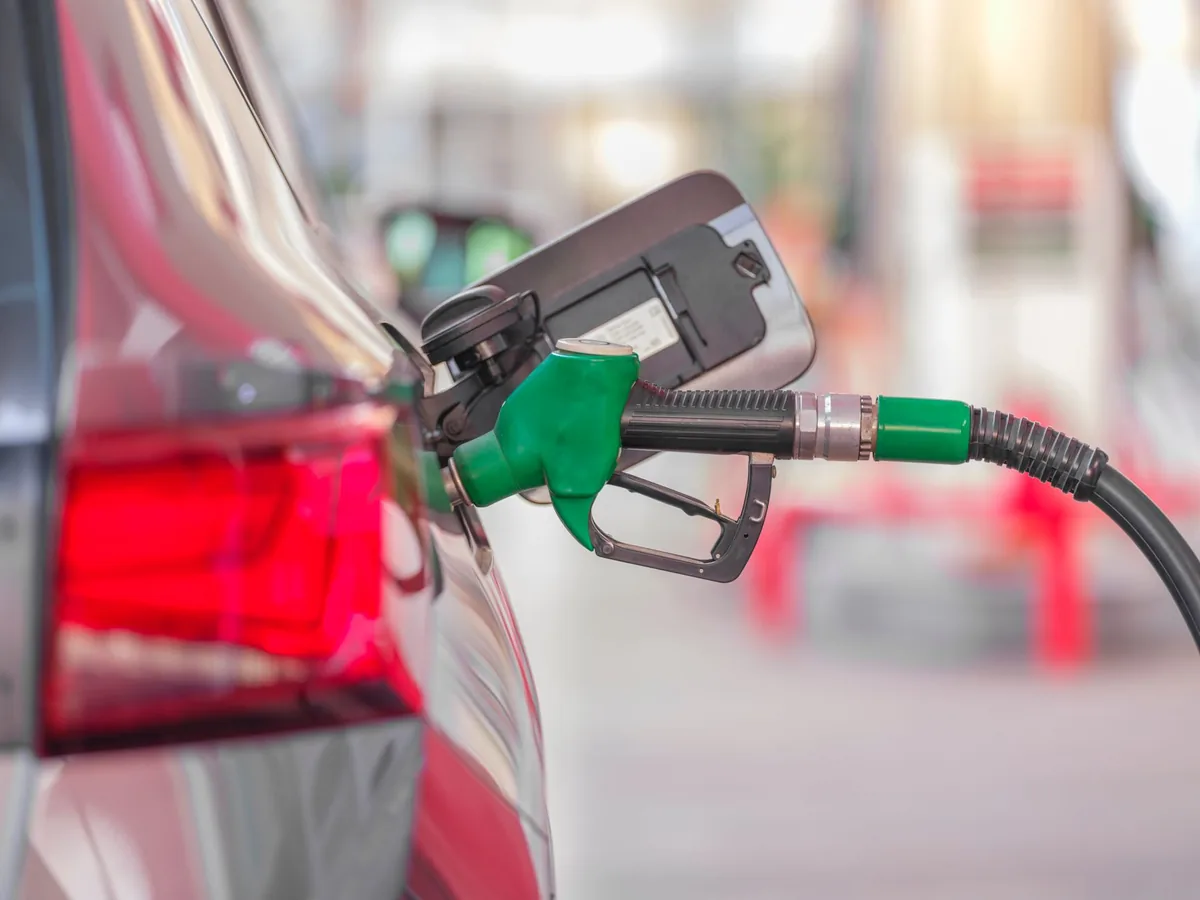
Car costs Germany are dominated by energy, because German fuel and electricity are among the most expensive in the European Union. Petrol averaged €2.236 a litre and diesel €2.232 in the week of 31 August 2026, against EU averages of €1.840 and €1.966 (EU Oil Bulletin). Household electricity was €0.387 per kWh, 76% above the EU average of €0.220 (Eurostat).
This guide turns those prices into real annual numbers using 17,130 official WLTP and NEDC type-approval records — approval values are identical across the EU, so the same certified consumption figures apply to German-registered cars. You get annual energy cost by powertrain with mean and median, cost per 100 km, the cheapest and dearest models to run, and a total-cost-of-ownership split built only from figures we can source.
Why energy is the spine of car costs Germany
Most running-cost guides lead with tax and insurance. In Germany that order is wrong. Petrol at €2.236/L is 21.5% above the EU average of €1.840/L, diesel at €2.232/L is 13.5% above the EU average of €1.966/L, and household electricity at €0.387/kWh sits 76% above the EU average of €0.220/kWh.
The consequence shows in the totals. For the average petrol car in our dataset, energy alone is €2,860 a year at 15,000 km. Add the €180 Kfz-Steuer reference and the amortised €80 a year for the HU/AU inspection and energy is 92% of the sourced annual running cost. The two fixed items together are €260. That is the spine of this article: in Germany the lever that moves car costs is energy per kilometre, not tax band.
Energy is 92% of the sourced running cost of the average petrol car in our data: €2,860 of €3,120 a year at 15,000 km.
How this Germany running-cost breakdown was built
We pulled 17,270 rows from three official UK Vehicle Certification Agency datasets — vca-uk, vca-mega and vca-archive — covering model years 2000 to 2027. After cleaning, 17,130 rows are used. WLTP and NEDC values come from the same harmonised EU test procedure, so a certified 3.6 L/100km in a VCA row is the figure printed on the German papers for the same model.
Annual energy cost is calculated straight from the certified figure. For petrol, diesel and hybrid: litres per 100 km divided by 100, multiplied by 15,000 km, multiplied by €2.236/L (petrol and hybrid) or €2.232/L (diesel). For electric cars the formula uses kWh per 100 km and €0.387/kWh. Nothing is modelled, adjusted or indexed. Means and medians are both reported because the data is skewed: a long tail of SUVs and performance cars lifts the petrol mean to 8.53 L/100km while the median car sits at 7.80 L/100km.
- vca-uk — 823 rows, current model years, includes the electric range and 129 plug-in hybrids with no consumption figure
- vca-mega — 7,522 rows, mainly 2011 to 2022 approvals
- vca-archive — 8,925 rows, mainly 2000 to 2013 approvals
- Prices: petrol €2.236/L, diesel €2.232/L (EU Oil Bulletin, week 31 August 2026); electricity €0.387/kWh (Eurostat, H2 2025, band DC, incl. taxes)
Distance is set at 15,000 km a year throughout. Scale linearly for your mileage: 7,500 km halves every energy figure, 30,000 km doubles it.
Data quality: the records we excluded, and why
Nine rows fall outside a plausible range (under 2.5 or over 25.0 L/100km, under 5.0 or over 40.0 kWh/100km) and were excluded. A 2026 Toyota Land Cruiser hybrid at 26.2 L/100km, a 2007 Kia Sorento diesel at 35.8 and a 2022 Mazda CX-60 petrol at 141.2 are test-cycle artefacts. Six old plug-in hybrids were below the floor: a 2013 Chevrolet Volt at 1.2 L/100km, a 2013 Vauxhall Ampera at 1.2, a 2013 Toyota Prius plug-in at 2.1, a 2013 Volvo V60 plug-in at 1.8, and 2018 Hyundai Ioniq and Kia Niro rows at 1.1 and 1.3.
Two rows tagged as plain hybrids carry a plug-in result: a 2018 Land Rover Range Rover and a 2018 Range Rover Sport, both 2.8 L/100km. That figure assumes a fully charged battery on every trip, so we drop them rather than let them distort the hybrid average. The 402 plug-in rows are reported separately and never folded into the hybrid numbers; the 129 plug-in rows in the current dataset carry no consumption value at all.
Every exclusion above is a real row from the source data, printed here so you can reproduce or challenge the cleaning.
What petrol, diesel and electricity cost in Germany in 2026
Petrol and diesel are almost identical in price in Germany: €2.236 against €2.232 per litre. That is not the pattern everywhere in Europe, where diesel often carries a pump premium. It matters because a diesel burns markedly less per kilometre, so in Germany diesel gets the efficiency advantage without paying for it at the pump.
Electricity is where the German structure really differs: at €0.387/kWh a kilowatt-hour at home costs 76% more than the EU average of €0.220, and only Ireland at €0.404/kWh is more expensive in the Eurostat data. Cheap home charging is a smaller German advantage than in France (€0.256/kWh) or Spain (€0.267/kWh).
| Energy | Germany | EU average | Germany vs EU |
|---|---|---|---|
| Petrol | €2.236/L | €1.840/L | +21.5% |
| Diesel | €2.232/L | €1.966/L | +13.5% |
| Household electricity | €0.387/kWh | €0.220/kWh | +76% |
Sources: EU Oil Bulletin, week 31 August 2026 (pump prices); Eurostat nrg_pc_204, H2 2025, band DC including taxes (electricity).
What a full tank and a full charge cost in Germany
A 50-litre tank of petrol costs about €112 in Germany at €2.236/L. The same 50 litres at the EU average of €1.840/L would cost about €92. That €20 gap, repeated at every fill, is the simplest way to feel the German price level. A 60 kWh battery charged at the household rate of €0.387/kWh costs about €23 from empty to full — roughly a fifth of the tank above.
Two caveats matter. Pump prices move week to week, so these totals describe the reference week rather than a forecast. And public fast charging is billed above the household tariff, so an EV owner without a home charger should model a higher cost per kWh than €0.387.
- 50-litre petrol tank: ~€112 at German prices, ~€92 at the EU average
- 60 kWh home charge: ~€23 at €0.387/kWh
- The household rate applies only if you can charge at home
We hold no verified German public-charging price, so we publish none and exclude it from every figure here.
Annual energy cost by powertrain: mean and median
Across all 17,130 cleaned rows the average petrol car uses 8.53 L/100km and costs €2,860 a year at 15,000 km, the median uses 7.80 L/100km and €2,616. That €244 gap reflects a dataset full of large and performance models.
Diesel is cheaper than petrol on both measures despite larger engines: mean 5.84 L/100km and €1,954, median 5.50 L/100km and €1,841. Hybrids sit between the two at 6.08 L/100km and €2,040 by mean. Electric cars are in a different category: mean 17.46 kWh/100km and €1,013, median 16.90 and €981 — €1,847 a year below the petrol mean, a factor of 2.8. The 402 plug-in hybrid rows appear for completeness only, at 6.19 L/100km and €2,075 by mean.
| Powertrain | Rows | Mean consumption | Median consumption | Mean annual energy | Median annual energy |
|---|---|---|---|---|---|
| Petrol | 9,201 | 8.53 L/100km | 7.80 L/100km | €2,860 | €2,616 |
| Diesel | 6,855 | 5.84 L/100km | 5.50 L/100km | €1,954 | €1,841 |
| Hybrid (non-plug) | 490 | 6.08 L/100km | 5.85 L/100km | €2,040 | €1,962 |
| Plug-in hybrid | 402 | 6.19 L/100km | 6.00 L/100km | €2,075 | €2,012 |
| Electric | 182 | 17.46 kWh/100km | 16.90 kWh/100km | €1,013 | €981 |
All figures: 15,000 km a year, petrol €2.236/L, diesel €2.232/L, electricity €0.387/kWh, computed from certified consumption values.
Cost per 100 km: the number that compares cars honestly
Annual totals depend on mileage; cost per 100 km does not. It is the cleanest way to compare two cars on energy. In Germany the median petrol car costs €17.44 per 100 km, the median diesel €12.28, the median hybrid €13.08 and the median electric car €6.54. On means the petrol figure rises to €19.07 against €13.02 for diesel and €6.76 for electric.
The petrol-to-diesel gap of €6.04 per 100 km adds up to €906 a year at 15,000 km, almost all of it from diesel's lower consumption rather than its price per litre. Multiply any difference in cost per 100 km by your annual distance to price the energy side of a buying decision.
- Median petrol: €17.44 per 100 km (7.80 L/100km)
- Median diesel: €12.28 per 100 km (5.50 L/100km)
- Median hybrid: €13.08 per 100 km (5.85 L/100km)
- Median electric: €6.54 per 100 km (16.90 kWh/100km)
Cost per 100 km = certified consumption per 100 km x German price per litre or per kWh. No other cost is included.
Cheapest petrol cars to run in Germany
The modern petrol leaderboard (2015 model year and later) is led by the 2017 Suzuki Celerio at 3.6 L/100km, 84 g/km CO2 and €1,207 a year in fuel — €1,409 less than the median petrol car and €1,653 less than the petrol mean. A cluster of city cars follows at 3.8 to 4.1 L/100km, all between €1,275 and €1,375.
Every model near the top is a small hatchback or city car. If you drive 15,000 km a year on petrol, the size of car you choose is worth roughly €1,000 a year in fuel alone — a bigger swing than the entire Kfz-Steuer bill. The cheapest petrol row in the whole archive is a 2000 Honda Insight at 3.4 L/100km and €1,140, kept out of the modern table because old NEDC values are not comparable with today's WLTP figures.
| Make | Model | Year | Consumption | CO2 | Annual energy |
|---|---|---|---|---|---|
| Suzuki | Celerio | 2017 | 3.6 L/100km | 84 g/km | €1,207 |
| Fiat | 500 & 500C | 2018 | 3.8 L/100km | 90 g/km | €1,275 |
| Citroën | C1 | 2016 | 3.8 L/100km | 88 g/km | €1,275 |
| Kia | Niro | 2018 | 3.8 L/100km | 88 g/km | €1,275 |
| Peugeot | 308 | 2017 | 4.0 L/100km | 95 g/km | €1,342 |
| Hyundai | i10 | 2017 | 4.0 L/100km | 93 g/km | €1,342 |
| Smart | fortwo coupé | 2016 | 4.0 L/100km | 98 g/km | €1,342 |
| Peugeot | 108 | 2018 | 4.1 L/100km | 95 g/km | €1,375 |
| SEAT | Mii | 2018 | 4.1 L/100km | 95 g/km | €1,375 |
Cost per 100 km: the Celerio is €8.05, the median petrol car €17.44 — more than double, for the same fuel at the same pump.
Cheapest diesel cars: still the cheapest liquid fuel in Germany
The 2017 Peugeot 208 diesel is the cheapest liquid-fuel car in the modern dataset at 3.0 L/100km, 79 g/km CO2 and €1,004 a year — €203 less than the cheapest petrol car and €1,612 less than the median petrol. Peugeot 308 at 3.1 L/100km (€1,038) and a group of 3.2 L/100km models at €1,071 complete the top of the table.
Diesel's advantage here is structural. Unlike the UK or Ireland, where diesel carries a pump premium, German forecourts price the two fuels within four thousandths of a euro of each other, so diesel gets its lower litres per 100 km without paying for it — which is why the diesel mean of €1,954 sits €906 below the petrol mean. Purchase prices and servicing are real costs no consumption table captures.
| Make | Model | Year | Consumption | CO2 | Annual energy |
|---|---|---|---|---|---|
| Peugeot | 208 | 2017 | 3.0 L/100km | 79 g/km | €1,004 |
| Peugeot | 308 | 2017 | 3.1 L/100km | 82 g/km | €1,038 |
| Ford | Fiesta | 2018 | 3.2 L/100km | 82 g/km | €1,071 |
| Peugeot | 308 SW | 2017 | 3.2 L/100km | 85 g/km | €1,071 |
| Hyundai | i20 | 2016 | 3.2 L/100km | 84 g/km | €1,071 |
| Nissan | Micra | 2018 | 3.2 L/100km | 85 g/km | €1,071 |
| Renault | Clio Sport Tourer | 2018 | 3.2 L/100km | 84 g/km | €1,071 |
Diesel at €2.232/L is marginally cheaper than petrol at €2.236/L in Germany — the opposite of what drivers assume from UK or Irish forecourts.
Hybrids in the German data: Toyota dominates
With the two mis-tagged plug-in Range Rovers removed, 490 non-plug hybrid rows remain. The 2018 Toyota Prius leads at 3.0 L/100km, 70 g/km CO2 and €1,006 a year, followed by the Toyota Yaris at 3.3 L/100km (€1,107) and further Toyota and Hyundai entries at 3.4 to 3.5 L/100km.
These are self-charging hybrids with no plug and no claimed electric range, so the certified figure is a fair description of behaviour: energy is recovered under braking and the engine switches off in traffic, which matches the German city pattern. The group mean of 6.08 L/100km exceeds the diesel mean of 5.84 only because it contains large hybrid SUVs. Like for like, the Prius and the Peugeot 208 diesel are level at 3.0 L/100km.
| Make | Model | Year | Consumption | CO2 | Annual energy |
|---|---|---|---|---|---|
| Toyota | Prius | 2018 | 3.0 L/100km | 70 g/km | €1,006 |
| Toyota | Yaris | 2018 | 3.3 L/100km | 75 g/km | €1,107 |
| Toyota | Prius (MY18) | 2018 | 3.4 L/100km | 78 g/km | €1,140 |
| Hyundai | IONIQ | 2017 | 3.4 L/100km | 79 g/km | €1,140 |
| Toyota | Auris | 2018 | 3.5 L/100km | 79 g/km | €1,174 |
| Toyota | Auris Touring Sports | 2018 | 3.5 L/100km | 81 g/km | €1,174 |
Hybrid mean 6.08 L/100km versus diesel mean 5.84 L/100km — that gap is the mix of cars tested, not the technology.
Electric cars are the cheapest to run in Germany
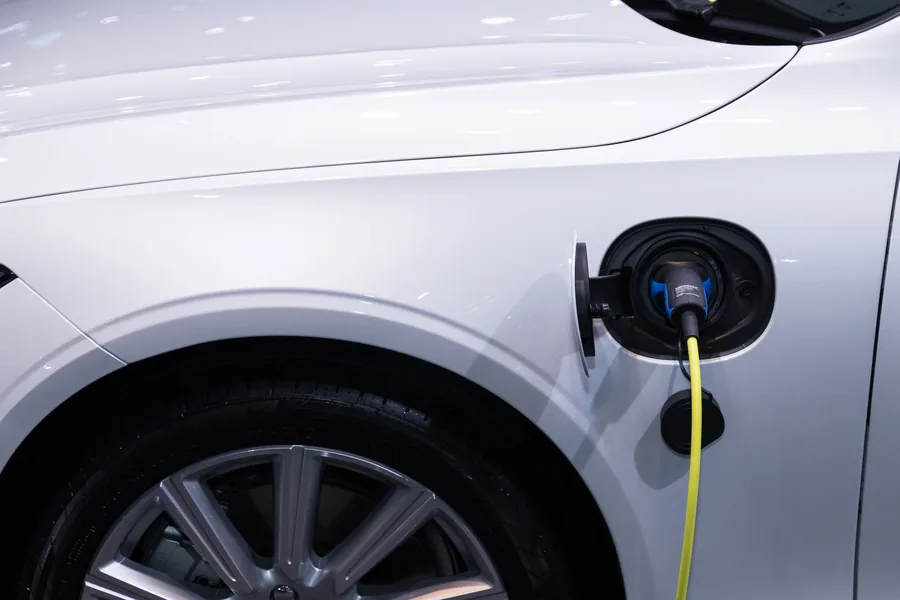
Even at €0.387/kWh, German household electricity keeps electric cars far ahead. The 2026 MINI Aceman leads the 182-row electric dataset at 10.9 kWh/100km, which is €633 a year at 15,000 km — €574 below the cheapest petrol car and €1,983 below the median. The Mercedes-Benz CLA Saloon (12.2 kWh/100km, €708), Dacia Spring (12.5, €726), Fiat 500 (13.3, €772) and Tesla Model 3 (13.8, €801) follow.
The spread inside the electric group is narrow by petrol standards. The thirstiest modern EV here is the Mercedes-Benz G-Class at 30.3 kWh/100km and €1,759 a year; a Lotus Eletre at 24.1 kWh/100km costs €1,399. That €1,126 gap is roughly six times smaller than the €7,211 spread inside petrol.
| Make | Model | Year | Consumption | Annual energy |
|---|---|---|---|---|
| MINI | Aceman | 2026 | 10.9 kWh/100km | €633 |
| Mercedes-Benz | CLA Saloon | 2026 | 12.2 kWh/100km | €708 |
| Dacia | Spring | 2026 | 12.5 kWh/100km | €726 |
| Fiat | 500 | 2025 | 13.3 kWh/100km | €772 |
| Tesla | Model 3 | 2026 | 13.8 kWh/100km | €801 |
| Tesla | Model Y | 2026 | 14.2 kWh/100km | €824 |
| Volkswagen | ID.7 | 2026 | 14.2 kWh/100km | €824 |
| Mercedes-Benz | G-Class | 2026 | 30.3 kWh/100km | €1,759 |
Cost per 100 km: €4.22 for the Aceman, €11.73 for the G-Class, against a petrol median of €17.44 — all at the same German prices.
What 15,000 km a year costs, month by month
On median figures a petrol car at 7.80 L/100km costs €2,616 a year, or €218 a month in fuel; a diesel at 5.50 L/100km costs €1,841, or €153 a month, €65 less every month; and an electric car at 16.90 kWh/100km costs €981, or €82 a month. On means the same three are €238, €163 and €84 a month.
The monthly framing shows how much of a motoring budget is decided at purchase: the median petrol car costs about €117 a month more than the 3.6 L/100km city car, and the median electric car about €136 a month less than the median petrol.
| Powertrain | Consumption at 15,000 km | Annual energy | Per month |
|---|---|---|---|
| Petrol (median) | 1,170 L | €2,616 | €218 |
| Diesel (median) | 825 L | €1,841 | €153 |
| Hybrid (median) | 878 L | €1,962 | €164 |
| Electric (median) | 2,535 kWh | €981 | €82 |
Monthly figures are annual totals divided by twelve. They do not smooth winter and summer consumption, which official test values do not capture.
The dearest cars to run in Germany
At the top of the modern petrol table, the 2026 McLaren GT consumes 23.7 L/100km and 270 g/km CO2, costing €7,949 a year — €6,742 more than the Suzuki Celerio and more than three times the median petrol car. Ferrari, Rolls-Royce and a second Ferrari fill the rest of the table.
Heavy electric models are far cheaper to run than combustion cars of similar size: a 2026 Mercedes-Benz G-Class at 30.3 kWh/100km costs €1,759 a year, around 40% less than the average petrol car. The archive's most expensive row is a Lamborghini Diablo at 24.9 L/100km and 575 g/km CO2, which would cost €8,351 a year in fuel — €7,211 more than the archive's cheapest petrol car.
| Make | Model | Year | Consumption | CO2 | Annual energy |
|---|---|---|---|---|---|
| McLaren | GT | 2026 | 23.7 L/100km | 270 g/km | €7,949 |
| Ferrari | 812 | 2022 | 20.2 L/100km | 373 g/km | €6,775 |
| Rolls-Royce | Phantom | 2026 | 18.7 L/100km | 351 g/km | €6,272 |
| Rolls-Royce | Wraith | 2026 | 18.0 L/100km | 357 g/km | €6,037 |
| Mercedes-Benz | G-Class (electric) | 2026 | 30.3 kWh/100km | 0 g/km | €1,759 |
The dearest petrol car in the modern data costs €7,949 a year in fuel; the dearest electric car costs €1,759. Size and power cost far more when the fuel is liquid.
Total cost of ownership: the sourced split
A total-cost-of-ownership figure is only useful if every line can be traced. Here there are exactly three: energy, the Kfz-Steuer reference for a typical petrol car (about €180 a year) and the HU/AU inspection (about €160 per test, amortised to €80 a year on the 24-month cycle for cars past their first test).
For the average petrol car that is €2,860 of fuel, €180 of tax and €80 of inspection — €3,120 a year at 15,000 km, of which energy is 92%. Diesel gives €2,214 with energy at 88%, a hybrid €2,300 and a plug-in hybrid €2,335. This is not a complete cost of ownership: insurance, tyres, servicing and parking are often larger in total, but they are not in our data and we will not invent them.
| Cost line | Basis | Average petrol car |
|---|---|---|
| Energy | 8.53 L/100km x 15,000 km x €2.236/L | €2,860 |
| Kfz-Steuer | Reference figure, typical petrol car | €180 |
| HU/AU inspection | ~€160 per test, every 24 months | €80 |
| Sourced total | Sum of the three lines above | €3,120 |
The €180 and €80 lines are sourced reference figures, not vehicle-specific quotes. Your Kfz-Steuer depends on engine and CO2 data, and the inspection fee on the organisation and the test result.
Kfz-Steuer: what the annual tax adds
The Kfz-Steuer is the annual German vehicle tax, collected by the customs authority (Zoll). For a typical petrol car the reference figure we use is about €180 a year. Against the energy figures above that is a small line: roughly 1,000 km of driving in a median petrol car, and less than the fuel a single extra 1,500 km would cost.
That is the central point about German car costs. A €180 tax bill is not what makes motoring expensive; €2.236 a litre is. A driver switching from 7.80 to 6.0 L/100km saves about €604 a year, more than three times the entire annual tax. Treat €180 as a planning anchor and confirm the exact amount for your vehicle.
- Reference figure: about €180 a year for a typical petrol car
- Collected annually by Zoll, the German customs authority
- Calculated on engine and CO2 characteristics, so it varies by vehicle
- Smaller than the annual fuel gap between a frugal and a thirsty petrol car
We hold no verified German tax figure for diesel, electric or large-engine cars, so we publish none. Check the current rules for your specific vehicle.
TÜV inspection (HU/AU): €160 every two years
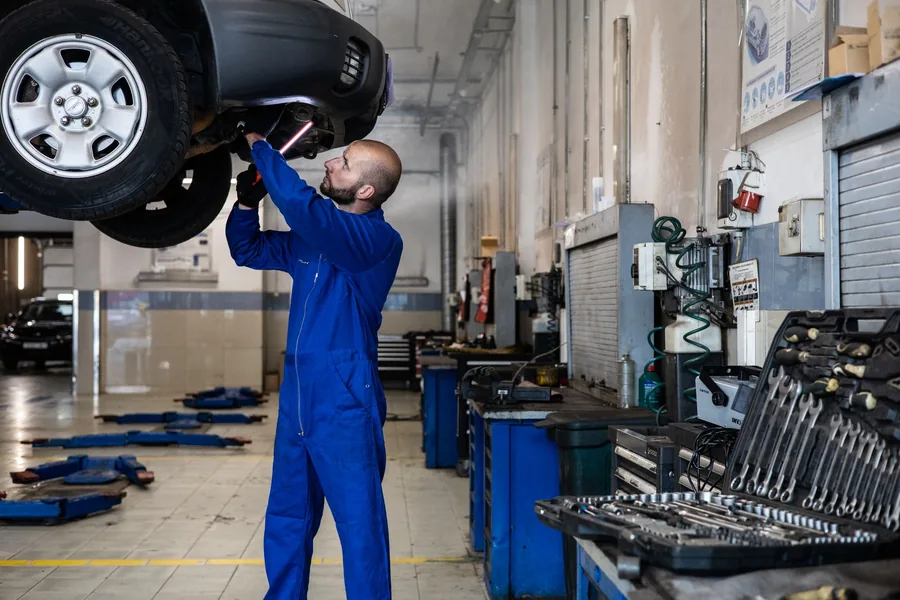
The Hauptuntersuchung (HU) and Abgasuntersuchung (AU) — the roadworthiness and emissions checks most drivers call the TÜV — cost roughly €160 combined. New cars get their first inspection at 36 months, then every 24 months. Amortised over the cycle that is €80 a year.
The inspection is not cosmetic: brakes, steering, suspension, lighting, exhaust emissions and structural condition are all examined. A failed test means repairs and a re-test, costs that sit outside this article's figures. Authorised organisations include TÜV, DEKRA, GTÜ and KÜS.
- Book the test before the due date — most organisations offer online appointments and some garages offer a pre-check
- Attend with the vehicle documents and the previous inspection report
- The tester examines the vehicle and issues a report with a pass or a defect list
- If it fails, complete the repairs and return for a re-test within the stated period
€160 per HU/AU test, roughly €80 a year amortised, on top of any repairs the inspection identifies.
What this data does not include: insurance, tyres, servicing, parking
Four major cost categories are absent from every table here, deliberately. Insurance varies enormously with driver age and history, region, vehicle group and cover level: third-party liability (Haftpflicht) is the legal minimum, while comprehensive cover (Vollkasko) costs materially more. We hold no verified German premium, so we publish no average.
Tyres depend on size, brand and whether you run a second winter set. Servicing and repairs depend on age, mileage and inspection findings. Parking ranges from free on-street spaces to city-centre costs that can rival the energy bill. Directionally, depreciation is usually the largest single cost on a new car, while repairs and tyres can exceed fuel on an old high-mileage one. Treat the figures here as the computed floor.
- Insurance — varies by insurer, driver, region and cover level; get individual quotes
- Tyres — size, brand and seasonal sets differ, and winter tyres are common practice in Germany
- Servicing and repairs — depends on age, mileage, labour rates and inspection findings
- Parking — free in many small towns, a real monthly cost in city centres
Energy, Kfz-Steuer and HU/AU are the only lines in this article's totals. Everything else is qualitative because we hold no verified German figure for it.
Depreciation: the biggest cost the tables cannot show
For most new-car owners depreciation exceeds fuel. The general market pattern is roughly 15% to 25% of value lost in the first year and about 50% over five years. On a mid-priced German car a larger annual number than the €2,616 of median petrol energy — but a percentage of a price we do not hold, so we state the pattern and leave the euro amount to you.
Depreciation cuts both ways. Efficient models often hold value well because buyers shopping on running costs want them, narrowing the total gap between a frugal and a thirsty car. Electric cars depreciate less predictably as battery technology and charging infrastructure keep moving.
Depreciation guide: roughly 15–25% in year one and about 50% over five years, stated as approximate market behaviour and not a forecast for any model.
WLTP versus German motorway reality
Every consumption figure here is a laboratory result. WLTP and NEDC tests run on a rolling road with no wind, no passengers and no air conditioning. Real-world consumption runs 10% to 25% higher for petrol and diesel, and 15% to 30% higher for EVs in winter.
German driving pushes those numbers further than a European average would. Sustained high-speed motorway running is the least efficient condition for combustion and electric cars alike, and short winter urban trips are the other extreme. Treat every euro figure as a ranked floor and your own fuel receipts as the truth.

Official values understate real consumption by roughly 10–25% for petrol and diesel and 15–30% for EVs in winter — a qualitative range, not a correction factor to apply to the tables.
How to turn these numbers into your own budget
Start with your own annual distance. Every energy figure scales linearly with kilometres: 15,000 km is the basis, so 10,000 km means multiplying by two thirds and 25,000 km by five thirds. Then compare your shortlist on cost per 100 km, which is independent of mileage, and multiply the difference between two cars by your annual distance to see the energy gap in euros.
Then add the lines we cannot: two or three insurance quotes for the exact models on your shortlist, tyre prices for the wheel sizes involved, servicing intervals, plus the €180 Kfz-Steuer reference and the €80 annualised inspection. In Germany, more than in most markets, the energy line will be the one that moves.
- Set your own annual distance and scale the energy figures
- Compare shortlisted cars on cost per 100 km, not just annual totals
- Add the Kfz-Steuer reference (about €180 for a typical petrol car) and €80 a year for HU/AU
- Add your own verified insurance, tyre and servicing quotes before deciding
Run your own figures in the calculators below — they use the same German prices and let you change mileage, consumption and ownership period.
Use the free calculators
Frequently asked questions
How much does it cost to run a car in Germany per year?
The average petrol car in our 9,201-row dataset uses 8.53 L/100km and costs €2,860 a year in fuel at 15,000 km, plus about €180 Kfz-Steuer and €80 for the amortised HU/AU inspection. The median petrol car costs €2,616 in fuel. Insurance, tyres, servicing and parking are not included and must be added separately.
Is petrol or diesel cheaper in Germany in 2026?
Diesel is marginally cheaper at the pump, €2.232/L against €2.236/L for petrol, and it burns less per kilometre. That makes diesel the cheaper liquid fuel: the median diesel car costs €1,841 a year against €2,616 for the median petrol car, a saving of €775 at 15,000 km. Purchase price and servicing can offset that advantage.
Are electric cars cheaper to run than petrol in Germany?
Yes, even though German household electricity is €0.387/kWh, 76% above the EU average. The median electric car uses 16.90 kWh/100km and costs €981 a year at 15,000 km, against €2,616 for the median petrol car. That is €1,635 a year less in energy, and it assumes you can charge at the household rate rather than at public chargers.
How much is Kfz-Steuer and the TÜV inspection in Germany?
Our reference figure for Kfz-Steuer is about €180 a year for a typical petrol car, collected by the customs authority and calculated on the vehicle's engine and CO2 characteristics. The HU/AU inspection costs roughly €160 per test, first at 36 months and then every 24 months, which is about €80 a year on average.
Why does this guide use UK VCA data for German car costs?
WLTP and NEDC type-approval values are harmonised across the EU, so the certified figure in a UK Vehicle Certification Agency row is the same figure printed on the German paperwork for that model. We apply German prices — €2.236/L petrol, €2.232/L diesel, €0.387/kWh — to those certified values, which makes the totals German even though the database is British.