NCT test Ireland: your 2026 checklist and failure guide

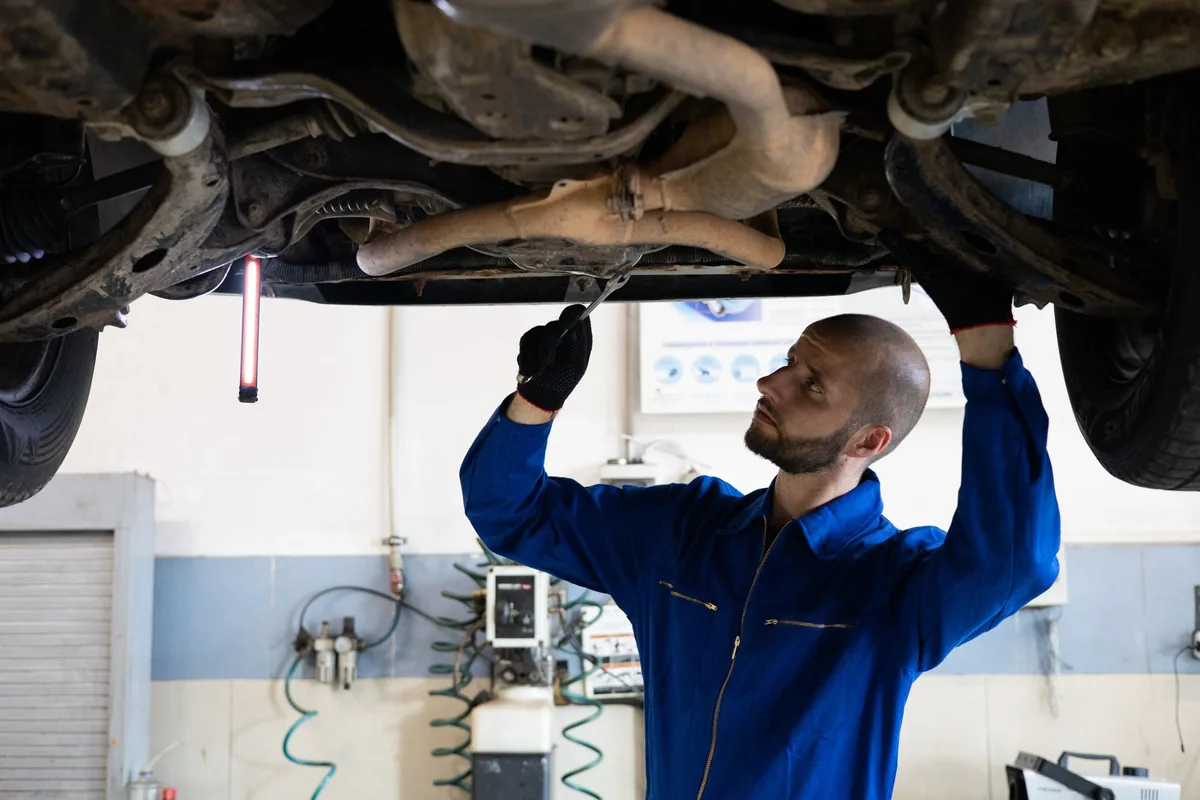
Every car over four years old in Ireland needs an NCT test, and the test itself costs €55. Spread over the two-year cycle that is €27.50 a year — a rounding error next to what the same car spends on fuel, and far less than the cost of being caught driving on an expired certificate.
This guide covers what the NCT test Ireland actually inspects, how the CO₂ band on your registration certificate drives both motor tax and fuel bills, and what 17,130 official certification records say about the real annual energy cost of the cars Irish drivers buy most. Where we could not verify a rule or a rate, we say so instead of guessing.
NCT test Ireland: what the €55 actually covers
The NCT costs €55 and it is paid once every two years, so on an annual basis it adds €27.50 to the cost of keeping a car on the road. That fee is the one genuinely fixed number in the whole process: pass or fail, the €55 buys a full inspection covering structure, brakes, steering, suspension, lighting, tyres, seatbelts and emissions.
Compare it with what the same car drinks. A 2026 Renault Clio certified at 5.3 L/100km costs about €1,463 a year in petrol at €1.84 a litre over 15,000 km — roughly 53 times the annualised NCT fee. The test is the cheapest part of Irish car ownership, and the part most easily forgotten until the reminder lands.
Put the fee beside the fuel it buys and the contrast sharpens. A 50-litre tank of petrol costs about €92 at the €1.84 a litre we use throughout this guide, and the same tank of diesel about €96. Irish petrol sits exactly on the EU average of €1.840 a litre, while Irish diesel at €1.92 is 4.6 cent below the EU average of €1.966 — one reason the diesel arithmetic here looks kinder than the British version.
Who runs the NCT and where it sits in your year
The NCT is administered by the Road Safety Authority (RSA) and carried out by its contracted test operator, Applus. You book through the RSA's NCT system, bring the car to a test centre, and the result is recorded against the vehicle's registration. The RSA owns the rules rather than the test centre or your local garage, which is why our advice on anything time-sensitive is to check the RSA's own pages.
The test does not replace servicing. It is a roadworthiness snapshot taken on one day, not a maintenance schedule, and it does not look at the things that quietly drain a budget: how much fuel the car really uses, the state of the oil, or how much life is left in the brake pads between tests. Those stay with you and your mechanic.
Fees, intervals and re-test windows are set by the RSA and do change. Confirm the current position with the RSA before you rely on any figure in this guide.
When your car needs an NCT: the age rules explained
A car needs its first NCT once it is more than four years old, and after that the test runs on a two-year cycle. The €55 fee applies to each test, and the certificate belongs to the car rather than the driver, so a second-hand purchase inherits whatever test history comes with it.
Older cars are tested more often than that two-year baseline. The RSA sets the intervals and the age thresholds that trigger them, so check your own due date on the RSA's NCT site rather than assuming a number. Once a certificate lapses with the car still in use, the vehicle stops being roadworthy for insurance and enforcement purposes until it passes.
Because the certificate travels with the registration, a used car carries its test history into your ownership. Before you agree a price, ask for the most recent certificate and the date of the next test; a car with a current pass and a short list of advisories is a different proposition from one with no paperwork at all. If a car has been off the road for a season, check the due date rather than taking the seller's word for it.
What the NCT actually inspects, area by area
The inspection follows a fixed list of systems in the same order at every centre — nothing on the sheet depends on which lane you happen to be sent to. The main groups are:
Several of those items are visible from outside the car in daylight, with no tools, which is why the pre-test checklist further down this page is worth twenty minutes of your time.
The tester is not appraising the car the way a buyer would. Every item is measured against a minimum standard, which is why a car that feels tired can sail through while a tidy one fails on a single bulb or a cracked lens. It also explains why the sheet is longer than most owners expect: the same test is applied to a 2009 hatchback and a 2026 SUV, and the standards do not bend for age.
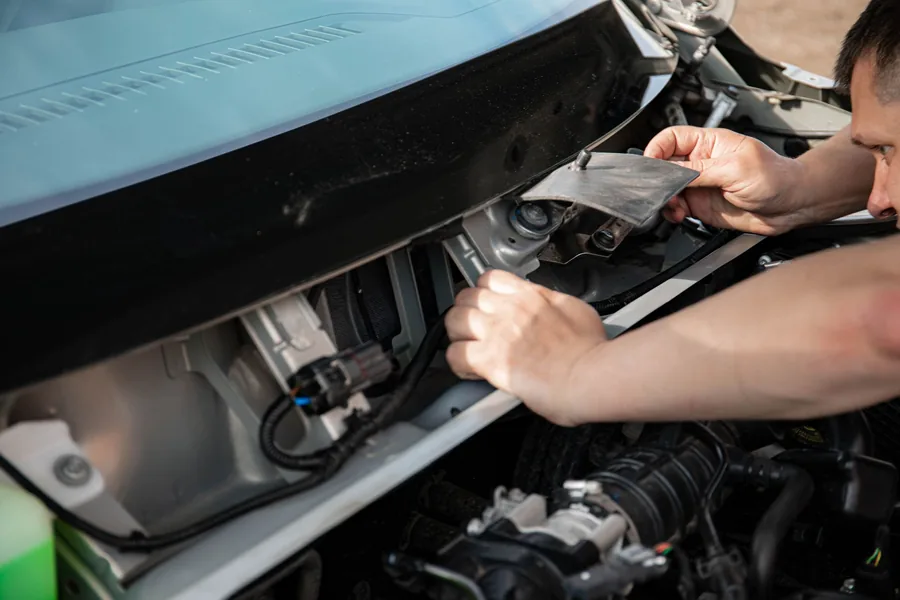
- Brakes — performance on the rolling road, plus the parking brake
- Steering and suspension — play, wear and mounting points
- Wheels and tyres — condition, tread and matching sizes
- Lighting — headlamps, indicators, brake, reverse and fog lamps
- Bodywork and chassis — corrosion and structural integrity
- Seatbelts, seats and their anchorages
- Glass, wipers, washers, mirrors and the horn
- Exhaust and emissions — a gas or smoke check depending on fuel
The emissions check is not the same as your CO₂ band
Two different numbers get called emissions, and they matter in different places. The first is the CO₂ figure on the registration certificate — the certified grams of carbon dioxide per kilometre that set the motor tax band. The second is what the tester measures at the tailpipe: whether exhaust gases and smoke fall inside the limits for that car's age and fuel type.
CO₂ comes from a laboratory test cycle, so it is a comparison tool more than a prediction of your week. The tailpipe check is a pass-or-fail measurement taken on the day. A car can sit in a low CO₂ band and still fail on smoke if the engine is worn, so a clean tax band is no substitute for an exhaust that works.
CO₂ bands, motor tax and the one rate we can verify
Motor tax in Ireland is banded by CO₂, and the boundaries and rates have moved with successive budgets. We can verify one figure: a car in the 111–120 g/km band pays around €210 a year. Rates outside that band we will not quote, because they change and because the published tables are simple to check against your own registration.
The verified band is still worth knowing because it sits in the busiest part of the market. Of the 16,942 kept records carrying a CO₂ figure, 1,332 — just under 8% — land in the 111–120 g/km bracket. If tax matters to you, look at the CO₂ figure before the test drive rather than after.
Only the 111–120 g/km band (around €210 a year) is verified in this guide. Check the current rate for your own band with the relevant government department.
How these running-cost tables were built
Every figure below comes from the UK VCA certification datasets we hold: the current file plus the 2000–2013 and 2011–2022 archives, 17,141 records in total before cleaning, spanning model years 2000 to 2027 with official certified consumption and CO₂. We use them as a proxy for the Irish market, which draws on the same EU type-approval test procedures rather than its own separate test. These are not Irish registration figures, so read the model tables as indicative of what is available and how it performs, not as a sales count.
Annual energy cost is litres per 100 km divided by 100, multiplied by 15,000 km, multiplied by the pump price. For an EV the same arithmetic runs on kWh per 100 km at the household electricity rate. Pump prices come from the EU Oil Bulletin and the electricity rate from Eurostat household data; the same constants are applied to every record, so the tables rank cars by certified efficiency rather than by local prices.
The mix inside the data says as much as the medians. Of the 17,130 kept records, 9,201 are petrol (53.7%), 6,855 are diesel (40.0%), 490 are hybrid (2.9%), 402 are plug-in hybrid (2.3%) and 182 are electric (1.1%). Hybrids and EVs look thin because the archive stretches back to 2000; the recent model years tell a very different story.
| Constant | Value | Source |
|---|---|---|
| Petrol | €1.84/L | EU Oil Bulletin, wk 31 Aug 2026 |
| Diesel | €1.92/L | EU Oil Bulletin, wk 31 Aug 2026 |
| Household electricity | €0.38/kWh | Eurostat band DC, incl. taxes |
| NCT test | €55 every two years | RSA |
| Motor tax, 111–120 g/km | ~€210/yr | Verified band only |
| Annual distance | 15,000 km | Assumption |
Data quality: the eleven records we removed
Certification data arrives with mistakes in it, and publishing it uncleaned puts nonsense in front of readers. We drop any liquid-fuel record outside 2.5 to 25.0 L/100km and any electric record outside 5.0 to 40.0 kWh/100km, then drop hybrid-tagged rows under 3.0 L/100km because those are almost always plug-in hybrids mislabelled as self-charging.
Nine rows failed the consumption bands and two failed the hybrid check, which leaves 17,130 of the 17,141 records that carry a consumption figure. The table shows the largest offenders — a Mazda CX-60 at 141.2 L/100km is a keying error rather than a car.
The plug-in mis-tags are the instructive ones. A 2013 Chevrolet Volt, a 2013 Vauxhall Ampera and a 2018 Hyundai Ioniq all appear between 1.1 and 1.2 L/100km, which is an inflated official plug-in figure rather than anything a driver would ever see at the pump. Two Range Rover rows are odder still: 2.8 L/100km recorded next to 64 g/km of CO₂, a pairing no full-size petrol SUV achieves. Publishing those numbers would flatter the cars and mislead the reader.
| Record | Certified value | Why it was excluded |
|---|---|---|
| Mazda CX-60, 2022, petrol | 141.2 L/100km | Outside 2.5–25.0 band |
| Kia Sorento, 2007, diesel | 35.8 L/100km | Outside band |
| Toyota Land Cruiser, 2026, hybrid | 26.2 L/100km | Outside band |
| Hyundai Ioniq, 2018, plug-in hybrid | 1.1 L/100km | Outside band |
| Range Rover, 18MY, 2018 | 2.8 L/100km, 64 g/km | Plug-in figure tagged hybrid |
Two certification eras: why a 2018 diesel looks better than a 2026 one
Older records in the data were certified on the NEDC cycle and newer ones on WLTP. Compare the same model and fuel across the two eras and the gap is plain: the WLTP-era median is about 20% higher than the 2015–2018 NEDC-era median across the four model-and-fuel pairs that appear in both.
That matters twice over. A 2018 car showing 99 g/km is not magically cleaner than a 2026 car showing 123 g/km, because the tests differ. And when you compare running costs quoted from different eras, part of what you are comparing is the test cycle rather than the car.
One consequence is worth spelling out for used buyers. A 2016 Octavia diesel showing 3.5 L/100km is not proof that the newer equivalent is a worse car — it is proof that the newer one was measured to a harder standard. The +34% uplift on that pair is the largest we found, and it is exactly the kind of gap that opens up when an advert quotes an official figure from 2015 beside a real-world number from 2026.
| Model and fuel | NEDC-era median | WLTP-era median | Uplift |
|---|---|---|---|
| Volkswagen Golf diesel | 4.2 L/100km (n=12) | 4.8 L/100km (n=2) | +14% |
| Skoda Octavia diesel | 3.5 L/100km (n=6) | 4.7 L/100km (n=2) | +34% |
| Nissan Qashqai petrol | 5.8 L/100km (n=5) | 6.4 L/100km (n=1) | +10% |
| Peugeot 208 petrol | 4.3 L/100km (n=3) | 5.4 L/100km (n=1) | +26% |
Representative models: CO₂ band, consumption and annual energy cost
The table below takes one record for each of 19 models that Irish buyers register in volume, chosen as the lowest-consumption variant inside the most recent model year held in the data. Costs are energy only, at the constants above, for 15,000 km.
Read it as a spread rather than a leaderboard. A 2026 Tesla Model 3 certified at 13.8 kWh/100km costs about €787 a year in household electricity, while a 2026 Nissan Qashqai at 6.4 L/100km costs about €1,766 — a gap of roughly €980 a year for the same distance. Note also how few of these rows sit in the verified 111–120 g/km tax band.
Nor does the table cover the whole market: it is 19 rows drawn from 17,130 records, and the spread within a single fuel is wide. Petrol records in the data run from 3.4 L/100km all the way to 24.9 L/100km, which is roughly €938 to €6,872 a year at these prices. Somewhere in that range sits whatever car is on your drive.
| Make | Model | Year | Fuel | CO₂ | Consumption | Annual energy |
|---|---|---|---|---|---|---|
| Toyota | Corolla | 2025 | Hybrid | 106 g/km | 4.7 L/100km | €1,297 |
| Toyota | Prius | 2019 | Hybrid | 107 g/km | 4.7 L/100km | €1,297 |
| Toyota | Yaris Cross | 2027 | Hybrid | 109 g/km | 4.8 L/100km | €1,325 |
| Kia | Niro | 2026 | Hybrid | 111 g/km | 4.9 L/100km | €1,352 |
| Toyota | RAV4 | 2018 | Hybrid | 115 g/km | 4.9 L/100km | €1,352 |
| Hyundai | Tucson | 2027 | Hybrid | 131 g/km | 5.8 L/100km | €1,601 |
| Ford | Focus | 2022 | Diesel | 106 g/km | 4.0 L/100km | €1,152 |
| Volkswagen | Golf | 2026 | Diesel | 123 g/km | 4.7 L/100km | €1,354 |
| Skoda | Octavia Estate | 2026 | Diesel | 123 g/km | 4.7 L/100km | €1,354 |
| Skoda | Fabia | 2026 | Petrol | 120 g/km | 5.2 L/100km | €1,435 |
| Renault | Clio | 2026 | Petrol | 120 g/km | 5.3 L/100km | €1,463 |
| Peugeot | 208 | 2026 | Petrol | 121 g/km | 5.4 L/100km | €1,490 |
| Volkswagen | Polo | 2026 | Petrol | 121 g/km | 5.5 L/100km | €1,518 |
| Dacia | Sandero | 2026 | Petrol | 127 g/km | 5.6 L/100km | €1,546 |
| Nissan | Qashqai | 2026 | Petrol | 146 g/km | 6.4 L/100km | €1,766 |
| Tesla | Model 3 | 2026 | Electric | n/a | 13.8 kWh/100km | €787 |
| Volkswagen | ID.4 | 2026 | Electric | n/a | 15.8 kWh/100km | €901 |
| Hyundai | Kona Electric | 2026 | Electric | n/a | 16.8 kWh/100km | €958 |
| Nissan | Leaf | 2026 | Electric | n/a | 20.6 kWh/100km | €1,174 |
Does a lower CO₂ band mean a lower running cost?
Largely yes, and the certification data shows a clean ladder. Median consumption and median annual energy cost climb band by band, because the same engine technology drives both the CO₂ figure and the fuel figure. These medians cover liquid-fuel records with a CO₂ figure from model year 2015 onward.
The ladder is also the reason a low-CO₂ car is usually worth the search: the difference between the 111–120 g/km band and the 171–200 g/km band is roughly €800 a year in energy at these prices, before you count any difference in motor tax.
Two caveats. These are medians of the records we hold rather than of the Irish fleet, so a band with a few dozen records is noisier than one with thousands. And the top of the market is heavy: close to six in ten of the records carrying a CO₂ figure sit above 150 g/km, so the cheap end of this ladder is a minority in certification terms.
| CO₂ band | Median consumption | Median annual energy |
|---|---|---|
| 51–90 g/km | 3.4 L/100km | €979 |
| 91–110 g/km | 4.1 L/100km | €1,159 |
| 111–120 g/km | 4.9 L/100km | €1,352 |
| 121–130 g/km | 5.3 L/100km | €1,463 |
| 131–150 g/km | 5.9 L/100km | €1,628 |
| 151–170 g/km | 6.7 L/100km | €1,849 |
| 171–200 g/km | 7.8 L/100km | €2,153 |
| 201+ g/km | 11.1 L/100km | €3,086 |
The cheapest petrol, diesel and hybrid cars in the certification data
The floor of each fuel table is set by small cars and one hybrid. The lowest-certified petrol record is a 2017 Suzuki Celerio at 3.6 L/100km and 84 g/km, about €994 a year. The lowest diesel is a 2017 Peugeot 208 at 3.0 L/100km and 79 g/km, about €864. The lowest hybrid is a 2018 Toyota Prius at 3.0 L/100km and 70 g/km, about €828.
Diesel's advantage over petrol is smaller than the consumption gap suggests, because diesel costs €1.92 a litre against €1.84. The cheapest diesel still saves about €130 a year against the cheapest petrol, and the best hybrid undercuts both. Across all records the picture is different: the median petrol record tests at 7.8 L/100km, which is roughly €2,153 a year at these prices.
- 2017 Suzuki Celerio, petrol — 3.6 L/100km, 84 g/km, about €994 a year
- 2017 Peugeot 208, diesel — 3.0 L/100km, 79 g/km, about €864 a year
- 2018 Toyota Prius, hybrid — 3.0 L/100km, 70 g/km, about €828 a year
- 2026 MINI Aceman, electric — 10.9 kWh/100km, about €621 a year
- Median petrol record — 7.8 L/100km, about €2,153 a year
- Median electric record — 16.9 kWh/100km, about €963 a year
Electric cars, the NCT and what charging costs
Electric cars are not exempt from the NCT. The same age rule and the same two-year cycle apply, and the structural, braking, steering, lighting and tyre checks are unchanged. There is simply no exhaust to sample, so the emissions element of the test does not work the same way — check the RSA's own NCT pages for exactly what is inspected on an electric vehicle.
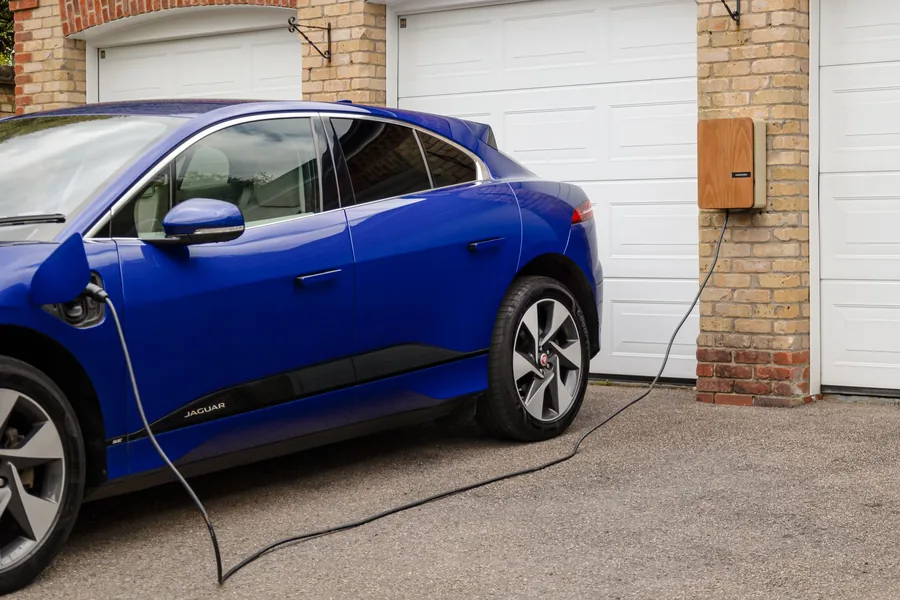
On running cost, the charger is the lever. At €0.38 per kWh the efficiency range in our data runs from 10.9 kWh/100km in a 2026 MINI Aceman, about €621 a year, to 30.3 kWh/100km at the least efficient end, about €1,727. The median electric record sits at 16.9 kWh/100km, roughly €963 a year. Irish household electricity is among the most expensive in the EU, where the average is €0.220/kWh, and public rapid charging costs more again — so treat these as best-case figures.
| Model | Year | Efficiency | Annual energy |
|---|---|---|---|
| MINI Aceman | 2026 | 10.9 kWh/100km | €621 |
| Mercedes-Benz CLA Saloon | 2026 | 12.2 kWh/100km | €695 |
| Dacia Spring | 2026 | 12.5 kWh/100km | €712 |
| Tesla Model 3 | 2026 | 13.8 kWh/100km | €787 |
| Tesla Model Y | 2026 | 14.2 kWh/100km | €809 |
| Nissan Leaf | 2026 | 20.6 kWh/100km | €1,174 |
Common reasons cars fail the safety and visual checks
We do not publish a failure rate, because we could not verify one and a made-up percentage helps nobody. What is safe to say is that on a car which is serviced and driven regularly, most failures come from parts that wear quietly: a bulb, a tyre, a wiper blade, a brake disc, a corroded brake pipe.
None of those are hidden from the owner. The list below is the short version of what catches people out, and every item on it can be checked by walking around the car with the lights on and a torch in hand.
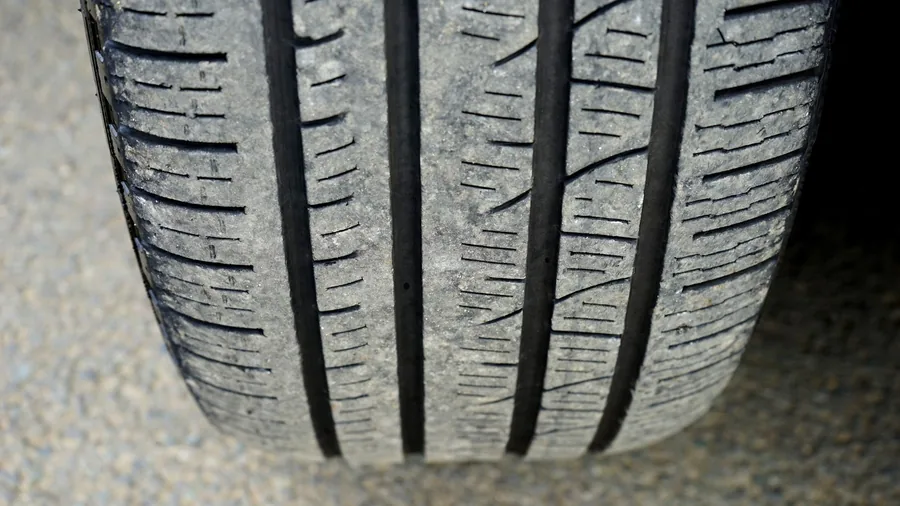
Tyres deserve their own line. Tread below the legal minimum, a bulge in the sidewall, a cut deep enough to expose the cords or a mismatch in size across an axle are all visible without a ramp, and any of them is a reason for a refusal. Corrosion in a load-bearing area is another, so a winter of road salt is worth a hose-down before the test.
- A single failed bulb or a cracked lamp lens
- Tyres below the legal tread minimum, or with sidewall damage
- Excessive smoke from a worn or poorly maintained engine
- Brake pads or discs worn past their service limit
- Play in steering or suspension joints and worn bushes
- A parking brake that will not hold the car
- Frayed seatbelt webbing or a buckle that will not latch
- Corrosion on load-bearing parts of the structure
A pre-NCT checklist you can run in 20 minutes
Run this at home, in daylight, a week before the test rather than the night before. Fixing a bulb yourself costs a fraction of the time a second visit costs, and a car that arrives clean and warmed up also inspects more easily.
Most of the items on this list cost less than the fuel in the tank. A bulb, a wiper blade and a litre of screen wash are pocket change against the price of a return visit, and a clean car with the clutter cleared out of the boot gives the tester a straight run at the things that actually matter.
- Walk around with the lights on: dip, main beam, indicators, brake lights, reverse, fog and both number-plate lamps.
- Check every tyre for tread depth above the legal minimum and for cuts, bulges or exposed cords.
- Check tyre pressures when cold, including the spare if you carry one.
- Top up engine oil, coolant, brake fluid and screen wash.
- Test the wipers and washers on every speed, front and rear.
- Listen for exhaust blowing or rattles when the engine is cold and again when warm.
- Sit in and test every seatbelt: pull it out fully, let it retract, and check the buckle latches.
- Test the horn and check all mirrors are intact and adjustable.
- Check the parking brake holds the car on a slope with normal travel.
- Clear the boot of clutter so the tester is not asked to move anything.
- Wash the car, including the number plates and lights.
- Bring the previous NCT certificate and the car's documents with you, and arrive with the engine warm.
NCT versus the UK MOT and Northern Ireland
Drivers who have lived in Britain usually know the MOT, and the difference in cadence surprises them. The MOT is capped at £54.85 and runs annually once a car is three years old, against Ireland's €55 on a two-year cycle from four years. UK road tax is a different system again: roughly £190 a year in the 111–130 g/km band, against the ~€210 we can verify for Ireland's 111–120 g/km band.
Northern Ireland runs its own MOT system, with different intervals and fees from both the Republic and Great Britain. If a car is moving between jurisdictions, check the rules where it is registered rather than assuming the Republic's two-year cycle follows the car across the border.
Cross-border and Northern Ireland rules change separately from RSA rules. Verify with the relevant agency before booking a test.
Booking, re-tests and what to do if you miss your date
Book as soon as the reminder arrives and leave a few weeks of slack. A car with an expired certificate is not roadworthy for insurance or enforcement purposes, and the cheapest way through the process is to pass on the first visit inside your own window rather than scramble for an emergency slot.
If the car fails, the RSA sets a window in which you can return to the same centre for a re-test. We have not printed the length of that window or any re-test charge, because we could not verify either one — treat both as rules to confirm on the RSA's own NCT pages before you book. What is certain is that the fail sheet is a to-do list, and clearing it completely before the re-test is the only way to avoid a third visit.
Re-test windows and charges are set by the RSA and change over time. Confirm them before you book.
What a year of driving actually costs after you pass
Add the fixed costs to the energy figure and the shape of Irish car ownership appears. A 2026 Renault Clio certified at 5.3 L/100km and 120 g/km costs about €1,463 a year in petrol, sits inside the one motor tax band we can verify at around €210, and carries €27.50 of NCT. That is roughly €1,700 before insurance, servicing, tyres or depreciation.
Depreciation remains the largest single cost and the one no test measures. As a rough guide, a typical new car loses 15–25% of its value in the first year and about 50% over five years, which dwarfs the energy bill on anything bought new. Run your own numbers with the calculators below before you commit to a model on the strength of its fuel figure alone.
Insurance and servicing are the two big omissions from the table, and both vary enormously by driver, car and county — which is why we publish no figure for either. The energy line is the part of the bill that depends on the car rather than on you.
| Cost item | Per year | Basis |
|---|---|---|
| Fuel, 5.3 L/100km | €1,463 | €1.84/L, 15,000 km |
| NCT, amortised | €27.50 | €55 every two years |
| Motor tax, 111–120 g/km | ~€210 | Verified band only |
| Total before insurance and servicing | ~€1,700 | Energy plus fixed costs |
Use the free calculators
Frequently asked questions
How much does the NCT test cost in Ireland?
The standard test costs €55 and covers the full inspection: structure, brakes, steering, suspension, lighting, tyres, seatbelts and emissions. You pay it every two years once the car is over four years old, so it works out at about €27.50 a year. Confirm the current fee with the RSA before booking.
How often does a car need an NCT test?
The first test falls due when the car is more than four years old, and the cycle then runs every two years. Older cars are tested more frequently than that baseline, and the RSA sets the age thresholds that trigger the shorter interval, so check your own due date on the RSA's NCT site.
Can I drive my car with an expired NCT certificate?
No. Once the certificate expires the car is not roadworthy for insurance or enforcement purposes, and driving it puts you at risk of a fine and of an insurer refusing a claim. Driving directly to a booked test appointment is a very different thing from driving normally, so book early and leave yourself room to pass.
Does the NCT check CO₂ emissions?
The test checks exhaust gases and smoke at the tailpipe against the limits for your car's age and fuel type, which is a pass-or-fail measurement. The CO₂ figure on your registration certificate is a separate laboratory number that sets your motor tax band. A low CO₂ band does not guarantee a clean tailpipe if the engine is worn.
Do electric cars need an NCT?
Yes. An electric car follows the same age rule and the same two-year cycle, and pays the same €55. The structural, braking, steering, lighting and tyre checks are unchanged. Because there is no exhaust to sample, the emissions part of the test does not apply in the same way; check with the RSA for what is inspected on an EV.
Why is my fuel bill higher than the certified figure?
Certified consumption comes from a laboratory cycle run under fixed conditions, without wind, passengers, roof loads or air conditioning. Real-world consumption at Irish pump prices is typically higher than the certified number, and the gap widens on short trips, in winter and with a loaded car. Treat the certification figures as a ranking tool rather than a prediction.